Quick answer
For canicross, wear a synthetic base layer that moves sweat, a light insulating midlayer, and a packable windproof shell you can open or remove as you warm up. Add short tights or shorts that stay put under a canicross belt, then fit your dog with a running harness and bungee line matched to the same conditions. Layer both of you for the forecast and the effort, not the temperature at the trailhead.
Start with the run you are actually doing
Canicross effort swings hard: a fast first kilometer, a technical climb, then a stop to untangle a line. Build your layers around that stop-start rhythm rather than a steady running pace. If you expect to stand around at the start line or wait at a gate, carry a shell instead of wearing your warmest layer from the car. If your dog pulls hard on descents, you will run hotter than the forecast suggests, so make your midlayer the piece you can shed first.
Choose a base layer that handles dog-sport sweat
A synthetic or wool-blend base layer dries faster than cotton and keeps its shape when a harness or belt rubs against it. Cotton holds moisture, which is the main cause of cold, heavy clothing once you slow down. For mild days, a short-sleeve base layer under a light vest is often enough; for cold starts, add a long-sleeve layer you can push up. If you run with a belt, look for a smooth, flat waistband on your bottoms so the belt does not dig into a seam.
Add insulation and a shell you can pack
Midlayers trap warmth, shells block wind and light rain. In canicross, the shell matters more than the insulation because you are moving and generating heat. A lightweight, packable jacket that fits over your harness or belt without riding up is more useful than a heavy insulated layer you cannot remove. Check that the shell has pockets you can reach while holding a line, and that the hood does not flap into your dog's line path.
Match your dog's gear to the same conditions
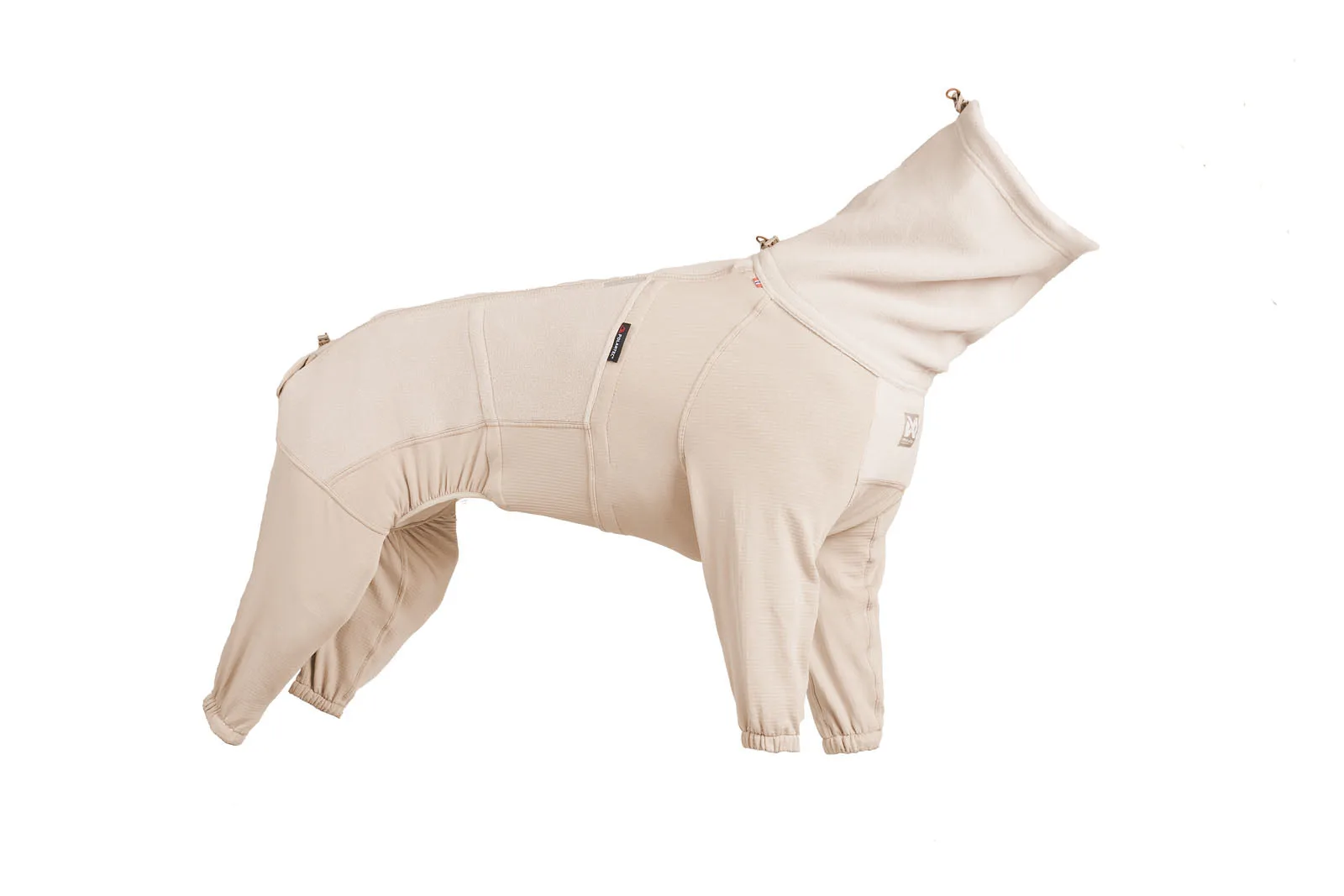
Your dog's layer is a running harness, not a walking harness: it needs a clear pull point and a fit that does not restrict the shoulders. Pair it with a bungee line that absorbs shock and a belt that sits on your hips, not your waist. In cold or wet weather, a short-coated dog may need a light coat, while a thick-coated dog may overheat in one. Check paws after runs on gritted or frozen ground, and rinse salt or grit off before it irritates the pads.
Test your layers on a short run first
Do a 20-minute loop with the exact layers and dog gear you plan to race in. You are checking three things: whether the belt stays put when your dog pulls, whether the line tangles around your legs, and whether you overheat at your normal pace. Adjust one piece at a time so you know what caused the problem. A layer that works on a 5 km training run is more reliable than a new combination tried on race day.
Your canicross layering steps
- Check the forecast and the route: Note the start temperature, wind, and how exposed the trail is. Pick a base layer and midlayer for the coldest point, and carry a shell for the warmest. Common mistake: dressing for the car park and overheating within ten minutes.
- Put on your base layer first: Choose a synthetic or wool-blend top that sits flat under a belt or harness. Avoid cotton and thick seams where the belt will press. Checkpoint: you can raise your arms without the hem riding up over your waist.
- Add a midlayer you can remove: Use a light fleece or insulated layer that fits over the base layer without bunching. If you run hot, make this the first piece you shed. Common mistake: choosing a midlayer that is too bulky to stuff into a pocket or belt.
- Add a packable shell: Pick a windproof, water-resistant jacket that fits over your layers and does not interfere with your belt or line. Keep it accessible, not buried in a pack. Checkpoint: you can open the shell's vents or front zip while holding the line.
- Fit your dog's harness, line, and belt: Set the harness so the pull point sits clear of the shoulders, attach the bungee line, and adjust the belt so it rests on your hips. Walk your dog in the setup before running. Common mistake: a loose belt that rides up or a line long enough to tangle in your legs.
- Do a short test run, then adjust one piece: Run an easy loop in your full kit. Note where you overheat, where the belt rubs, and whether your dog's harness shifts. Change one item at a time. Next step: lock in the combination that worked and repeat it on your next run.
Gear that fits the layering plan
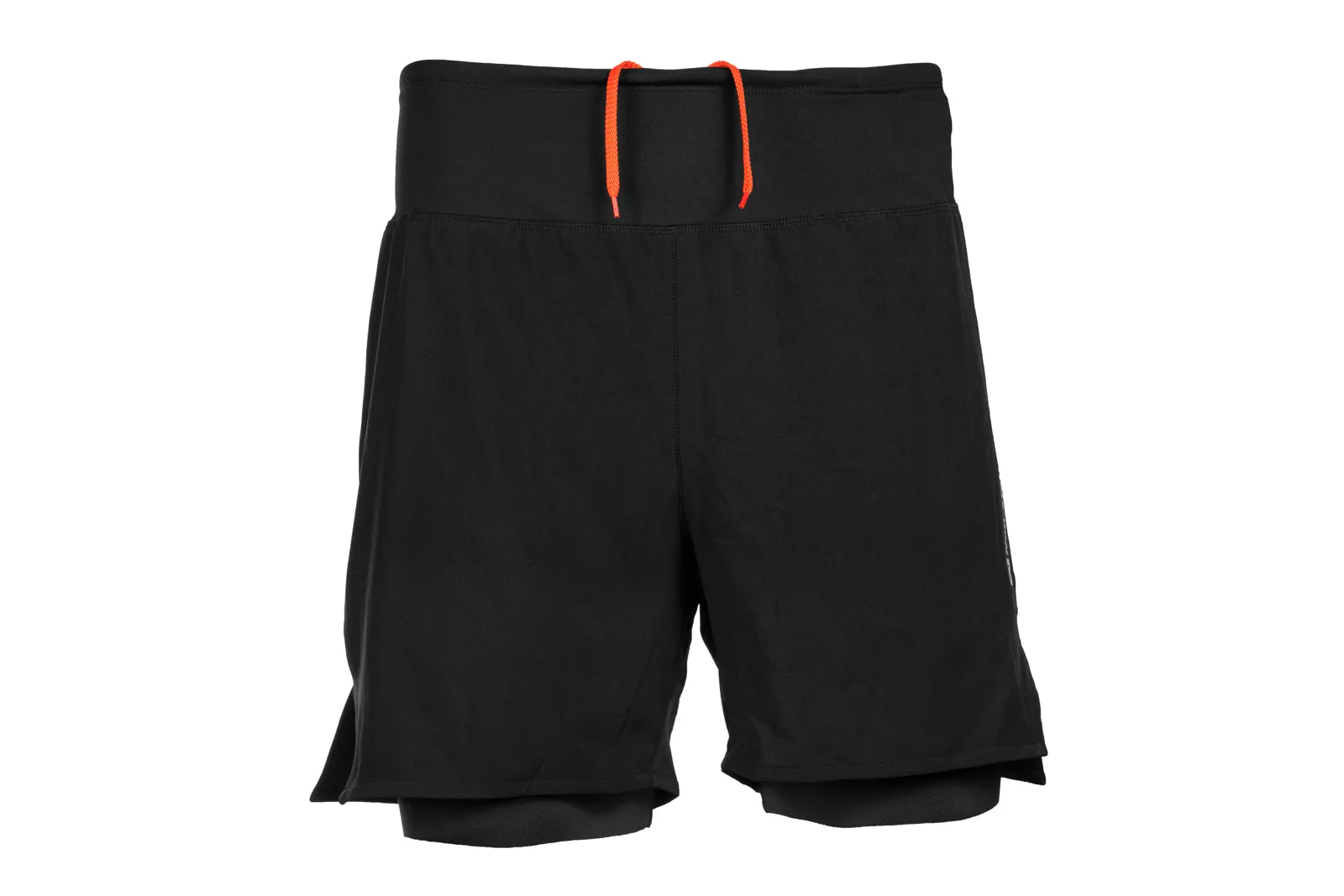
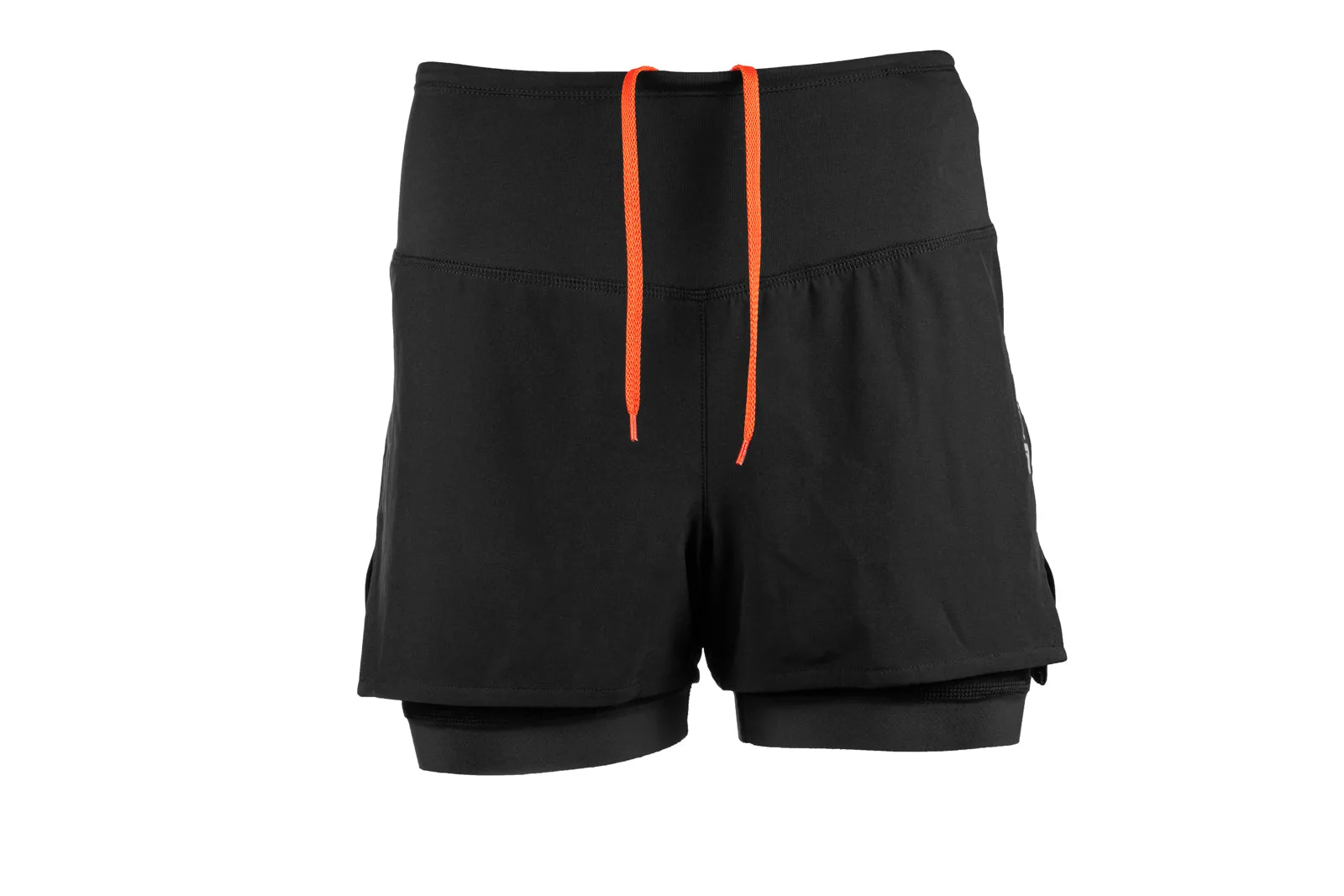
- CaniX short tights men's: CaniX short tights men's are light, functional shorts developed for canicross and an active lifestyle with dogs, with a wide waistband and a zipperless pocket. The wide waistband and zipperless pocket are designed to stay comfortable under a canicross belt, so your belt does not press a zipper into your stomach on the run.
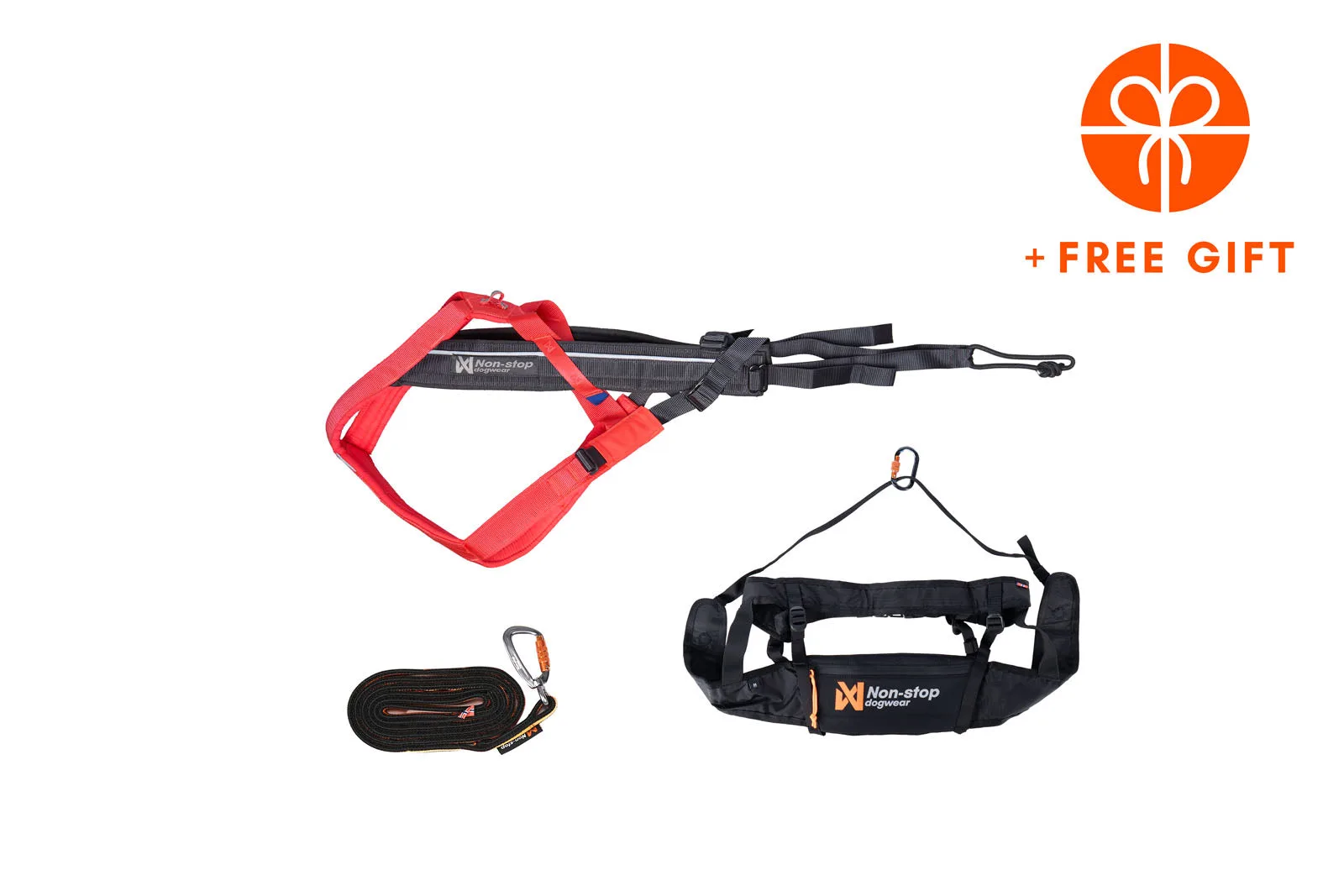
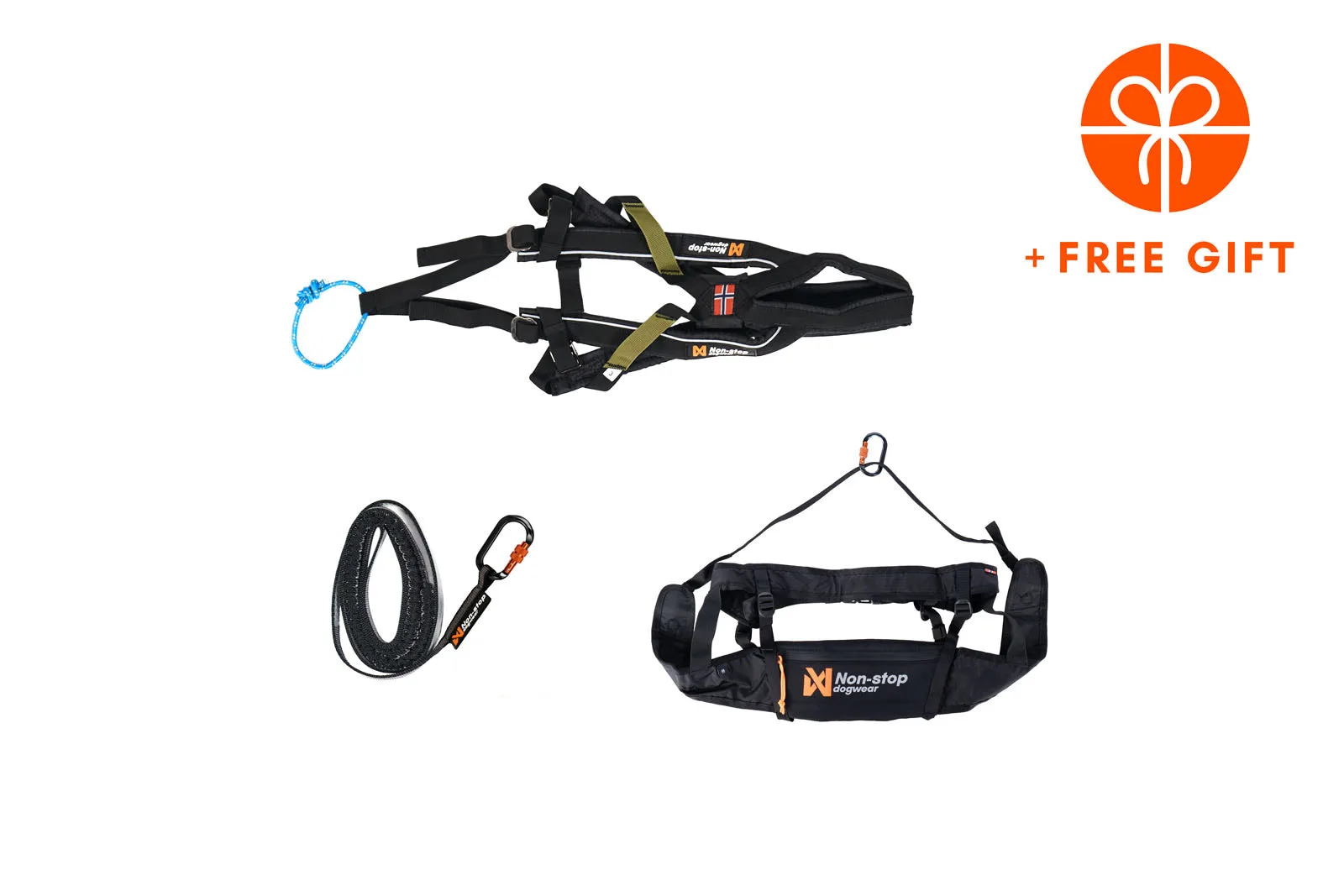
- CaniX kit Teal: CaniX kit Teal is a canicross set including the https://nonstopdogwearoz.com/products/freemotion-harness-5-b3aec08d83ae6df2d3cd936d-582049Freemotion harness 5.0, a bungee leash, and the https://nonstopdogwearoz.com/products/canix-belt-2-137d143e663671c46af145b9-581997CaniX belt 2.0. Buying the harness, line, and belt as one kit removes the guesswork of matching a pull point, bungee length, and belt fit for your dog.