Quick Answer
Start your zero-drop transition gradually by alternating short runs in the Torin ST with your current shoes, focusing on form and foot strength over several weeks.
Why Zero Drop Matters for Your Running Form
Zero-drop shoes place your heel and forefoot at the same height, encouraging a more natural midfoot strike. This shift can reduce impact on knees and hips but requires your calves and Achilles to adapt to a new range of motion. The Torin ST offers a balanced platform for this transition, combining zero-drop geometry with GuideRail technology for gentle medial guidance without forcing your foot into a rigid position.
Rushing the switch is the most common mistake. Your feet and lower legs need time to build strength in muscles that may have been underused in traditional heel-elevated shoes. Plan for at least four to six weeks of gradual exposure.
What Makes the Torin ST a Good Transition Shoe
Unlike minimalist shoes that provide little cushioning, the Torin ST delivers a responsive, soft ride that helps absorb early-stage impact while you adapt. Its GuideRail technology offers subtle support for runners who want a touch of stability without a rigid post. This makes it a practical bridge for runners moving from traditional stability shoes or neutral trainers to a zero-drop feel.
Keep in mind that the Torin ST is not a maximalist shoe. If you are accustomed to very high stack heights, the lower profile may feel firm at first. Start on softer surfaces like grass or a track to ease the transition.
Step-by-Step Zero Drop Transition Plan
- Start with Short Walks: Wear the Torin ST for 15–20 minute walks on flat pavement for the first 3–4 days. Focus on landing softly on your midfoot. This lets your calves and Achilles adapt without the impact of running. If you feel sharp pain in your Achilles or calf, reduce walk time by 5 minutes and add a rest day.
- Alternate with Your Current Shoes: On your next runs, use the Torin ST for only the first 5–10 minutes, then switch to your regular shoes for the remainder. Repeat this pattern for 1–2 weeks, gradually increasing the zero-drop portion by 2–3 minutes per run. A common mistake is skipping the warm-up in your old shoes. Always start in the Torin ST to practice form, then finish in your regular shoes to avoid overloading.
- Build to Full Runs in Torin ST: Once you can comfortably run 20 minutes in the Torin ST without calf soreness, try completing an entire easy run in them. Keep the pace conversational and the distance 2–3 miles for the first week of full use. If your calves feel tight for more than 48 hours after a run, take an extra rest day and do light stretching before your next session.
- Add Foot Strengthening Exercises: Incorporate calf raises, toe yoga, and single-leg balance drills on off days. Stronger foot intrinsics and calves reduce the risk of plantar fasciitis and Achilles tendinopathy during the transition. Do not skip strength work even if you feel fine. Weak feet are the leading cause of transition injuries.
- Monitor Your Running Form: Film yourself running on a treadmill or ask a friend to check your stride. Aim for a cadence of 170–180 steps per minute and a foot strike that lands under your hips, not ahead of them. The Torin ST's GuideRail can help cue better alignment, but conscious form work speeds up adaptation. If you notice heavy heel striking, shorten your stride and increase your cadence rather than trying to change your foot strike abruptly.
Product Facts
-
Men's Torin ST: The Torin ST is a do-it-all stability shoe with GuideRail technology for gentle medial guidance. This provides subtle support to encourage natural foot placement while you adapt to zero drop, reducing the risk of overpronation without forcing a corrected gait.
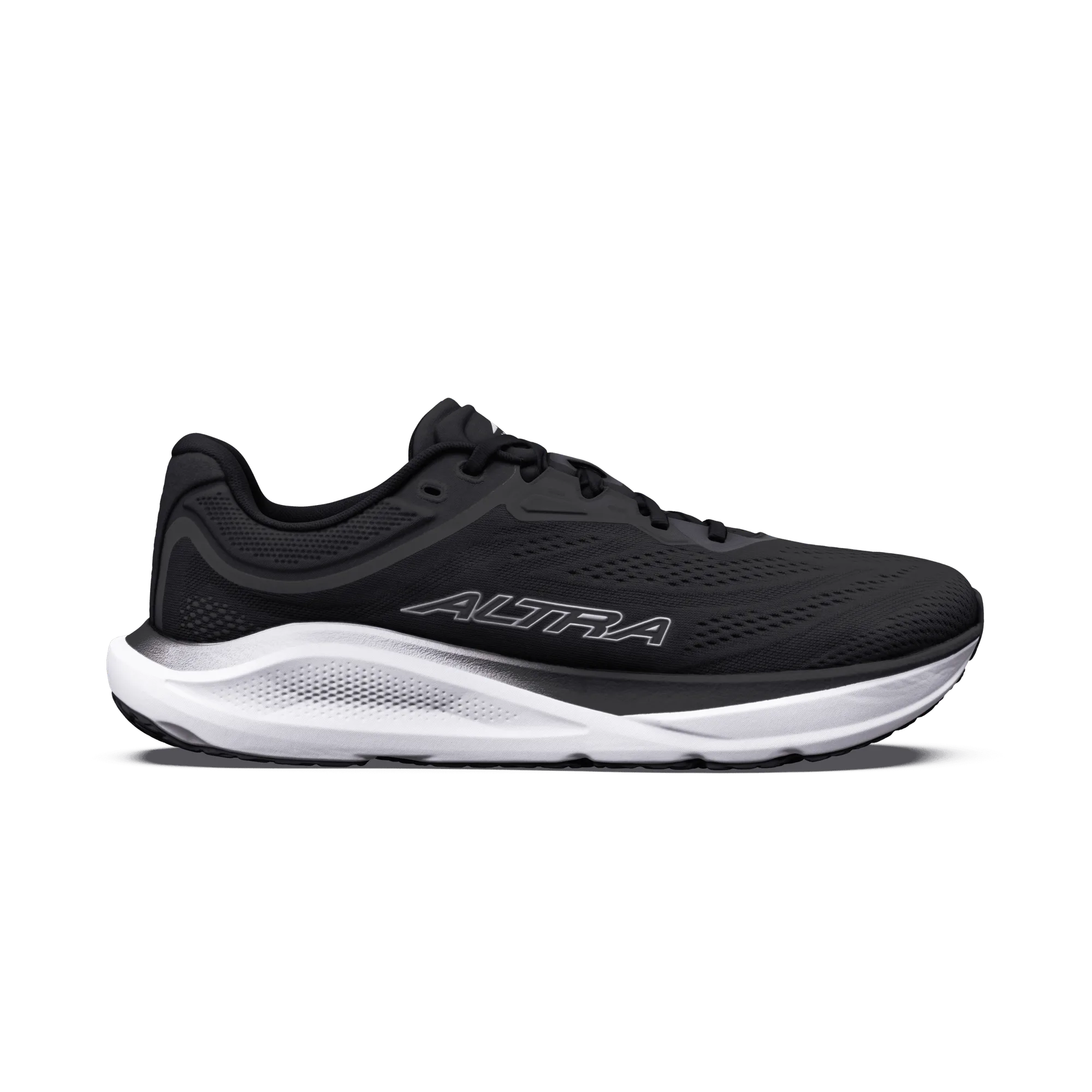
Men's Torin ST