Quick answer
Pack toothpaste bits in a small, airtight container in your carry-on, keep them dry, and treat them as a solid—not a liquid or gel—so they don't count toward the 3-1-1 liquids rule. For a simple TSA-friendly setup, use a dedicated tin or jar, add a dry toothbrush, and keep a few bits in a separate pill pouch for easy access.
Why toothpaste bits work for carry-on travel
Toothpaste bits are solid tablets that you chew and brush with a wet toothbrush. Because they contain no water, they are not a liquid, gel, or paste under TSA rules, so they do not need to fit in your quart-sized liquids bag. That frees up space for other toiletries and removes the risk of a leak in your luggage. They are also lightweight and compact, making them a practical travel size toothpaste alternative for both short trips and longer journeys.
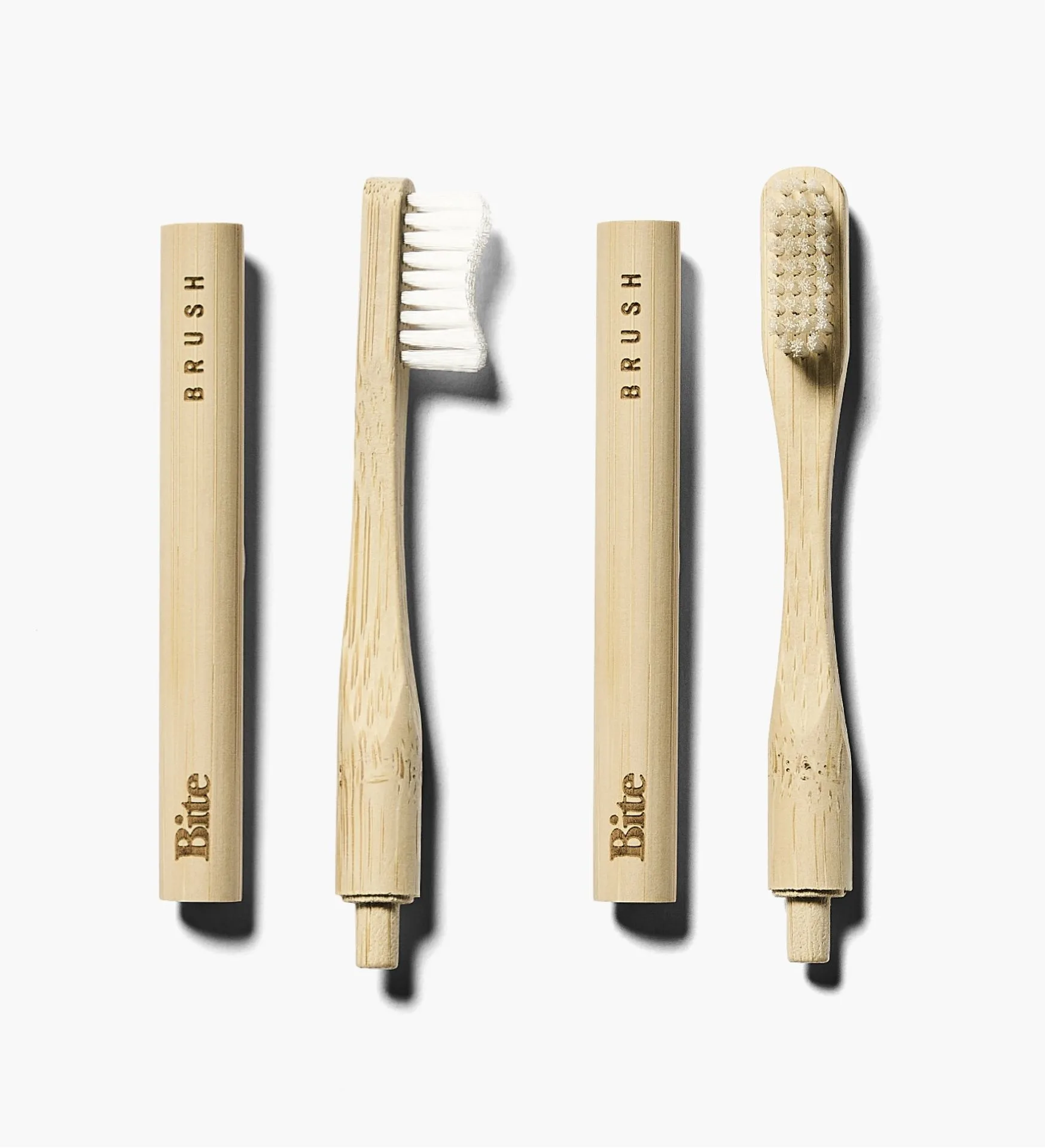
For a plastic-free travel dental kit, pair bits with a bamboo or reusable toothbrush and a tongue scraper. This keeps your oral care routine consistent on the road while cutting down on single-use plastic tubes and wrappers. If you already use a subscription at home, packing a small amount for travel is straightforward—just transfer what you need into a travel container.
How to pack toothpaste bits step by step
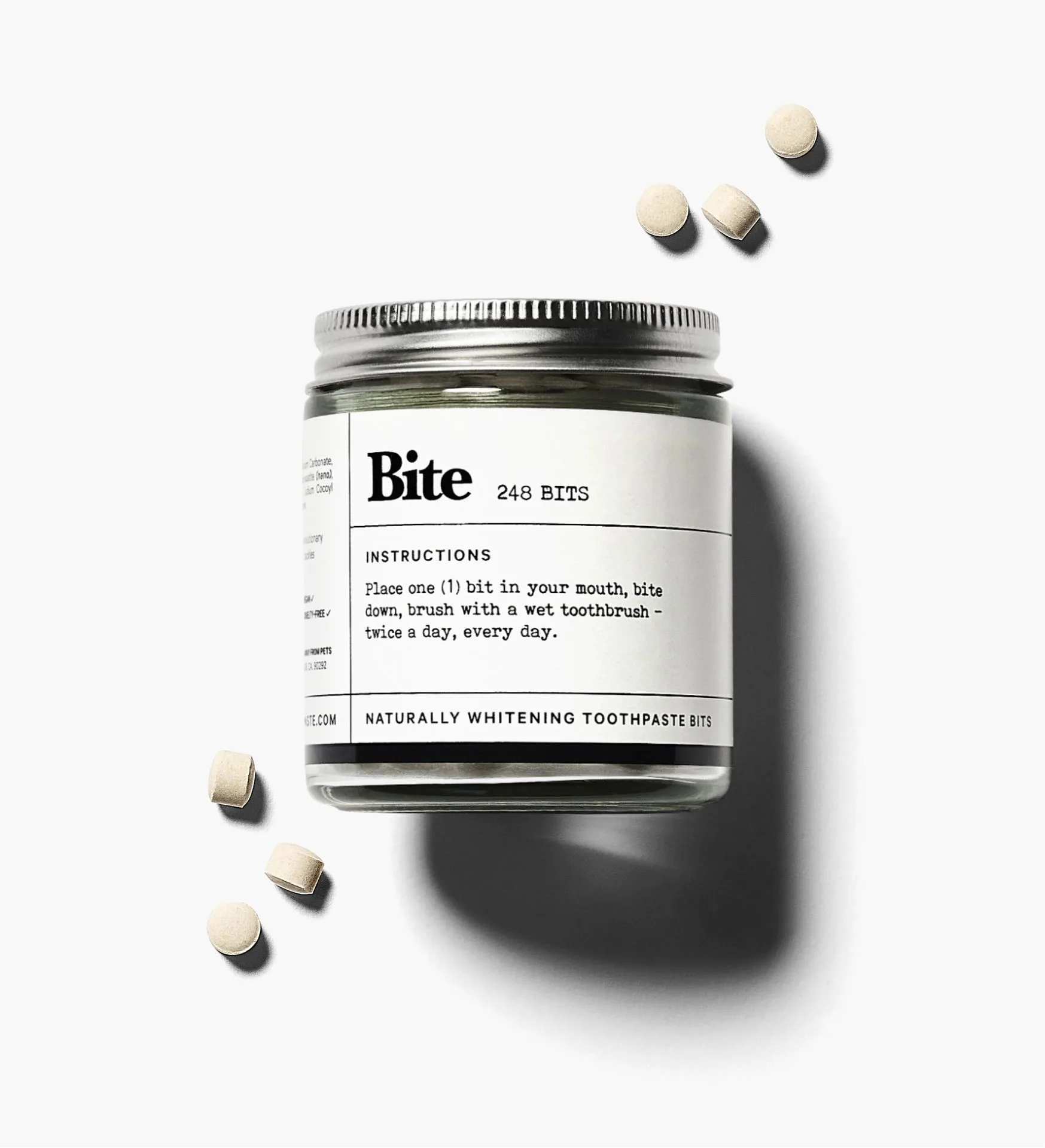
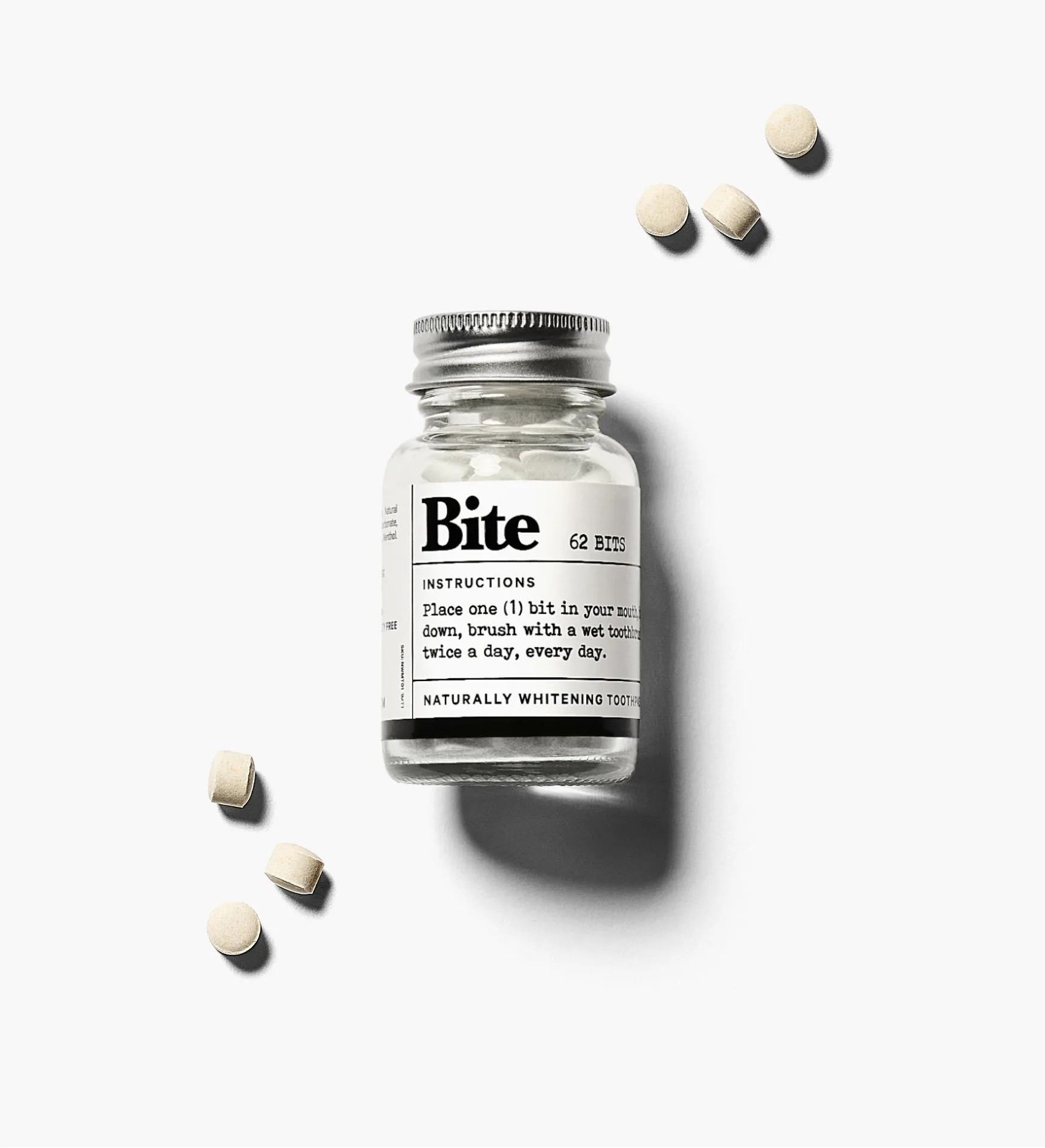
Start by choosing a container that seals tightly. A small tin or jar with a screw-top lid works well because it keeps moisture out and prevents bits from crushing. Avoid open bags or loose compartments where bits can absorb humidity from the air or nearby damp items. If you are using a subscription product, you can simply take a portion from your regular supply rather than buying a separate travel size.
Next, count how many bits you need. Most people use one bit per brushing, so two bits per day is a good rule of thumb. For a week-long trip, pack about 14 to 16 bits in case of delays. Put them in your carry-on rather than checked luggage so you can brush during long flights or layovers. Keep a few extra bits in a separate small pouch or pill box for quick access if your main container is packed away.
Finally, place the container in an outer pocket of your bag, not next to wet items like a damp toothbrush or face cloth. Moisture is the main enemy of toothpaste bits—if they get damp, they can soften or clump together. A dry toothbrush is essential; shake off excess water before storing it, or let it air-dry before packing.
Common mistakes to avoid
One frequent mistake is assuming toothpaste bits are a liquid and putting them in your 3-1-1 bag. They are solid, so they do not need to go there, and doing so wastes valuable space. Another mistake is using a container that is not airtight. Bits can absorb moisture from the air, especially in humid climates or steamy bathrooms, which makes them stick together and harder to use.
A third mistake is packing bits next to a wet toothbrush or leaking toiletries. Even a small amount of moisture can affect their texture. Keep them separate and dry. Also, avoid transferring bits into a container that previously held liquids without washing and drying it thoroughly—residual moisture can cause clumping.
What to include in your plastic-free travel dental kit
A complete carry-on oral care kit can be small and lightweight. Besides toothpaste bits, bring a travel toothbrush, a tongue scraper, and a small container of floss if you use it. A tongue scraper helps remove plaque and debris from the tongue's surface and is compact for travel. If you want to keep everything in one place, a small drawstring pouch or reusable bag works well.
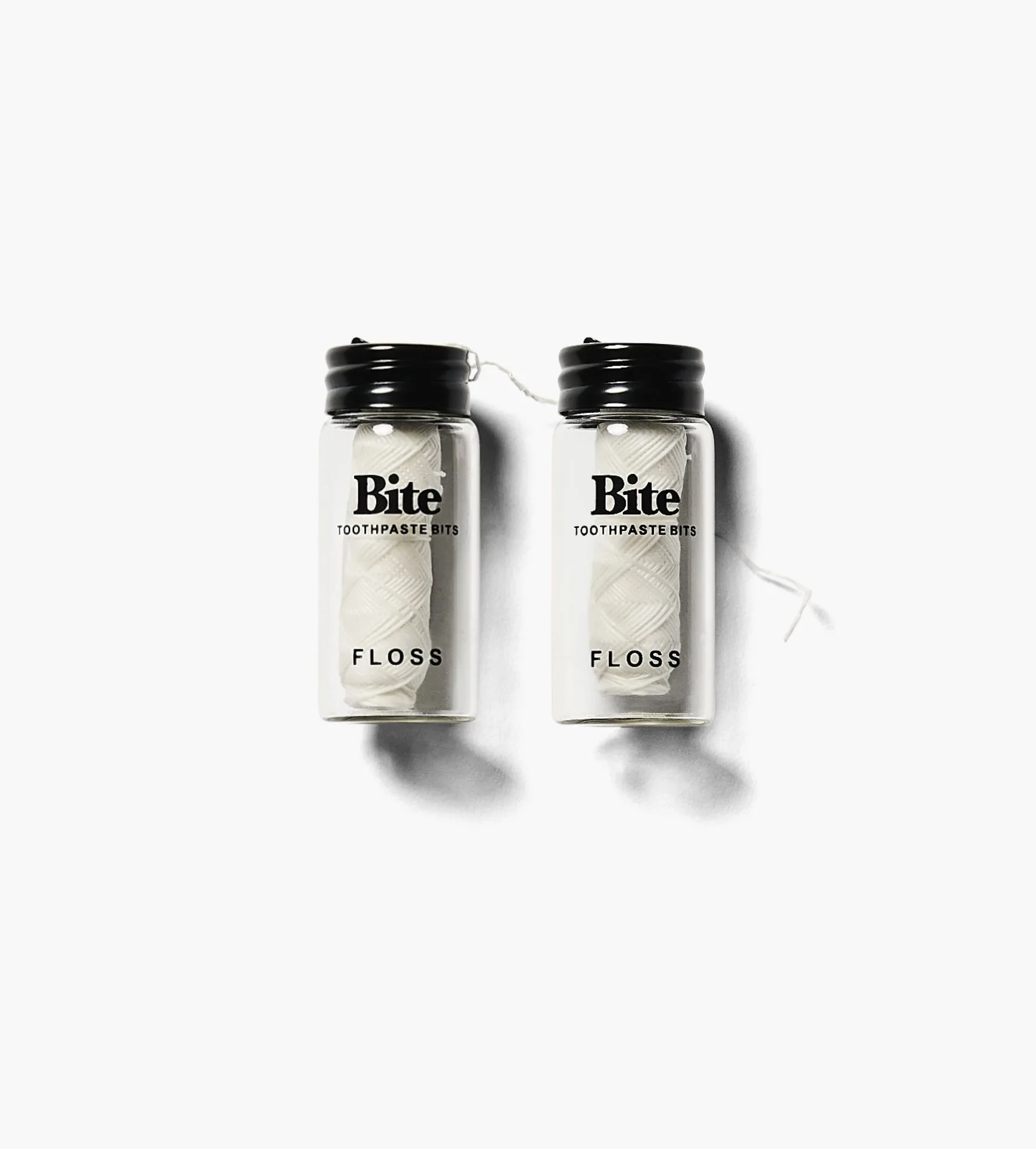
floss
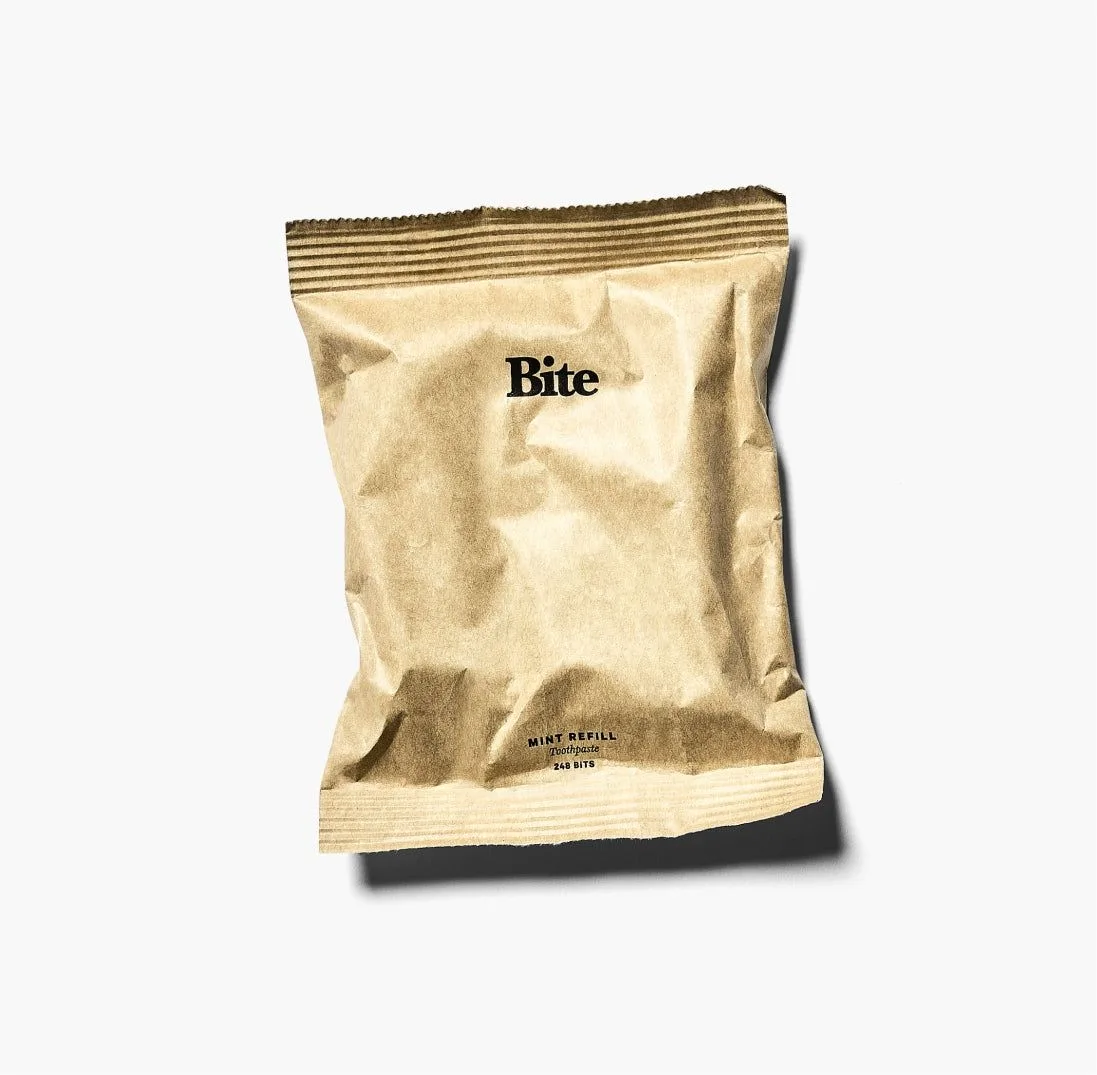
For the bits themselves, you can use the original packaging if it is resealable, or transfer them to a dedicated travel tin. If you use a subscription, you might already have a supply at home; just take what you need for the trip. The Fluoride-Free Toothpaste is also available in a compact 1oz jar if you prefer a paste format for longer trips, though it is a liquid or gel and would need to follow TSA liquid rules.
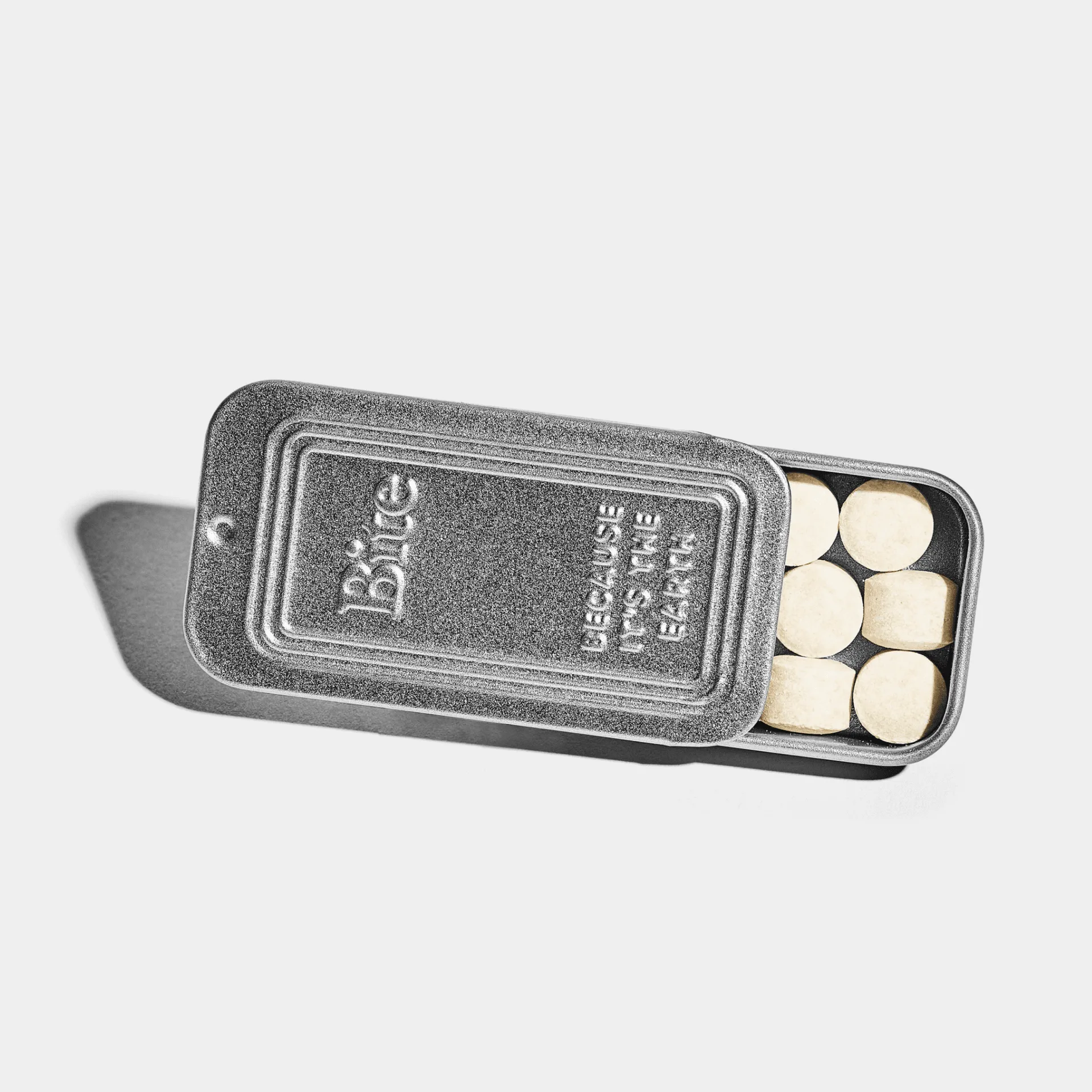
travel tin
TSA-friendly packing steps for toothpaste bits
- Choose an airtight container: Use a small tin or screw-top jar that seals tightly. Avoid open bags or containers that let in air. Checkpoint: Fill it, close it, and shake gently—if bits rattle freely and stay dry, the seal is good.
- Count and pack the right amount: Plan for one bit per brushing, two per day. For a week, pack 14–16 bits in case of delays. Checkpoint: Add two extra bits for every three days of travel as a buffer.
- Keep bits separate from moisture: Store the container away from damp toothbrushes, wet washcloths, or leaking liquids. Ensure your toothbrush is dry before packing. Checkpoint: If bits feel soft or sticky, they have absorbed moisture—replace them with dry ones.
- Place in carry-on, not checked luggage: Keep bits in an outer pocket or easily accessible pouch so you can brush during long flights or layovers. Checkpoint: Confirm the container is closed and not under heavy items that could crush the bits.
- Add complementary tools: Include a travel toothbrush and a tongue scraper for a complete routine. A small floss container is optional. Checkpoint: Your kit should fit in a small pouch and take up less space than a traditional toothpaste tube.
Products that fit this travel routine
- Fluoride-Free Toothpaste Subscription: Fluoride-Free Toothpaste Subscription offers a gentle, effective alternative to traditional toothpaste, made without chemicals, plastics, or fluoride, and is available in Mint, Mint Charcoal, and Berry Twist flavors. A subscription keeps you stocked at home, and you can take a small portion of bits for travel without buying a separate travel size.
- Tongue Scraper (Free Gift): Tongue Scraper (Free Gift) is a practical tool designed to help remove plaque and promote a fresher, cleaner mouth, and is compact and convenient for travel. It complements toothpaste bits and fits easily in a carry-on dental kit without adding bulk.
- Fluoride-Free Toothpaste: Fluoride-Free Toothpaste is a 1oz jar available in Mint, Mint Charcoal, and Berry Twist, free from fluoride, harsh chemicals, and plastic packaging. If you prefer a paste for longer trips, this jar is compact, but remember it is a gel or paste and must follow TSA liquid rules.