Quick answer
Trim a dog's face and paws at home by working in small sections with blunt-tipped or rounded-edge scissors, keeping one hand between the blade and your dog's skin. Start with the paws and work up to the face, and stop if your dog pulls away. For eye-area trimming, use a small safety scissor and cut only the hair you can see clearly.
What you need before you start
You do not need a full grooming table to trim a face and paws. You need good light, a stable non-slip surface, and a pair of scissors small enough to control. A detangling brush helps lift loose hair so you cut less. Keep treats within reach and plan a short session, because most dogs tolerate five to ten minutes far better than a long grooming marathon.
- Small scissors with a rounded or blunt tip for face and paw work
- A gentle slicker or detangling brush to remove loose hair first
- Treats and a non-slip mat
- A towel to catch clippings
Why face and paw trimming is different
Face and paw trimming is detail work, not bulk clipping. The hair around the eyes can impair vision, and the hair between paw pads collects debris and can mat. Scissors give you control in these tight spots, but they also require you to see the skin at all times. If you cannot see the skin, do not cut. That single rule prevents most home grooming accidents.
How to hold scissors around a dog's face
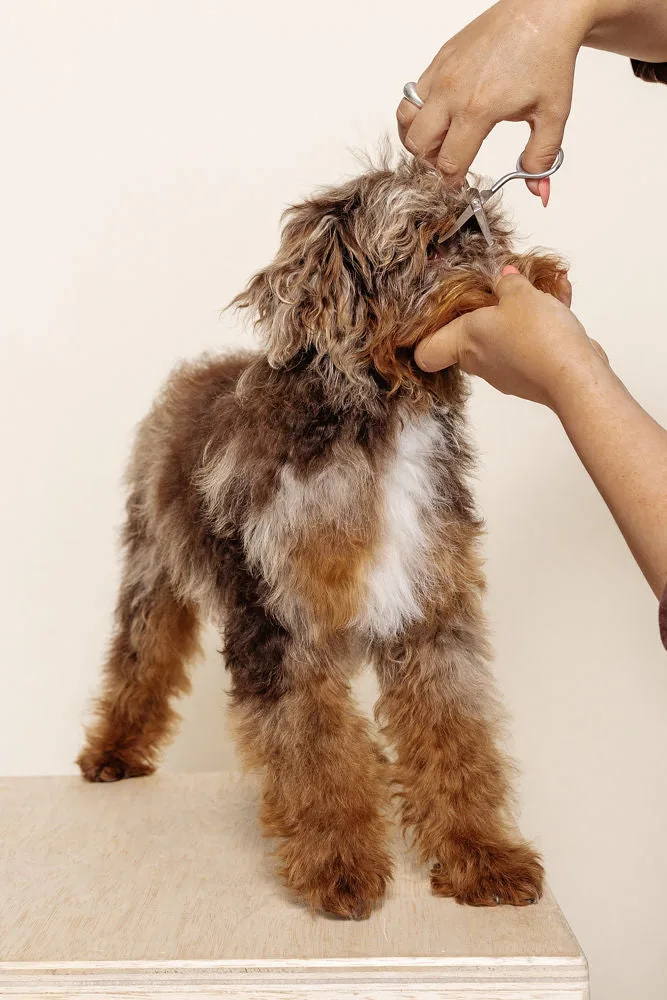
Hold the scissors with the tips pointing away from the eye and your free hand gently steadying your dog's chin. Cut toward the nose, not toward the eye. Use the tips of the scissors for small snips rather than closing the full blade near the face. If your dog blinks or pulls back, pause and reset before making another cut.
Step-by-step: face and paw trimming at home
- 1. Brush the face and paws first: Use a gentle detangling brush to lift loose hair and check for mats. Work in the direction the hair grows and stop if you hit a tangle. Checkpoint: if the brush snags, do not cut over the tangle. Work it out first or skip that spot.
- 2. Trim the paw pads: Lift one paw and trim only the hair that sticks out between the pads. Keep the blade parallel to the pad and cut small amounts. Common mistake: cutting too close to the pad. Leave a thin layer until you see how your dog reacts.
- 3. Neaten the paw outline: With the paw flat on the table, trim the hair that touches the floor so the paw looks tidy. Cut with the tips of the scissors. Checkpoint: the paw should still look round, not chopped. Stop when the outline is even.
- 4. Trim around the eyes: Use a small safety scissor with a rounded edge. Steady your dog's chin and snip only the hair you can see clearly in front of the eye. Common mistake: cutting toward the eye. Always point the tips away from the eye and cut toward the nose.
- 5. Tidy the muzzle and chin: Comb the hair forward and trim the stray hairs that hang over the mouth. Keep the scissors parallel to the muzzle. Checkpoint: your dog should be able to see and eat without hair falling into the mouth.
- 6. Check both sides and finish: Step back and compare both sides of the face and both paws. Make small corrections only where needed. Common mistake: over-trimming to fix one side. Stop while the trim still looks natural.
Tools that match this job
- Mini Safety Scissor: Mini Safety Scissor has a slightly rounded edge for trimming the hair that impairs a pup's vision. The rounded edge gives you a safer margin when trimming around the eyes, where a sharp point is hardest to control.
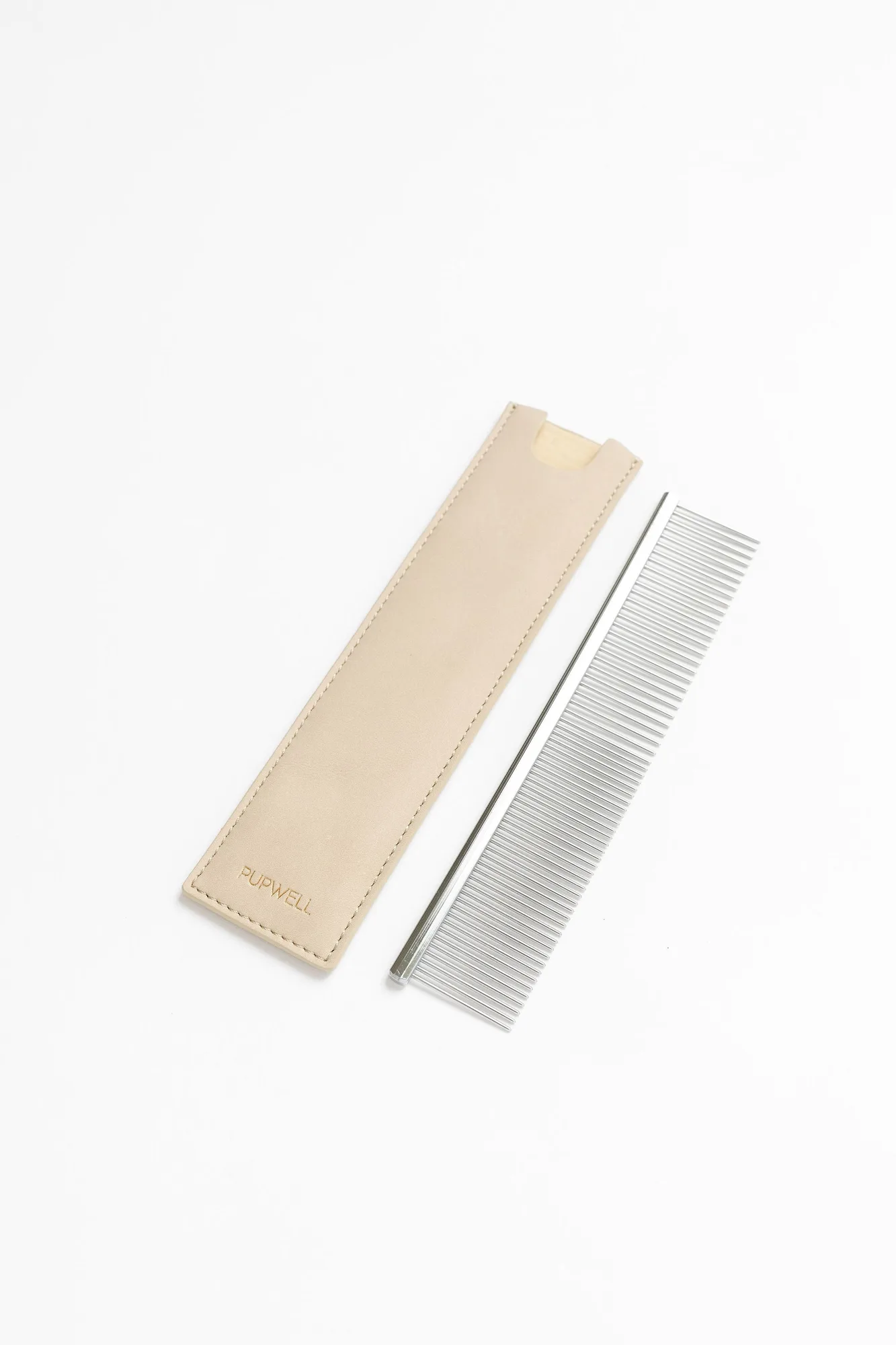
- Mini Gentle Detangling Brush: Mini Gentle Detangling Brush uses smooth-end stainless steel pins and is designed for sensitive pups. Brushing out loose hair before you cut means fewer scissor passes near the face and paws.