Quick Answer
For everyday cooking, the 10-inch hybrid fry pan is your go-to for searing, sautéing, and one-pan meals—just preheat properly, use moderate heat, and let the pan do the work.
Why the 10-Inch Size Works for Most Meals
The 10-inch fry pan hits a sweet spot: large enough to sear multiple pieces of meat or cook a family-sized side, yet compact enough to handle quick weekday tasks like frying eggs or making a grilled cheese. It's the pan you'll reach for daily, so mastering it pays off.
One trade-off: it won't fit an entire batch of stir-fry for a large family—that's where a wok or larger pan steps in. But for most households, the 10-inch size covers the majority of cooking needs.
Heat Management: The Key to Non-Stick Success
Hybrid pans combine stainless steel and a non-stick surface, so they respond differently than pure non-stick. You need to preheat properly and adjust heat levels to avoid sticking or burning.
Start on medium heat, let the pan warm gradually, and test with a drop of water—if it sizzles and beads, you're ready. Avoid high heat for delicate foods like eggs; save it for searing meat.
Step-by-Step: Everyday Cooking with Your 10-Inch Hybrid Fry Pan
- Preheat the pan properly: Place the pan on the stove over medium heat and let it warm for 2–3 minutes. Test with a few drops of water: they should sizzle and bead up. If they evaporate instantly, the pan is too hot—turn down the heat. This prevents sticking and ensures even cooking. Always preheat on medium, not high, to avoid hot spots.
- Add oil or butter at the right time: Once the pan is preheated, add a thin layer of oil or a pat of butter. Swirl to coat the surface. For high-heat searing, use an oil with a high smoke point like avocado or grapeseed; for eggs or pancakes, butter adds flavor. A common mistake is adding oil to a cold pan, which can cause sticking. Match the fat to the cooking temperature—don't use butter for high-heat searing.
- Sear meat in batches, not all at once: Pat meat dry, season it, and place it in the pan without crowding. Leave space between pieces so they brown, not steam. Flip only when it releases easily—if it sticks, it's not ready. For a family-sized meal, cook in batches and keep finished pieces warm. Crowding the pan lowers temperature and causes steaming; work in batches for a proper sear.
- Sauté vegetables with a quick toss: Add vegetables to the hot pan and toss or stir frequently. Use medium-high heat for crisp-tender results. If the pan gets too dry, add a splash of broth or wine to deglaze and create a quick sauce. Don't overfill—cook in batches if needed. Keep vegetables moving to avoid burning; deglaze to build flavor.
- Simmer sauces and finish with the lid: For sauces, reduce heat to medium-low and let the liquid simmer gently. Use the vented glass lid to monitor without lifting—this traps moisture and speeds up cooking. Stir occasionally to prevent sticking. A common mistake is boiling sauces on high heat, which can cause scorching. Use the lid to retain moisture, but lower the heat for simmering.
- Clean and care for your pan: After cooking, let the pan cool slightly, then wash with warm soapy water and a soft sponge. Avoid abrasive scrubbers that can damage the non-stick surface. Dry thoroughly and store with a protective layer if stacking. Proper care extends the pan's life and keeps it non-stick. Never plunge a hot pan into cold water—thermal shock can warp it.
The Pan That Makes It Easy
-
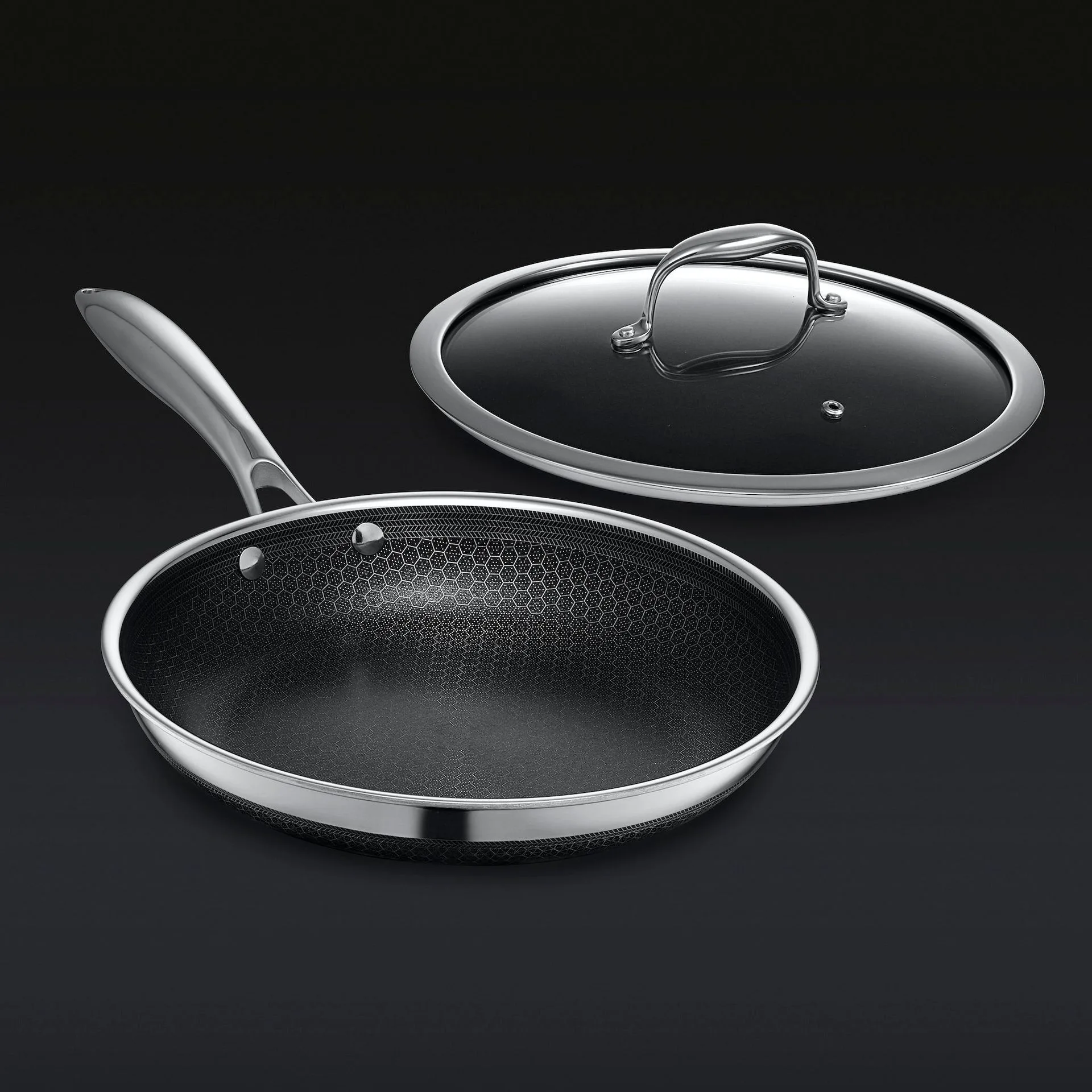
Hybrid Fry Pan with Lid, 10": The Hybrid Fry Pan with Lid, 10" is designed for searing multiple pieces of meat, sautéing veggies, simmering sauces, or cooking family-sized sides. It includes a tempered-glass, vented lid for easy monitoring. This pan's size and lid make it a versatile everyday tool—you can start a dish on the stovetop and finish it covered without needing extra cookware.
Hybrid Fry Pan with Lid, 10"