Quick answer
To use a 35mm SLR film camera, load the film correctly, set the ISO, choose an exposure mode, focus, and advance the film after each shot. Start with a camera like the Canon A-1 for its user-friendly automatic modes.
Why start with a 35mm SLR?
35mm SLR cameras give you full control over exposure and focus while still being relatively affordable and easy to find. They use standard 35mm film, which is widely available and offers a good balance of image quality and cost. The Canon FTb QL and Canon A-1 are two popular models that are great for beginners, with the A-1 offering automatic exposure modes for easier learning.
What you'll need to get started
Besides the camera body, you'll need a lens (often sold separately), a roll of 35mm film, and batteries if the camera uses them (like the Canon A-1). A lens cap and a strap are useful for protection and carrying. Many used cameras come with these accessories, but double-check before you buy.
How to shoot your first roll of 35mm film
- Load the film: Open the camera back, pull the film leader across to the take-up spool, and close the back. Advance the film until the frame counter reads '1'. Common mistake: not inserting the film leader far enough into the spool, causing the film to not advance. Always check that the rewind knob turns when you advance.
- Set the ISO (film speed): Set the camera's ISO dial to match the film's ISO (e.g., 400 for most color negative films). This tells the camera's light meter how sensitive the film is. Forgetting to set the ISO will lead to overexposed or underexposed photos. Write the film ISO on a sticky note and put it on the camera.
- Choose an exposure mode: On a camera like the Canon A-1, select Program AE for fully automatic exposure or Aperture Priority to control depth of field. On a manual camera like the Canon FTb QL, set the shutter speed and aperture yourself using the built-in meter. Start with Program AE to get comfortable. Once you understand exposure, try Aperture Priority to control background blur.
- Focus the lens: Turn the focus ring until the subject appears sharp in the viewfinder. Many SLRs have a split-image or microprism focusing aid in the center of the screen. A common mistake is not focusing at all, especially in low light. Use a bright focus point (like an edge) and lock focus before recomposing.
- Take the shot and advance the film: Press the shutter button gently. Then, advance the film to the next frame using the film advance lever. Never rewind the film until the roll is finished. Forgetting to advance the film will double-expose the same frame. Always advance immediately after each shot.
Product facts
-
Canon A-1 Film 35mm SLR Camera - Pre Owned: The Canon A-1 is a multi-mode, user-friendly, and reliable camera. It was a development of the ultra-successful Canon AE-1, offering the AE-1's automation plus Program AE and Aperture Priority auto exposure modes. This makes the A-1 ideal for beginners who want to learn exposure without worrying about manual settings on every shot.
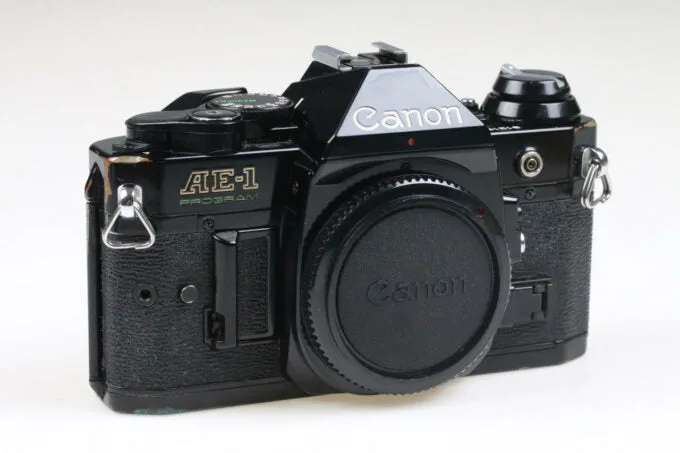
Canon A-1 Film 35mm SLR Camera - Pre Owned
-
Canon FTb QL 35mm SLR Film Camera - Pre Owned: The Canon FTb QL features a Canon FD lens mount and is compatible with Canon's earlier FL-mount lenses in stop-down metering mode. The FTb QL's compatibility with a wide range of lenses gives you more creative options as you advance, but its stop-down metering requires a bit more practice.
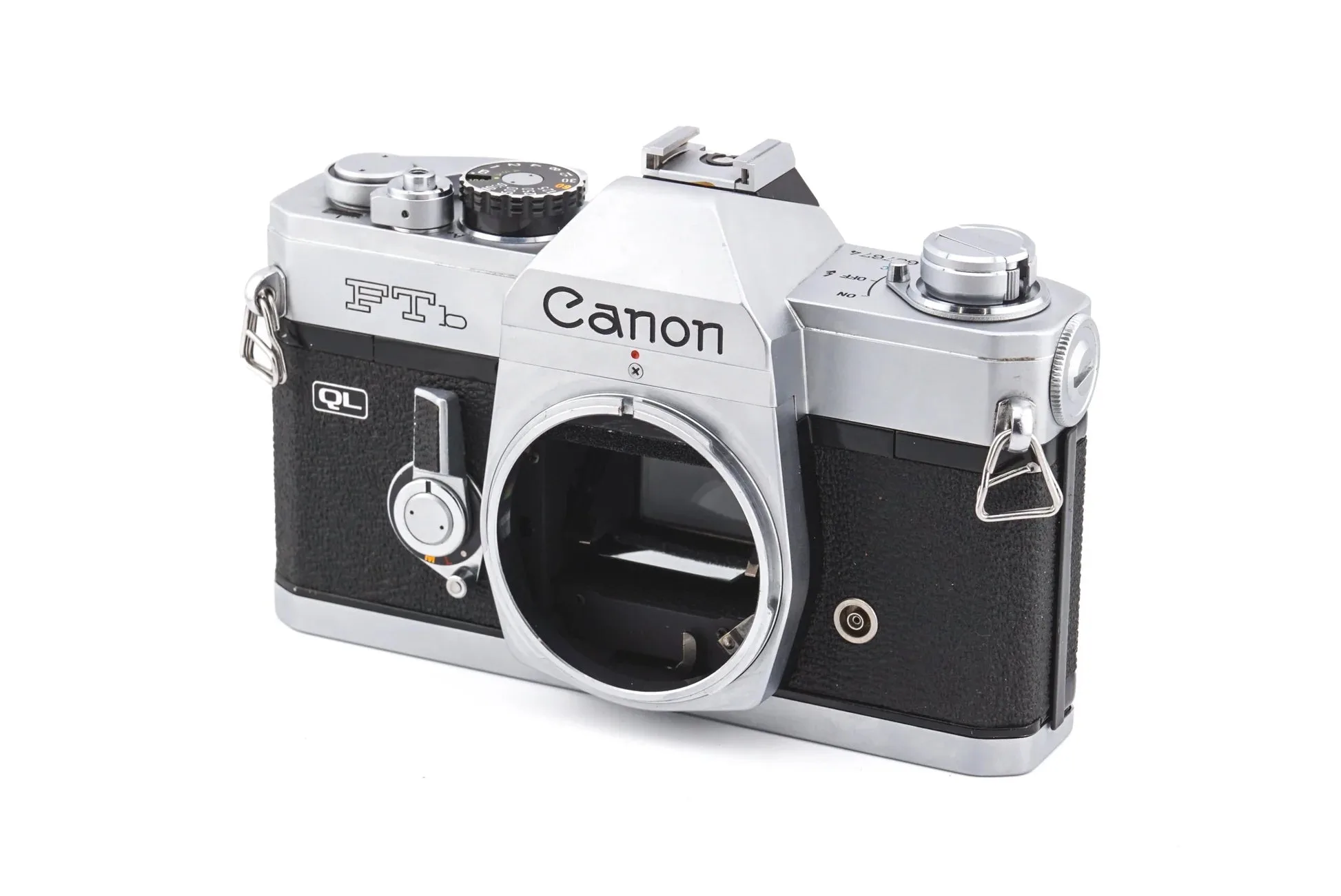
Canon FTb QL 35mm SLR Film Camera - Pre Owned