Quick answer
To use a baby chest carrier for newborns safely, ensure the carrier supports the head and neck, position the baby high and close enough to kiss, and check the TICKS guidelines before each use.
Why Positioning Matters for Newborns
Newborns lack head and neck control, so the carrier must keep their airway open and spine in a natural C-curve. A chest carrier that lets you adjust the seat width and head support gives you the best control over safe positioning.
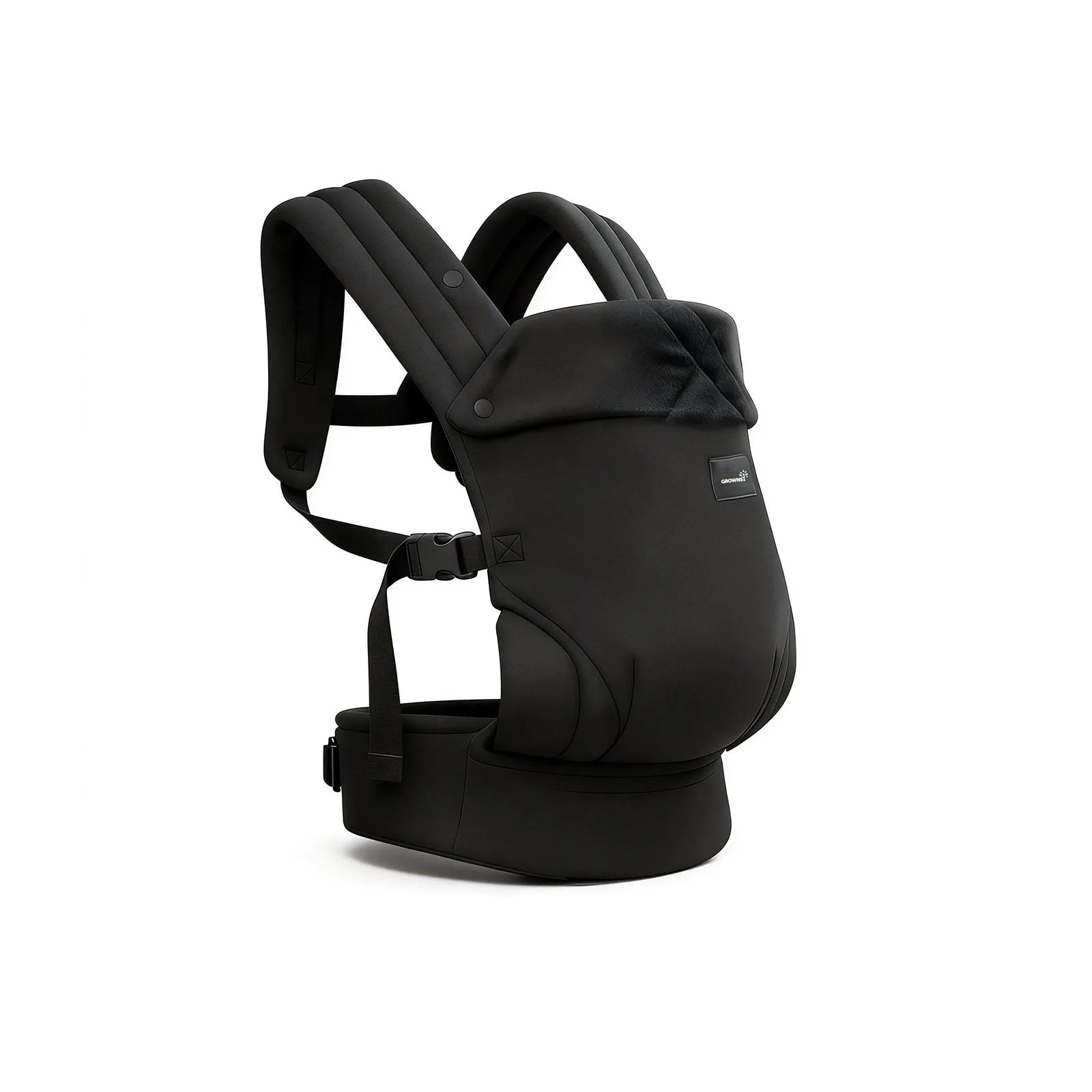
The GROWNSY Easy-Breezy Cozy Baby Chest Carrier is designed with a minimalist four-step setup, making it easier to achieve the correct position without wrestling with complicated straps.
Common Newborn Carrier Mistakes to Avoid
Placing the baby too low can cause slumping and restrict breathing. Always keep the baby high on your chest, with their face visible and chin off their chest.
Using a carrier without proper head support for a newborn can lead to airway obstruction. Choose a carrier that offers a padded headrest or can be adjusted to cradle the head.
Step-by-Step: Safe Newborn Chest Carrier Use
- 1. Choose the Right Carrier for a Newborn: Select a carrier that explicitly supports newborns (often from 7–8 lbs) and has adjustable head support. The GROWNSY Easy-Breezy carrier fits newborns to toddlers, and its minimalist design helps you focus on fit. Avoid carriers that lack head support or have a minimum weight above your baby's current weight.
- 2. Position the Carrier High on Your Chest: Put the carrier on so the top edge sits at or just below your collarbone. The baby should be high enough that you can kiss the top of their head without bending your neck. If you have to lean forward to kiss the baby, the carrier is too low.
- 3. Check the TICKS Guidelines: TICKS stands for: Tight (baby close enough to kiss), In view at all times, Close enough to kiss (again), Keep chin off chest, and Supported back. Ensure the baby's face is visible and their chin is not tucked into their chest. Always check that you can see your baby's face by glancing down; if you need to move fabric, adjust the carrier.
- 4. Adjust the Seat and Leg Position: The carrier's seat should support from knee pit to knee pit, keeping the baby's hips in an M-shape (knees higher than bottom). For newborns, tuck their legs inside the carrier if the seat is too wide. If the baby's legs dangle straight down, the seat is too wide or the carrier is not adjusted for their size.
- 5. Secure and Test Before Moving: Fasten all straps and tighten until the carrier feels snug. Gently bounce or sway to see if the baby shifts. If the carrier loosens or the baby slides, readjust. A properly snug carrier should not allow the baby to move away from your chest.
Product facts
-
Easy-Breezy Cozy Baby Chest Carrier for Newborn to Toddler: Put on Baby Carrier by Yourself: Designed with absolutely no fuss, this minimalist baby carrier redefines ease. Put it on in seconds with just four intuitive steps—no cumbersome clips, no complicated wrapping. Simplifies the process of achieving correct positioning, reducing the chance of user error that could compromise newborn safety.
Easy-Breezy Cozy Baby Chest Carrier for Newborn to Toddler