Quick Answer
Start with a firm bite roll on the ground, let your dog grip it fully, and reward with a tug. Progress to elevated holds and controlled releases to build a confident, full-mouth bite.
Why a Bite Roll Works for Early Bite Training
A bite roll is one of the most effective tools for teaching a young or inexperienced dog to open wide and commit to a full bite. Unlike a tug or a sleeve, a roll sits on the ground and gives the dog a target that is easy to grip, which encourages a complete mouth engagement.
The firmness of a new roll helps the dog learn to bite with pressure, but it softens after a few sessions, giving the dog a more realistic feel. This progression is important: it lets you start with a solid surface and gradually introduce a softer texture that mimics the resistance of a bite suit.
Common Mistakes to Avoid
One of the biggest mistakes handlers make is pulling the roll away too quickly. This teaches the dog to grab and release, rather than hold and carry. Another error is using a roll that is too soft for the dog's experience level, which can cause the dog to mouth it instead of biting fully.
Always let the dog win the tug at the end of the session. This builds drive and confidence. If the dog is hesitant, drop the roll and let it chase, rather than forcing the grip.
Step-by-Step Bite Roll Training
- Introduce the Roll on the Ground: Place the roll on the ground and let your dog investigate it. Use a treat or a toy to encourage interest. Once the dog shows curiosity, allow it to mouth the roll. Do not force the bite; let the dog engage at its own pace. If the dog ignores the roll, try moving it slightly to mimic prey movement.
- Encourage a Full Mouth Grip: When the dog grabs the roll, gently tug to create resistance. This encourages the dog to open wider and bite deeper. Keep the roll low to the ground to promote a full-mouth bite rather than a shallow grip. Avoid pulling too hard; the goal is to build confidence, not to overpower the dog.
- Add Movement and Elevation: Once the dog holds the roll confidently, start moving it in short, controlled motions. Then, gradually lift the roll a few inches off the ground to simulate a higher target. This teaches the dog to bite with its whole body, not just its mouth. If the dog loses its grip when the roll is elevated, go back to the ground and repeat the previous steps.
- Teach a Reliable Out: After the dog has a solid bite, introduce a release command. Use a treat or a toy as a reward for letting go. Practice the out in short sessions to avoid frustration. Always reward the out with a high-value treat to make the release a positive experience.
- Progress to Bite Suit Work: Once your dog is consistently biting the roll fully and releasing on command, you can transition to a bite suit or sleeve. The roll has prepared the dog for the feel of the suit material, so the transition should be smoother. Keep the roll in your rotation even after moving to the suit; it is great for warm-ups and confidence building.
Recommended Bite Roll
-
Redline Linen Bite Roll: The RedLine Linen Bite Roll is made from high-quality bite suit material, firm when new but softens after a few sessions. This lets you start with a solid target for confident bites and transition to a softer feel that better prepares the dog for real bite work.
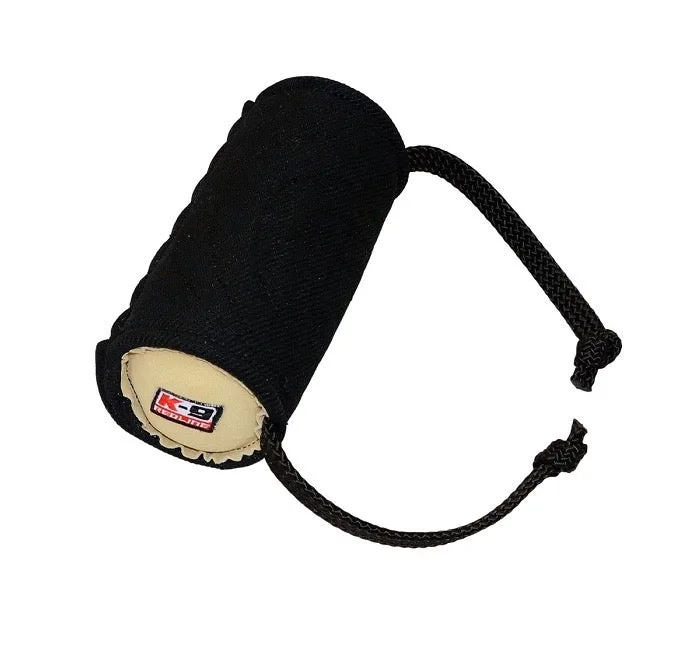
Redline Linen Bite Roll
Start each session with a warm-up on the roll, and always end on a positive note. With consistent practice, your dog will develop a strong, confident bite that transfers well to advanced bite work.