Quick answer
Start using a bunny push toy when your baby can stand with support, then guide them through short, supervised sessions to build confidence and balance.
Why a push toy works for first steps
Push toys offer stability and motivation for new walkers. Unlike stationary activity centers, they let babies practice forward motion while holding onto a handle, which builds core strength and coordination. The gentle resistance of a rolling toy also helps toddlers learn to control their pace.
The Bunny Push Toy from Wee Gallery is made from durable bamboo with a child-safe finish, making it sturdy enough for daily use. Its size is designed for little hands to grasp and carry, so it grows with your child from early pushing to independent walking.
When to introduce the push toy
Most babies are ready for a push toy between 9 and 12 months, when they can pull to stand and take a few steps while holding furniture. Introducing it too early—before your baby has trunk control—can lead to frustration or falls. Look for signs like cruising along the couch or standing unassisted for a few seconds.
Step-by-step guide to using the bunny push toy
- Step 1: Set up a safe practice space: Clear a flat, open area free of sharp corners, cords, and clutter. A hard floor or low-pile carpet works best—avoid thick rugs that can catch the wheels. Place the push toy in front of your baby while they stand holding a stable surface. A clear space prevents falls and lets your baby focus on the motion.
- Step 2: Demonstrate the motion: Kneel down and gently roll the toy back and forth to show your baby how it moves. Place their hands on the handle and guide it forward slowly. Let them push at their own pace—don't force the toy forward. Common mistake: pushing the toy for your baby instead of letting them initiate the movement.
- Step 3: Stay close and supervise: Walk behind or beside your baby with your hands hovering near their torso, not on the toy. This lets them feel independent while you catch them if they wobble. Keep sessions to 5–10 minutes to avoid fatigue. Over-supervised sessions can delay confidence; let your baby take small risks within reach.
- Step4: Celebrate small wins: Cheer and clap when your baby takes even a few steps with the toy. Positive reinforcement builds motivation. If they sit down or crawl away, don't worry—they're telling you they need a break. Pushing too hard can turn practice into frustration; follow your baby's cues.
Product spotlight
-
Bunny Push Toy: Made with durable bamboo and a child-safe finish, it's the perfect size for little ones to grasp, carry, and roll along with them as they grow. The sturdy bamboo construction ensures the toy won't tip easily during use, and the child-safe finish means you don't have to worry about harmful chemicals while your baby mouths or handles it.
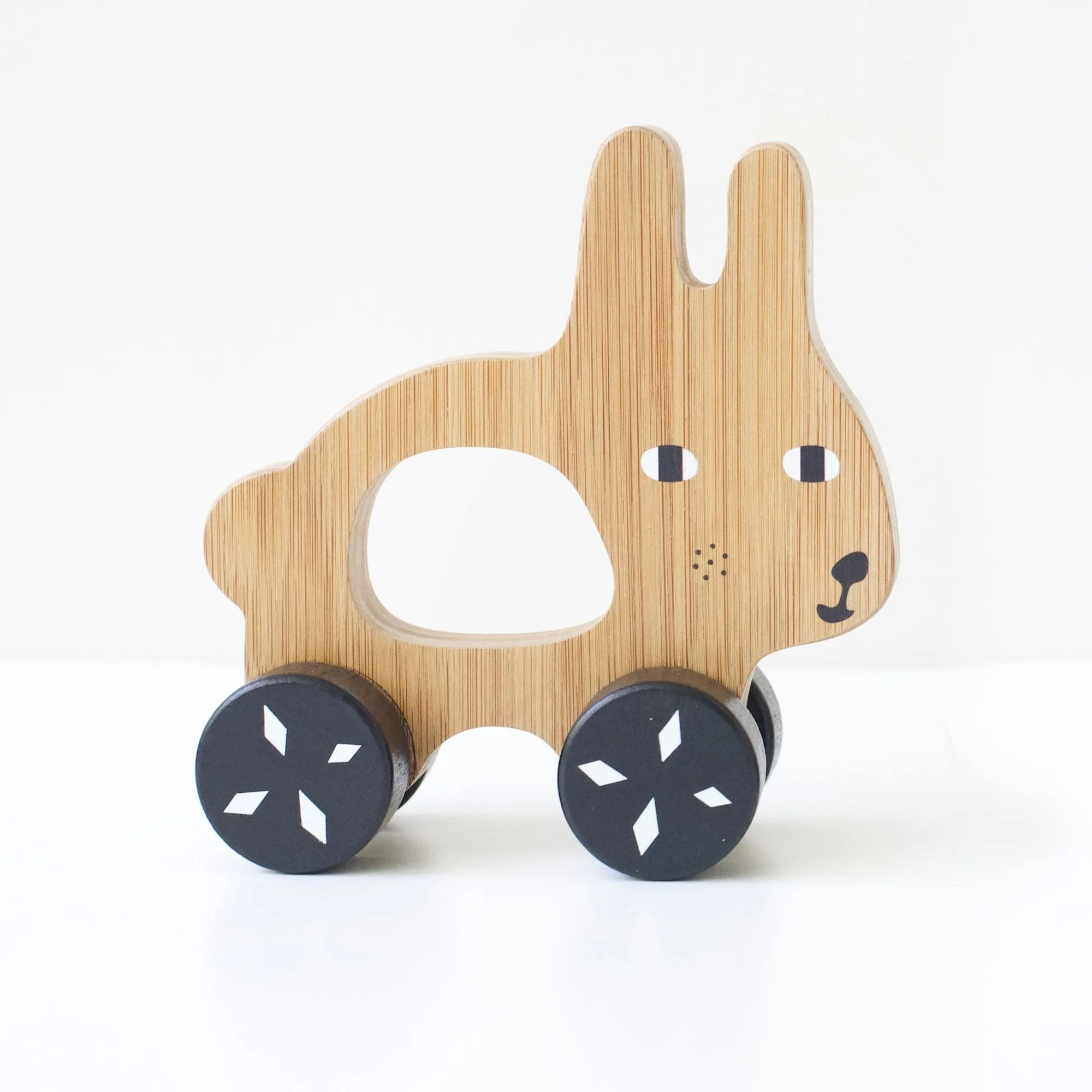
Bunny Push Toy