Quick Answer
Use a wooden driving console as a prop for open-ended role play: let your child take the wheel, create destinations, and act out driving scenarios to build creativity, language, and social skills.
Why a Driving Console Works for Toddlers
A driving console is more than a toy car dashboard—it's a stage for storytelling. Because it has no screens or preset sounds, your child decides where to go and what happens along the way. That freedom builds confidence and problem-solving skills naturally.
The simple design also invites cooperation. Siblings or friends can take turns being the driver, passenger, or even a traffic officer. This kind of role play teaches empathy and communication without needing a script.
Trade-Offs to Keep in Mind
Unlike electronic toy steering wheels, a wooden console doesn't produce engine sounds or light effects. Some children may initially look for audio feedback. You can easily add sound effects yourself or let your child invent them—this actually deepens imaginative engagement.
The console is best used on a flat surface or lap. If your child expects a full car seat experience, they may need a little guidance to see it as a prop rather than a vehicle.
5 Steps to Spark Imaginative Play with a Driving Console
- 1. Set the Scene: Place the driving console on a low table, couch cushion, or the floor. Ask your child, "Where should we drive today?" Let them choose a destination—a park, the moon, or Grandma's house. Common mistake: skipping the setup and just handing over the toy. A simple question invites your child into the story.
- 2. Add Sound Effects Together: Make engine noises, honk an imaginary horn, or say "vroom" as your child turns the steering wheel. Encourage them to copy you or invent their own sounds. Checkpoint: If your child stays quiet, start with a single sound like "beep beep" and pause for them to repeat it.
- 3. Introduce a Passenger: Grab a stuffed animal or doll and say, "Let's take Bunny to the store!" Hand the toy to your child and ask them to tell Bunny about the trip. This builds empathy and conversation skills. Common mistake: making the passenger the driver. Let your child stay in control of the wheel.
- 4. Create Road Challenges: Say "Oh no, a big puddle!" or "The bridge is up—what do we do?" Let your child decide whether to stop, go around, or wait. This teaches problem-solving and flexibility. Checkpoint: If your child seems stuck, offer two simple choices ("Should we go left or right?") to keep the story moving.
- 5. Switch Roles: After a few minutes, ask if you can be the driver. Let your child be the passenger or a traffic officer giving directions. Role reversal builds perspective-taking and extends playtime. Common mistake: staying in one role too long. Switching keeps the play fresh and teaches cooperation.
Product Highlight
-
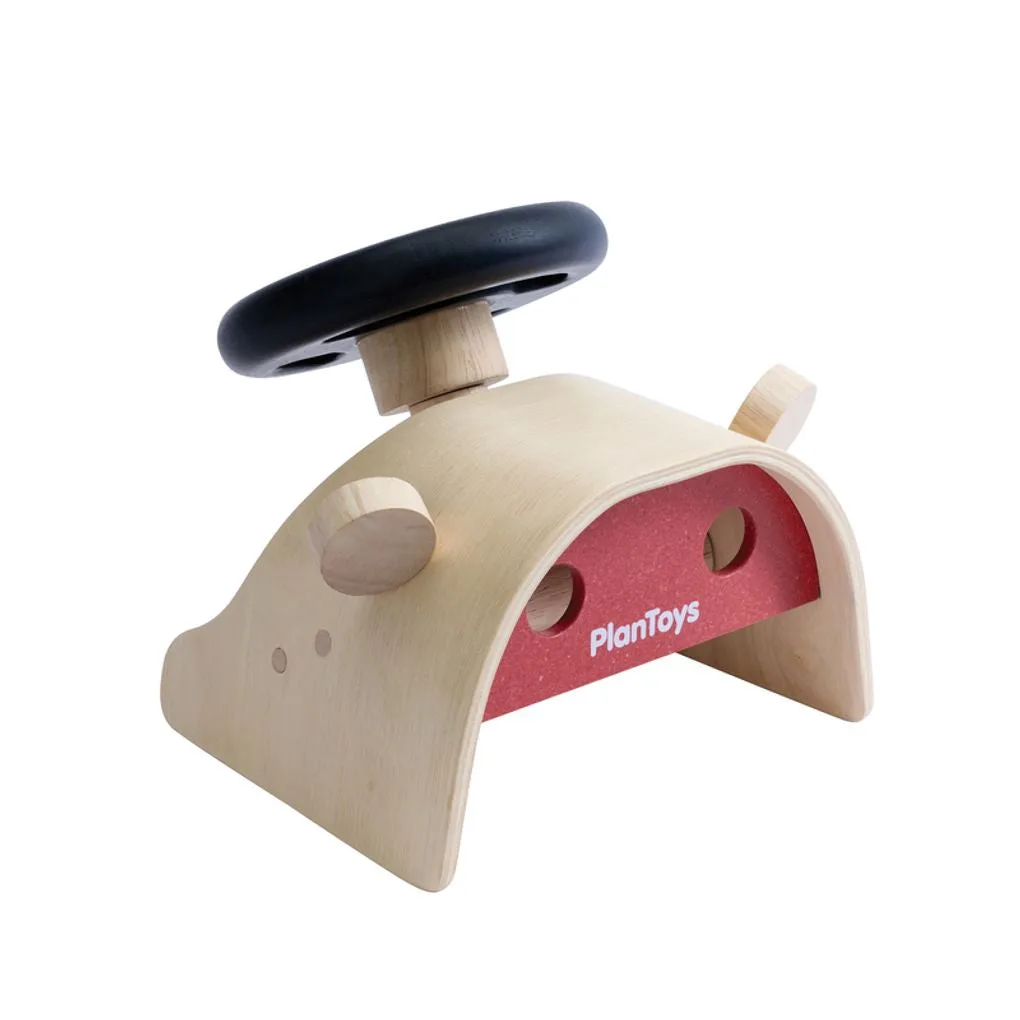
Driving Console: The PlanToys Driving Console invites children to role-play as drivers on exciting adventures—imagining routes, destinations, and stories of their own. This open-ended design lets your child practice language and social skills naturally during play, without needing batteries or a script.
Driving Console