Quick answer
Pack your lay-flat toiletry bag by grouping items into three flat zones: leak-prone liquids on one side, dry tools in the middle, and small essentials in the remaining space. Keep the bag under half-full so it can actually lie flat, and choose a clear or see-through style so you can confirm everything at a glance before you zip it.
A lay-flat toiletry bag only works when you pack it flat, not stuffed. Most people overfill the bag, then wonder why it bulges in a carry-on and forces them to dig for a toothbrush at midnight. The fix is a repeatable packing order that respects the bag's shape.
This guide walks through a short-trip routine you can reuse for weekenders, overnight work trips, and carry-on-only flights. It also covers which bag styles make flat packing easier and where a clear cosmetics case fits into the system.
Start with the bag shape, not the contents
A true lay-flat toiletry bag opens like a book and sits flat on a counter or hotel shelf. Before you pack anything, open it fully and look at how the interior is divided. If one side has a clear panel or mesh window, that side is built for items you need to spot quickly. If the other side is solid, it is better for tools and dry goods.
The most common mistake is treating a lay-flat bag like a deep pouch. If you fill it vertically and zip it shut, the hinge cannot fold and the bag becomes a lump. Decide which side is 'wet' and which is 'dry' before the first item goes in, and keep that split consistent every trip.
- Checkpoint: lay the empty bag flat on a table. If it will not sit flat when empty, it will not sit flat when full.
Pack liquids on the leak side, standing or sealed
Put shampoo, conditioner, sunscreen, and any other liquids on the side you designated as wet. Keep bottles upright relative to the bag's folded position, and tighten caps before they go in. A lay-flat bag protects against leaks mainly by limiting movement, so bottles should fit snugly enough that they do not slide around.
If a bottle is more than half empty, decant it into a smaller container rather than bringing the full size. Short trips rarely need full-size products, and smaller bottles keep the bag flat. Wipe each bottle neck with a tissue before packing so residue does not transfer to the fabric.
- Common mistake: packing a nearly full 3 oz bottle next to a zipper. Pressure from a packed carry-on can push product out through the threads.
Keep dry tools in the middle zone
Brushes, combs, tweezers, nail clippers, and razors belong in the middle or on the dry side. These items are rigid, so they should sit parallel to the bag's long edge rather than crossing the fold. A brush laid across the hinge is the fastest way to stop a lay-flat bag from closing cleanly.
For razors, keep the blade guard on and place the razor in a small sleeve or pouch so it cannot scratch a mirror or snag fabric. If your bag has elastic loops, use them for slim tools. Loops keep items from shifting, which matters more in a flat bag than in a deep one.
- Checkpoint: close the bag halfway and look for any rigid item crossing the center fold. Move it if you see one.
Use small pouches for the loose pieces
Hair ties, bobby pins, cotton swabs, and travel-size pills disappear in a flat bag unless they are contained. A small zip pouch or a clear cosmetics case keeps these items together and makes the bag easier to repack on the way home. Clear containers also let you confirm contents without opening everything.
This is where a see-through case earns its place. The Medium Clear Cosmetics Case is designed to keep beauty essentials visible and easy to access, and it fits neatly into a carry-on. Used inside a larger lay-flat bag, it creates a second layer of organization rather than competing with the main bag.
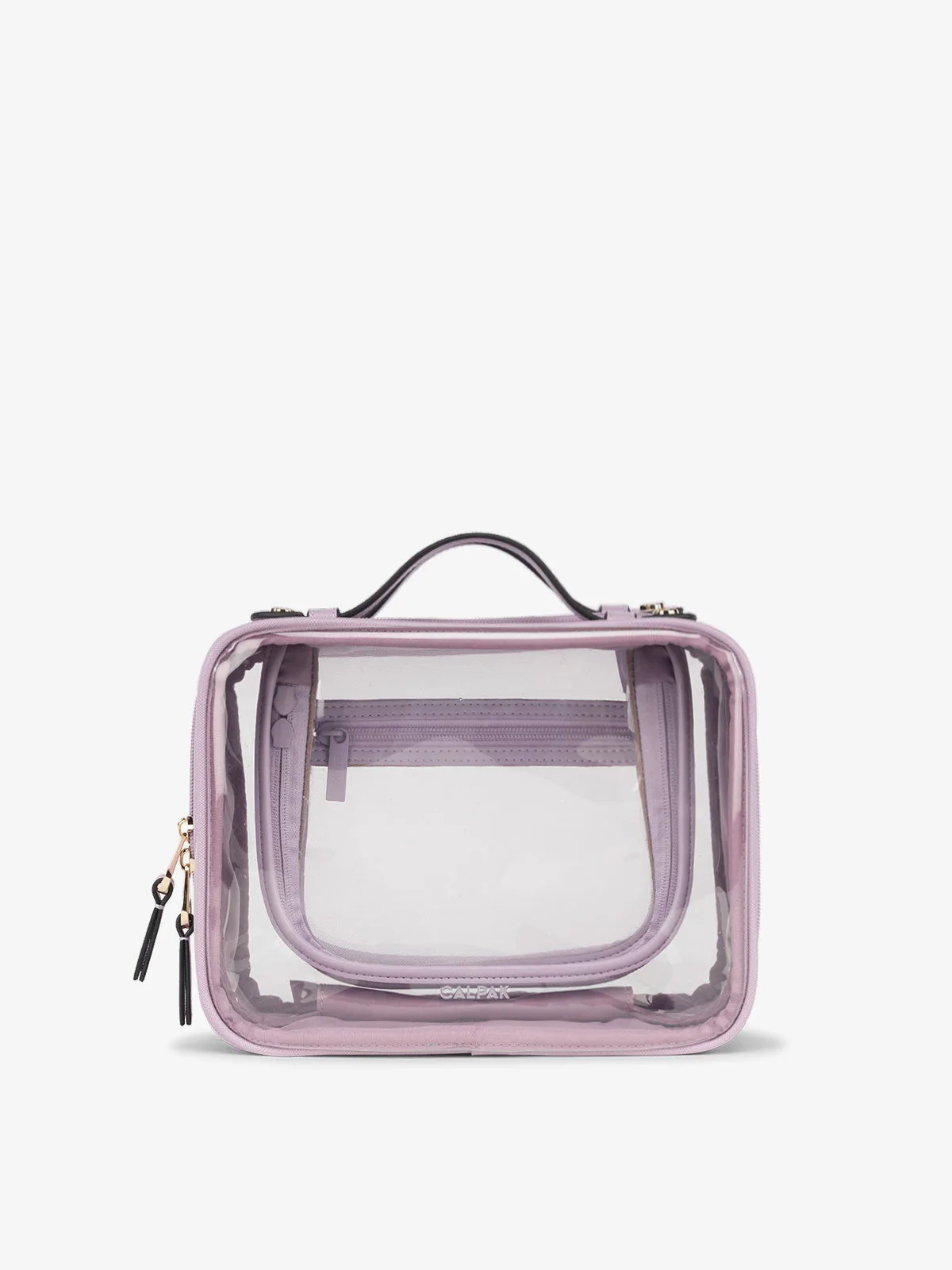
Medium Clear Cosmetics Case
- Tip: label nothing you can see through. Clear cases remove the need for guessing.
Fold, compress, and test the fit
Once both sides are packed, fold the bag along its hinge and press gently. It should close without force. If you have to push, remove one item rather than rearranging everything. A bag that closes under tension will stay compressed in your luggage and may crease soft packaging.
Then test the real fit. Slide the closed bag into the spot it will occupy in your carry-on or weekender. If it only fits at an angle, your bag is overpacked. Flat packing is about maintaining the bag's footprint, so the final check is whether it still lies flat inside the luggage.
- Common mistake: packing the toiletry bag last, when the luggage is already full. Pack it early, then build soft items around it.
Repack the same way on the return trip
The return trip is where organization usually collapses. Keep the same wet side and dry side, even if you are in a hurry. If a bottle leaked, wipe the interior before closing the bag so the residue does not set into the lining.
A lay-flat bag that gets repacked consistently lasts longer and stays pleasant to open. If you travel often, keep a small set of duplicate toiletries already packed in the bag so you never rebuild it from scratch.
- Checkpoint: before zipping for the trip home, confirm no wet item is resting against a dry item.
Short-trip lay-flat packing steps
- Open the bag flat and assign sides: Lay the empty bag on a table and decide which side holds liquids and which holds dry tools. Keep that split for the whole trip. If the empty bag does not sit flat, no packing method will fix it.
- Load leak-prone liquids first: Tighten caps, wipe bottle necks, and place liquids on the wet side so they stay upright when the bag folds. Decant anything more than half empty into a smaller bottle.
- Lay rigid tools parallel to the fold: Place brushes, razors, and clippers along the long edge, not across the hinge, and use elastic loops where available. Any rigid item crossing the center fold will stop the bag from closing flat.
- Contain small loose items in a clear pouch: Group hair ties, pins, and swabs in a small zip pouch or clear case so they do not scatter inside the bag. Clear containers let you check contents at a glance.
- Fold, press, and test the fit in your luggage: Close the bag without forcing it, then slide it into its final spot in your carry-on or weekender. If it only fits at an angle, remove one item and try again.
- Repack the same way before heading home: Wipe any leaks, keep the wet and dry sides separate, and close the bag only when nothing wet touches anything dry. Consistent repacking keeps the lining clean and the bag flat for the next trip.
Products that support flat toiletry packing
- Medium Clear Cosmetics Case: Clear, see-through design that keeps beauty essentials visible and easy to access, and fits neatly into a carry-on. Visibility means you can confirm contents without unpacking, and the compact size keeps a lay-flat bag from bulging.
- Colette 15" Canvas Laptop Tote: Crafted from durable, water-resistant canvas with a padded laptop sleeve and multiple interior pockets. A water-resistant tote with interior pockets gives a toiletry bag a protected, separate spot on work-to-weekend trips.
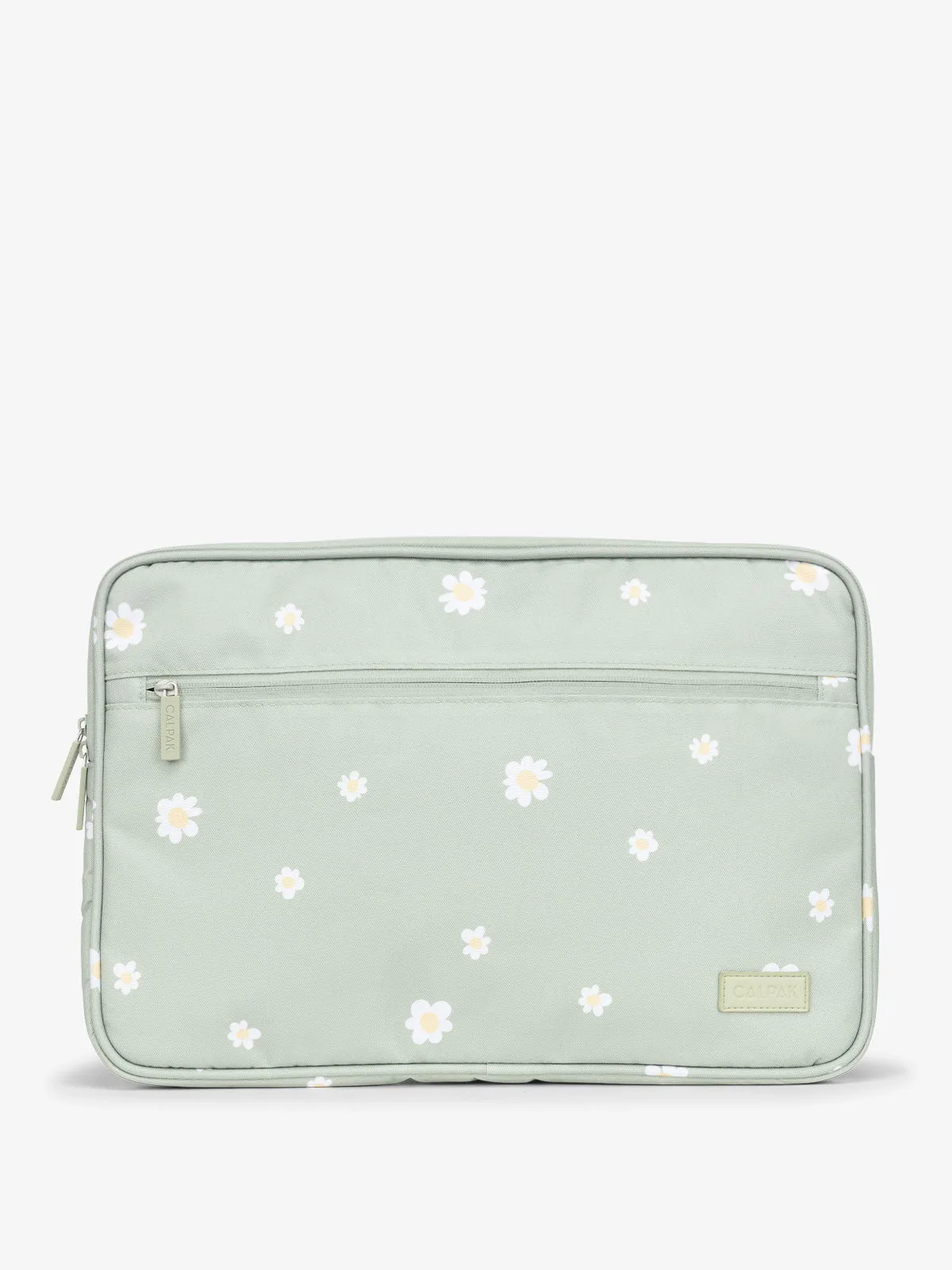
padded laptop sleeve
A lay-flat toiletry bag rewards a simple routine: assign sides, pack liquids first, keep rigid tools parallel to the fold, and contain the small pieces. Do that, and the bag stays flat, opens without digging, and fits your short-trip luggage the same way every time.