Quick answer
Use a long handle dish brush by holding the handle near the end for leverage, scrubbing with the bristles at a slight angle, and rinsing the brush after each use. Proper technique keeps your hands dry and reduces strain.
Why a long handle dish brush helps
A long handle dish brush keeps your hands out of greasy water and away from sharp utensils. The extra length also gives you better leverage, so you don't have to scrub as hard to remove stuck-on food.
The main trade-off is that a long handle can feel less precise for small items like wine glasses. For those, you may want to switch to a smaller brush or sponge.
How to use a long handle dish brush
- 1. Prepare the brush and sink: Fill the sink with warm, soapy water. Dip the brush bristles into the water to wet and soften them. This helps prevent scratching and makes the soap lather more easily. Avoid using the brush dry; it can scratch non-stick pans and wear down bristles faster.
- 2. Hold the handle near the end: Grip the handle close to the bottom, away from the bristles. This gives you maximum leverage and keeps your hand out of the water. Use your other hand to hold the item being washed steady. A common mistake is gripping too close to the bristles, which reduces leverage and puts your hand closer to the mess.
- 3. Scrub with the bristle tips: Angle the brush so the bristle tips make contact with the surface. Use a back-and-forth or circular motion. The long handle lets you apply more force without straining your wrist. Pressing too hard can bend the bristles and reduce cleaning efficiency. Let the brush do the work.
- 4. Rinse the brush after each use: After washing dishes, rinse the brush under hot running water to remove food particles and soap residue. Shake off excess water and store it upright or hanging to air dry. Leaving the brush wet in a dish rack can trap moisture and lead to bacterial growth. Always allow it to dry completely.
- 5. Replace the brush when bristles fray: Check the bristles every few weeks. When they start to bend, fray, or lose stiffness, it's time for a new brush. A worn brush doesn't clean effectively and can harbor bacteria. Don't wait until the brush looks terrible. Replacing it every 2-3 months keeps your kitchen hygiene in check.
Product facts
-
Long Handle Dish Brush: This long-handled dish brush is designed to make cleanup a little easier, keeping hands out of the mess while giving you the control you need for a thorough scrub. The simple design means you can focus on scrubbing without worrying about wet sleeves or bending over the sink.
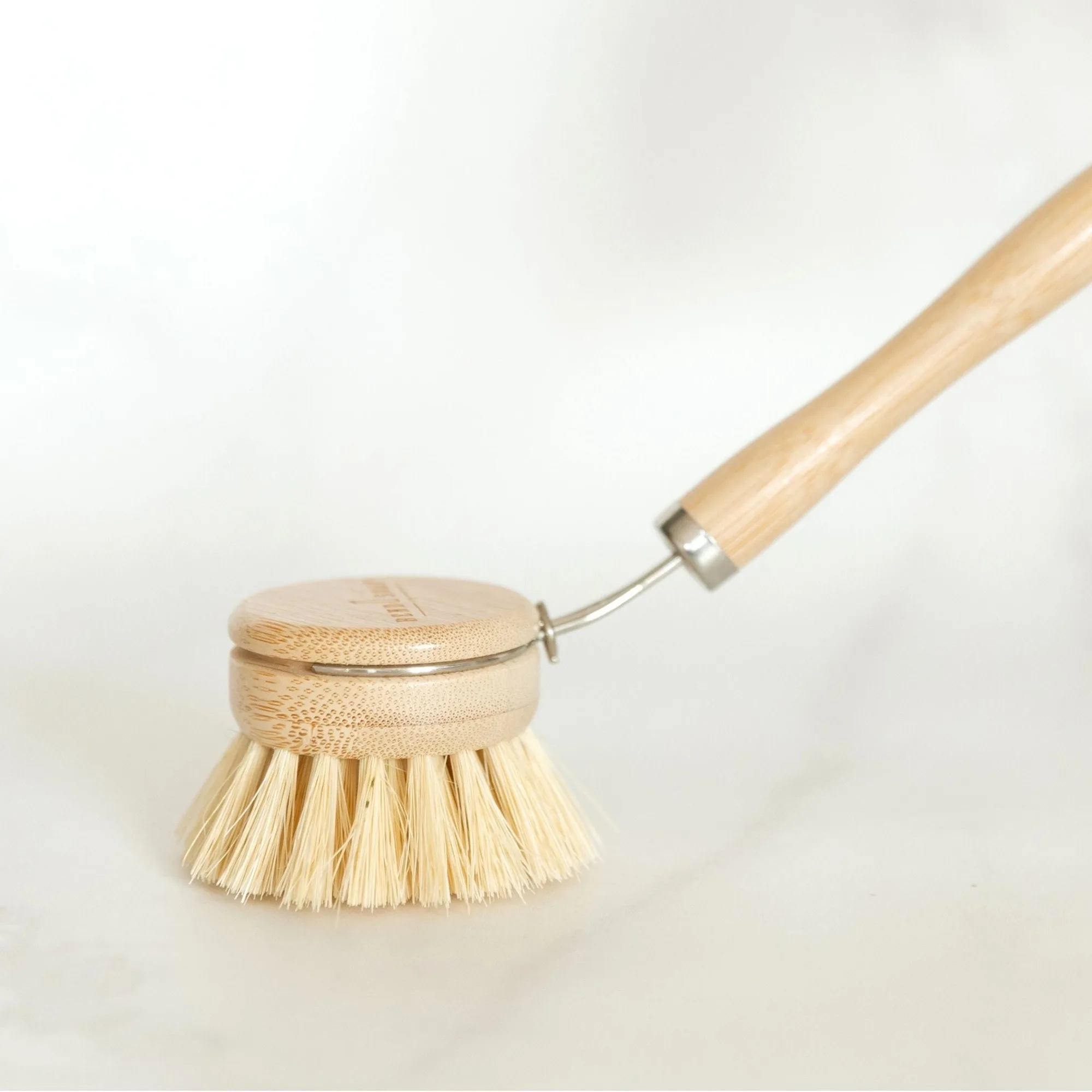
Long Handle Dish Brush