Quick answer
A silicone threading board helps kids build fine motor skills and focus by pushing, twisting, and threading soft strands into a ridged surface. Follow these steps to get the most out of this calming activity.
Why use a threading board for fine motor skills?
Threading activities require precise finger movements and hand-eye coordination, which directly strengthen the small muscles in the hands. The silicone material adds gentle resistance without causing frustration, making it ideal for children who struggle with traditional lacing boards or need a sensory-friendly option.
Classroom calm-down activity
Teachers can place a threading board in a calming corner or use it during transitions. The repetitive push-and-pull motion naturally lowers heart rate and redirects restless energy. It works best when paired with a quiet timer (5–10 minutes) and a visual cue that signals the end of the activity.
How to use a silicone threading board
- Set up the board on a flat surface: Place the silicone threading board on a desk or table in a quiet area. Make sure the child is seated comfortably with both feet on the floor. A cluttered or noisy environment can reduce the calming effect. A stable, quiet setup helps the child focus on the threading motion.
- Choose a starting point: Hold one silicone strand and push it through a hole near the edge of the board. Pull it through from the other side until about an inch remains. Common mistake: trying to thread a strand that is too long—cut it to a manageable length if needed. Start with short strands to avoid tangles and frustration.
- Create a pattern or free-form design: Continue threading the strand through adjacent holes to make a line, curve, or shape. For beginners, simple vertical or horizontal lines work best. Advanced users can cross strands or weave them for more complexity. Let the child choose the pattern to maintain engagement and ownership of the activity.
- Secure the ends: Once the strand is fully threaded, press the end into the last hole or tuck it under the board to prevent slipping. Check that no loose ends are sticking out—they can distract or cause the strand to come undone. Securing ends keeps the design intact and prevents frustration.
- Clean up and store properly: After use, remove all strands and store them with the board in a zip bag or container. Silicone can attract dust and lint; rinse the board with warm water and mild soap if needed, then air dry completely. Proper storage extends the life of the board and keeps it ready for the next calm-down session.
Product facts
-
Sensory Play Board | Silicone Threading Board: Silicone Threading Board – Twist, Press and Create for Calm and Focus. A Tactile Fine Motor Tool for Fidgeting, Focus and Fun. The soft silicone strands and ridged board provide just enough resistance to build finger strength while keeping hands busy and minds calm.
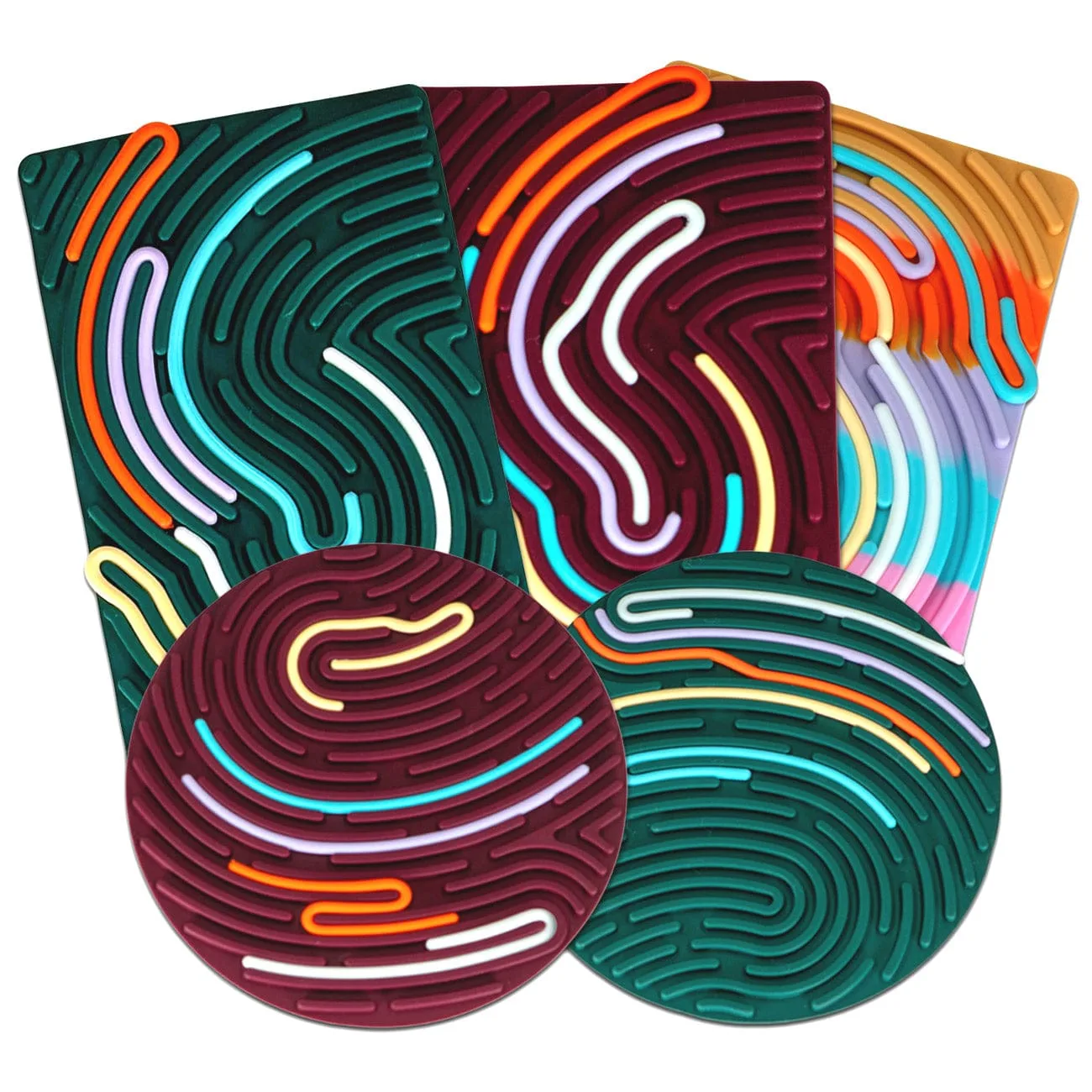
Sensory Play Board | Silicone Threading Board