Quick Answer
To use a slam ball for full body workouts, start with dynamic warm-up moves like overhead slams and rotational throws, then progress to compound exercises such as squat-to-press and lunge twists. Always control the eccentric phase and choose a ball weight that allows 8-12 reps with good form.
Why a Slam Ball Works for Full Body Training
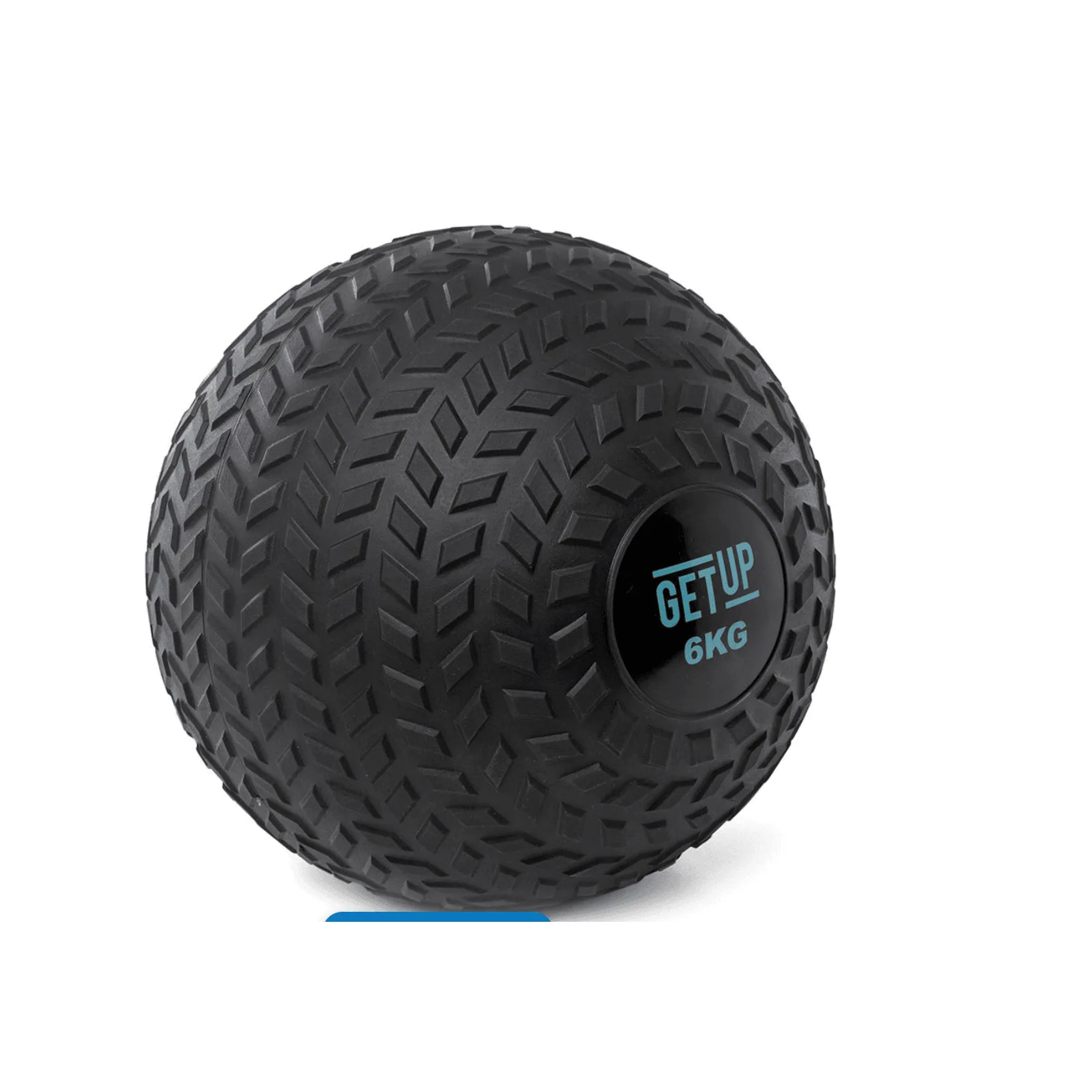
Unlike a standard medicine ball, a slam ball is designed to absorb impact without bouncing, making it ideal for explosive movements. The weighted ball engages your core, arms, shoulders, and legs simultaneously, turning each rep into a full body effort. The textured finish on models like the GetUp Slam Ball provides a secure grip even during high-intensity sets.
A common concern is that slam balls are only for slamming. In reality, they are versatile tools for presses, rotations, and carries. The key is to treat the ball as an unstable load that forces your stabilizer muscles to work harder than with dumbbells or kettlebells.
Choosing the Right Weight for Your Goal
Select a weight that challenges you without compromising form. For power-focused work (e.g., overhead slams), a heavier ball like the GetUp Slam Ball 6kg builds explosive strength. For endurance or high-rep circuits, a lighter ball (4-6 kg) allows faster movement and more repetitions.
If you are new to slam ball training, start with a weight you can control for 10 controlled reps. The sand-filled construction of the GetUp Slam Ball eliminates bounce, so you can focus on the concentric drive without worrying about the ball rebounding into your face.
How to Use a Slam Ball: Step-by-Step
- 1. Overhead Slam: Stand with feet shoulder-width apart, hold the ball overhead with both hands. Engage your core and slam the ball down to the floor in front of you as hard as you can. Catch it on the rebound (if it bounces) or pick it up quickly and reset. Common mistake: letting the arms do all the work. Drive the slam from your hips and legs, not just your shoulders.
- 2. Squat to Press: Hold the ball at chest height with elbows bent. Lower into a squat, keeping your chest up. As you stand, press the ball overhead in one smooth motion. Lower the ball back to your chest and repeat. Checkpoint: keep your wrists straight during the press to avoid strain. If your lower back arches at the top, reduce the weight.
- 3. Rotational Throw (against wall or partner): Stand sideways to a sturdy wall (or a partner). Hold the ball with both hands at hip height. Rotate your torso away from the wall, then forcefully rotate back and release the ball toward the wall. Catch or retrieve and repeat on both sides. Common mistake: using only your arms to rotate. Initiate the rotation from your hips and core for power and to protect your lower back.
- 4. Lunge Twist: Hold the ball at chest height. Step forward into a lunge with your right leg. As you lower, rotate your torso to the right, keeping the ball close to your chest. Return to center as you push back to standing. Alternate legs. Checkpoint: your front knee should stay aligned with your ankle. Avoid twisting your knee; the rotation comes from your torso.
- 5. Slam Ball Burpee: Place the ball on the floor. Squat down, place your hands on the ball, and jump your feet back into a plank. Perform a push-up (optional), then jump your feet forward. Stand up, pick up the ball, and perform an overhead slam. Repeat. Common mistake: rushing the plank position. Keep your core tight and hips level to avoid sagging your lower back.
Product Facts
-
GetUp Slam Ball - 6kg: The GetUp Slam Ball is made with sturdy rubber and sand inside, so it does not rebound. This non-bounce design lets you perform explosive slams safely without the ball bouncing back unpredictably, making it ideal for high-intensity intervals and home gyms with limited space.
GetUp Slam Ball - 6kg