Quick answer
Start by placing a slow feed bowl on a non-slip surface and filling it with your dog's regular food. Supervise the first few meals to ensure your dog adapts without frustration.
Why slow feeding matters for fast eaters
Dogs that inhale their food risk choking, vomiting, and a life-threatening condition called gastric dilation-volvulus (bloat). A slow feed bowl forces your pup to work around raised ridges or fins, which naturally extends mealtime and encourages proper chewing.
Choosing between a bowl and an insert
A built-in slow feed bowl (like the Mighty Paw Slow Feed Bowl) is a dedicated vessel with an integrated maze pattern, ideal for dogs that need a fixed solution. A slow feeder insert (such as the Mighty Paw Slow Feeder Bowl Insert) fits any existing bowl and is easier to clean, but may slide around if not secured.
Transitioning your fast eater gradually
Some dogs get frustrated by the new challenge. Mix a small amount of kibble in the slow feeder alongside their regular bowl, then increase the slow feeder portion over 3-5 days. This reduces stress and helps your dog see the bowl as a positive mealtime tool.
Step-by-step guide to using a slow feed bowl
- Step 1: Choose the right surface: Place the slow feed bowl on a non-slip mat or towel to prevent it from sliding during use. A stable bowl reduces spills and keeps your dog focused on eating slowly. If the bowl moves, your dog may knock it over or become frustrated.
- Step 2: Fill with your dog's regular food: Use the same kibble your dog is used to. Avoid adding wet food or toppers initially, as they can fill the ridges and reduce the slowing effect. Stick to dry food first. Even amounts up to 3 cups (for the Mighty Paw Slow Feed Bowl) ensure the maze pattern remains effective.
- Step 3: Supervise the first few meals: Watch your dog as they eat. Some fast eaters may try to flip the bowl or paw at the food. Gently redirect them back to the bowl and offer praise when they eat calmly. If your dog shows signs of stress, take a break and try again later.
- Step 4: Gradually increase challenge: Once your dog is comfortable, you can add a small amount of wet food or use the slow feeder for both meals. For an added mental challenge, scatter treats among the ridges. Avoid overfilling—excess food may bypass the maze and let your dog eat too quickly again.
Product facts
-
Slow Feed Bowl: The Mighty Paw Slow Feed Dog Bowl uses an interactive maze pattern with raised ridges of varying heights to slow eating. This design forces your dog to navigate around the ridges, naturally extending mealtime and reducing gulping.
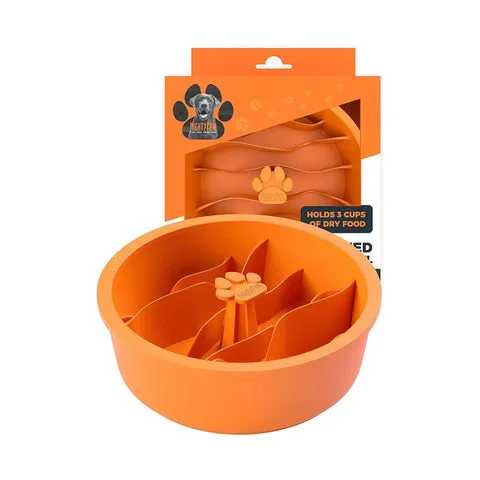
Slow Feed Bowl
-
Slow Feeder Bowl Insert: The Mighty Paw Slow Feeder Bowl Insert features six interactive floppy fins and two unique textures to fit any bowl. It's a versatile option for households that want to use existing bowls, with textured fins that challenge your dog's eating pace.
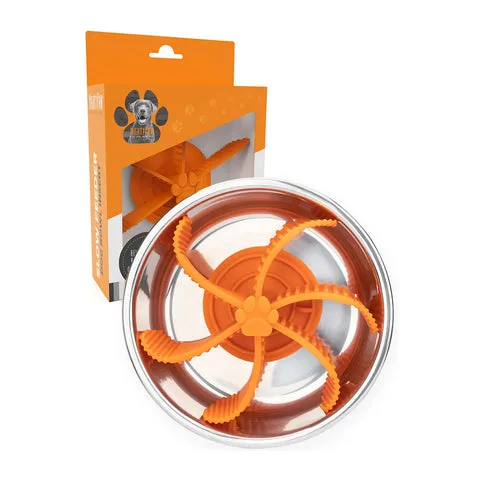
Slow Feeder Bowl Insert