Quick answer
Use the Around the House Sound Puzzle to pair everyday sounds with spoken words, helping your toddler build vocabulary through hands-on, auditory play.
Why sound puzzles work for speech development
Toddlers learn language best when they can connect a word to a real experience. The Around the House Sound Puzzle gives each room a distinct sound—like a sizzling pan in the kitchen or a car engine in the garage—so your child hears the noise as they lift the piece. That direct link between sound, object, and word makes new vocabulary stick faster than a picture alone.
The puzzle also encourages repetition without boredom. Each time your child replaces a piece, the sound stops, creating a natural pause. You can use that moment to say the word again, ask a question, or let your child try saying it themselves.
When to start and what to expect
The puzzle is recommended for ages two and up. At this stage, most toddlers have a few dozen words and are adding new ones daily. They may not say every word clearly at first, but hearing the sound and seeing the picture builds comprehension long before perfect pronunciation arrives.
Expect short attention spans—two to five minutes per session is normal. The goal is playful exposure, not drilling. If your child wants to move on, let them. You can always come back later.
Steps to teach everyday words with the sound puzzle
- Introduce one room at a time: Start with just two or three pieces that represent familiar places, like the kitchen and bedroom. Place the puzzle in front of your child and lift the first piece together. When the sound plays, say the name of the room clearly: "Kitchen!" Then point to the picture and repeat the word. Keep the session short—two rooms is plenty for a first try. Common mistake: Lifting all pieces at once. That overwhelms a toddler with too many sounds and words at the same time.
- Name the action or object in the sound: Once your child recognizes the room, focus on the specific sound. For the kitchen, say "Sizzle—the pan is cooking breakfast!" For the garage, say "Vroom—the car is starting!" Use the same phrase each time so the word becomes predictable. After a few repetitions, pause before the key word and see if your child tries to fill it in. Checkpoint: If your child points or makes a sound, celebrate that attempt—it shows they are connecting the sound to the word.
- Ask simple questions as vocabulary grows: After your child is comfortable with a few rooms, start asking: "Which room has the car?" or "Where is the breakfast sound?" Let them lift the piece to check. If they choose wrong, just say the correct word and try again later. This builds listening comprehension without pressure. Common mistake: Correcting errors too firmly. Toddlers learn through trial; a neutral "Let's try the kitchen!" keeps it fun.
- Mix puzzle play with real-life practice: Use the puzzle sounds as a springboard for everyday conversations. When you are actually in the kitchen cooking, say "Remember the sizzle sound? That's the pan!" When you start the car, say "Vroom! Just like the puzzle!" This bridges the puzzle world to real life, reinforcing the words in context. Checkpoint: Notice if your child starts saying the word spontaneously during real-life moments—that is a sign the vocabulary has truly stuck.
Product facts
-
Around the House Sound Puzzle - 8 Pieces: Lift one of the eight peg puzzle pieces to see and hear what’s happening in each room of this busy house. Replace the piece to immediately stop the sound and move to the next room. This on/off sound control lets you repeat a word as many times as your toddler needs without rewinding or resetting, making it ideal for vocabulary practice.
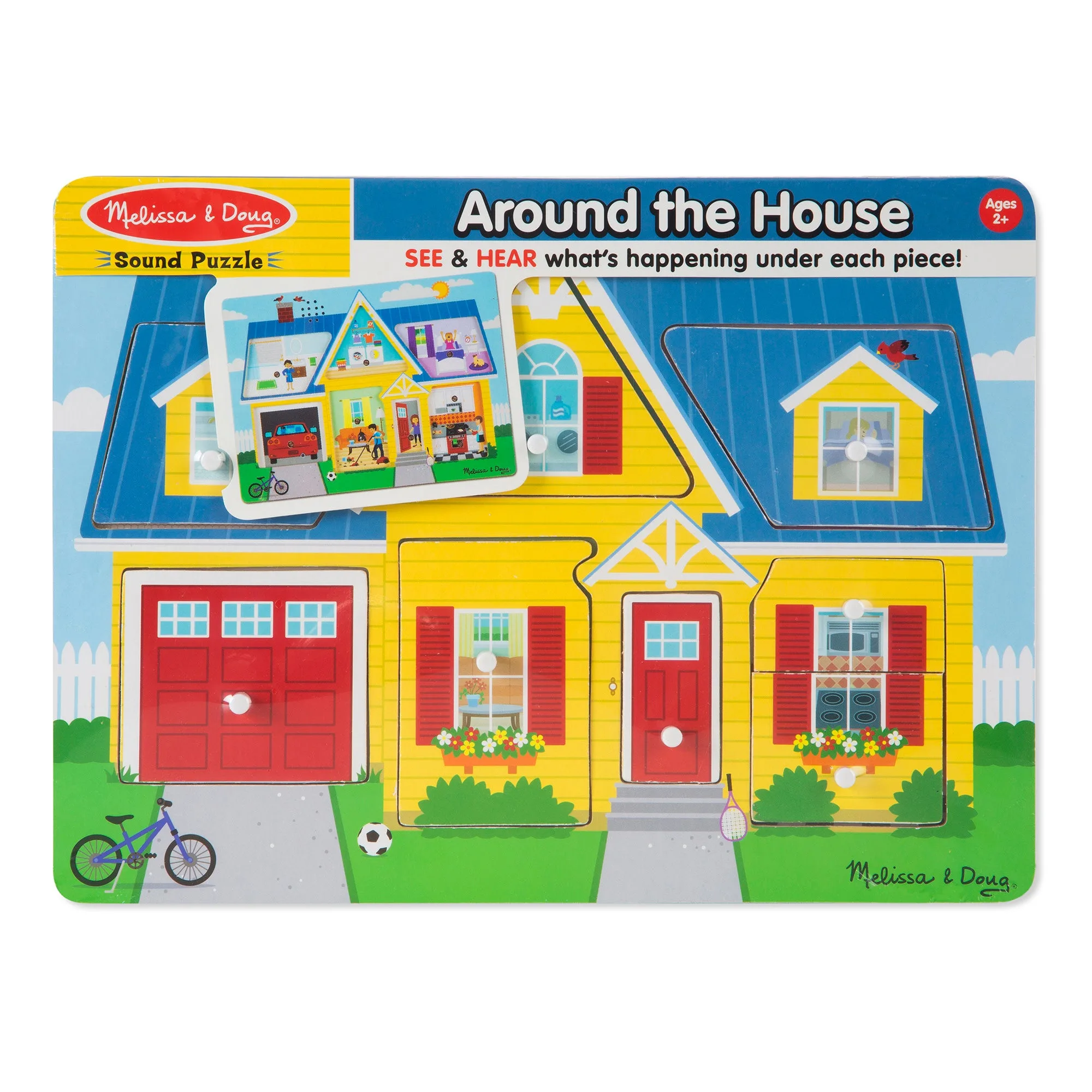
Around the House Sound Puzzle - 8 Pieces