Quick answer
To use a tow strap for vehicle recovery, attach it to secure recovery points on both vehicles, drive smoothly to take up slack, and pull steadily without jerking.
Why a dedicated tow strap beats a chain or rope
Tow straps are engineered to stretch slightly under load, storing energy that helps free a stuck vehicle without the sudden snap of a chain. Chains can cause severe damage or injury if they break, and standard ropes lack the abrasion resistance needed for off-road recovery. A proper recovery strap also has printed instructions and rated capacity, so you know its limits before you pull.
How to use a tow strap for vehicle recovery
- 1. Inspect the strap and recovery points: Check the tow strap for cuts, fraying, or chemical damage. On both vehicles, locate factory-installed tow hooks or recovery points — never attach to a bumper, axle, or suspension component. A common mistake is hooking to a chrome bumper, which can tear off and become a projectile. Use only rated recovery points; avoid ball hitches and bumpers.
- 2. Attach the strap securely: Feed the strap loop through the recovery point and back over itself (a loop-to-loop connection) or use a rated shackle. Ensure the strap lies flat without twists. A common mistake is using a knot, which reduces strap strength by up to 50%. Never tie knots in a tow strap.
- 3. Place a damper or blanket over the strap: Drape a heavy blanket, jacket, or purpose-made damper over the middle of the strap. If the strap breaks, the weight absorbs energy and prevents whipping. A common mistake is skipping this step, which is the leading cause of injury in recoveries. Always use a damper — even on short pulls.
- 4. Take up slack slowly: The pulling vehicle should drive forward gently until the strap is taut but not under tension. A common mistake is gunning the engine immediately, which creates a violent jerk that can snap the strap or damage both vehicles. Slow and steady wins the recovery.
- 5. Pull steadily — do not jerk: Once the strap is taut, apply smooth, steady power. If the stuck vehicle does not move after a few seconds, stop and reassess. A common mistake is repeated jerking, which fatigues the strap and risks sudden failure. If it doesn't move, dig or use traction aids instead of forcing it.
- 6. Disconnect and store the strap properly: After recovery, remove the strap, coil it loosely, and store it in a dry bag away from sunlight and chemicals. A common mistake is leaving a muddy or wet strap wadded up, which promotes mildew and weakens the fibers. Clean and dry the strap before storing.
Recommended gear for safe recovery
-
The Extractor - Tow Strap: Rated to over 17,600 pounds of pulling force — nearly four times the weight of a Ford F-150. This high rating gives you a wide safety margin for most SUVs and trucks, reducing the risk of strap failure during a hard pull.
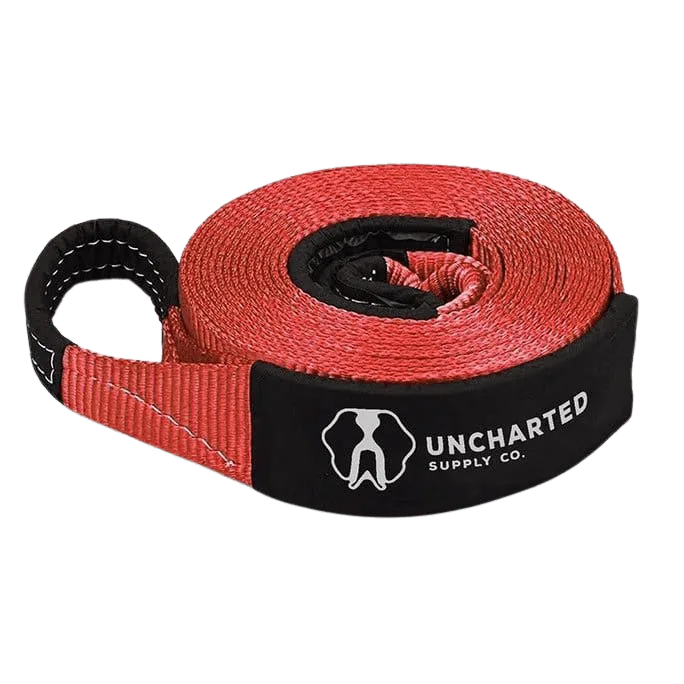
The Extractor - Tow Strap