Quick Answer
Use a training whip for decoy work by gripping near the handle's base, targeting the dog's drive zones with the popper, and practicing controlled flicks to avoid injury or overstimulation.
Why Whip Technique Matters in Decoy Work
A training whip isn't a punishment tool—it's a targeting aid that builds drive and precision. Poor technique can confuse the dog or cause accidental contact, so mastering the basics protects both the decoy and the dog.
Step-by-Step: Using a Training Whip for Decoy Work
- Step 1: Grip and Stance: Hold the whip near the base of the handle, not the middle. Keep your wrist loose and your feet shoulder-width apart for balance. A tight grip reduces whip control—practice with a relaxed hand.
- Step 2: Target the Drive Zones: Aim the popper toward the dog's shoulder or flank, not the head or legs. This simulates a bite target without causing pain. Hitting the head can shut down drive; always target the body.
- Step 3: Execute a Controlled Flick: Snap your wrist forward and stop abruptly. The popper should crack near the target zone without wrapping around the dog. A full-arm swing is slower and less accurate—use wrist action alone.
- Step 4: Read the Dog's Response: If the dog backs off, reduce intensity or switch to a different reward. If the dog engages harder, continue building drive. The whip is a gauge—adjust based on the dog's confidence, not your own timing.
Decoy Equipment Spotlight
-
Redline Leather Protection Training Whip 23": Covered with chap leather with a Delron core and a standard rope lash and popper. The chap leather covering provides durability and a realistic feel, while the Delron core gives the whip enough stiffness for a loud pop without being too flexible.
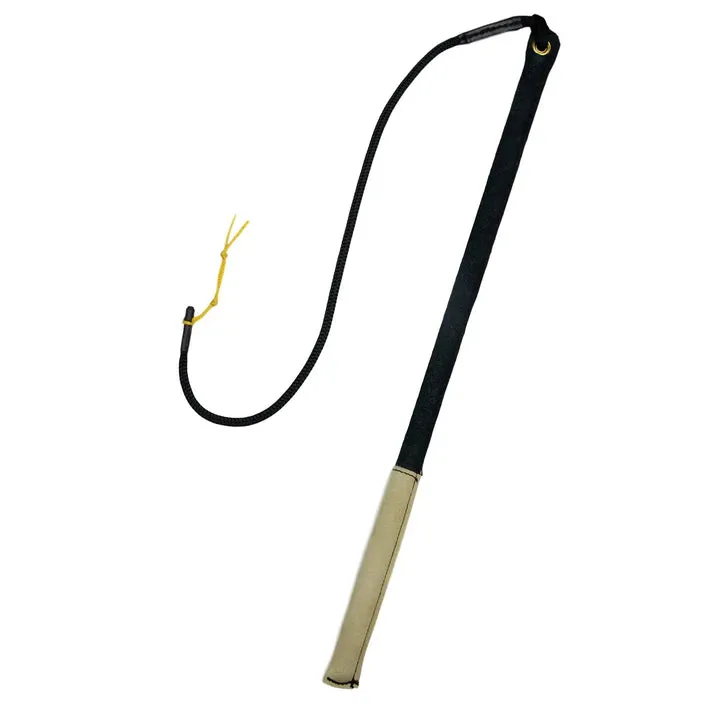
Redline Leather Protection Training Whip 23"