Quick answer
Start by picking one card per day, then help your child say the affirmation aloud and connect it to a real moment from their day. This builds a habit of positive self-talk without pressure.
Why a consistent routine matters
Children absorb emotional language best when it's repeated in a calm, predictable setting. The A-Z cards are designed to be used one letter at a time, so the routine itself becomes a grounding moment. A common mistake is trying to use too many cards at once, which can overwhelm a child and turn a mindful practice into a chore.
Adapting the cards to different ages
For preschoolers (ages 3-5), focus on the card's picture and repeat the affirmation as a call-and-response. For early elementary kids (ages 6-8), ask them to explain what the affirmation means in their own words. Older children (9+) can journal about how the affirmation applies to their day. Avoid skipping the explanation step—without it, the cards become just words instead of tools for emotional growth.
Step-by-step routine
- Choose one card for the day: Let your child pick a card from the deck, or start with the letter that matches their name or current challenge. Avoid letting them pick more than one card per session—this keeps the focus on depth, not quantity. If your child resists a specific card, let them choose freely. Ownership over the choice increases engagement.
- Read the affirmation aloud together: Say the affirmation clearly while holding the card up. Have your child repeat it back. If they mispronounce a word, gently model the correct sound without correcting them—this keeps the experience positive. A common mistake is rushing the repetition. Pause after each phrase to let the words sink in.
- Connect the affirmation to a real moment: Ask your child: 'When did you feel that way today?' or 'How can you show that tomorrow?' If they can't think of an example, offer a simple one from your own day. The goal is to bridge the abstract word to their lived experience. If your child says 'I don't know,' wait 10 seconds before prompting. Silence helps them think.
- End with a calm close: Thank your child for sharing and place the card in a visible spot (like a mirror or lunchbox) as a reminder. Avoid turning this into a quiz or test—the routine should feel like a gift, not homework. After a few days, let your child place the card themselves. This builds ownership of the practice.
Product facts
-
A-Z Mindful Affirmation Cards: Each card features a meaningful affirmation from A to Z, helping little ones build confidence, resilience and kindness, one mindful moment at a time. This structure makes it easy to introduce one new emotional concept per day, turning abstract ideas like 'resilience' into a daily, repeatable practice.
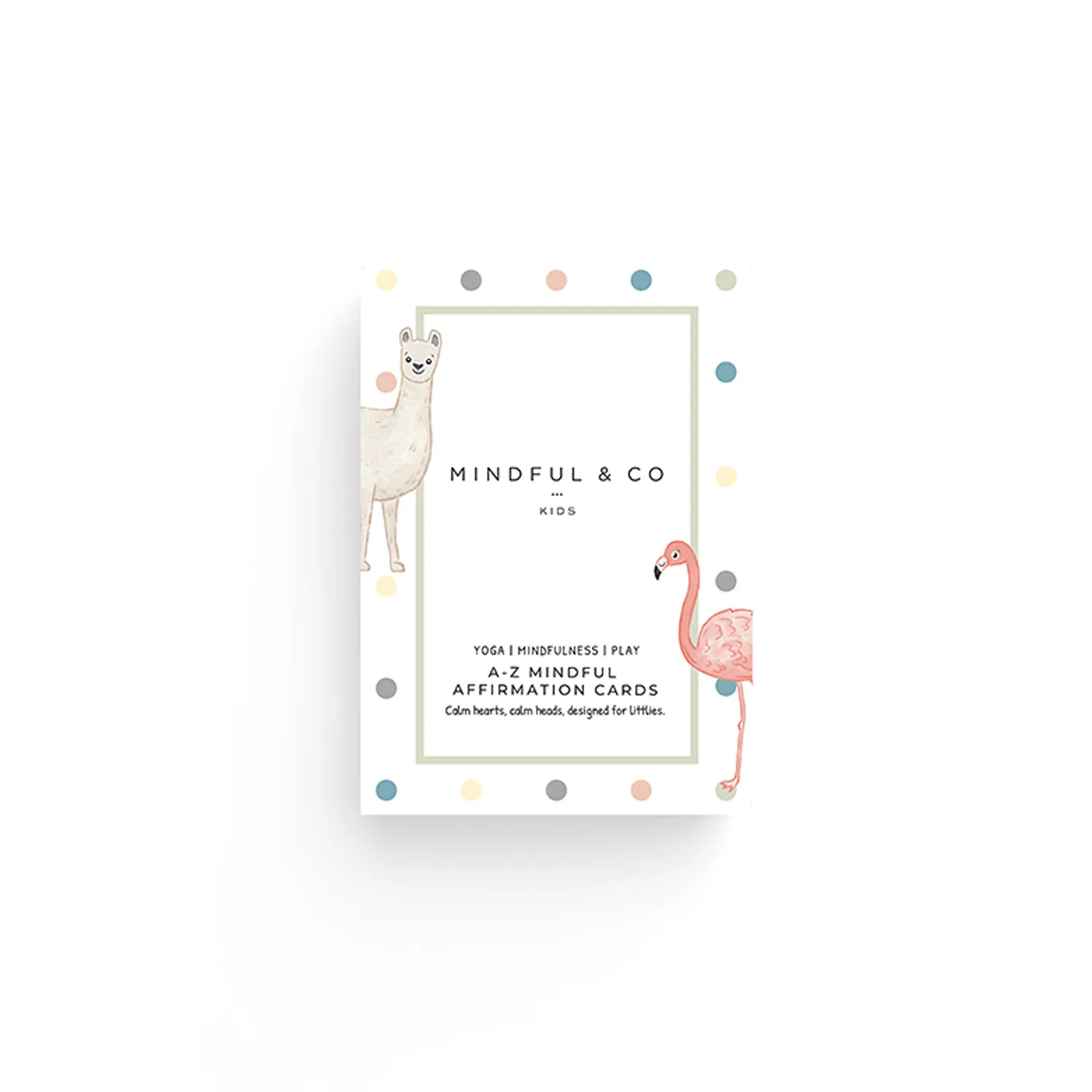
A-Z Mindful Affirmation Cards