Quick Answer
Use ABC Picture Boards to build letter recognition by having your child match uppercase and lowercase letters to pictures, then practice saying the letter sounds and names.
Why ABC Picture Boards Work for Letter Recognition
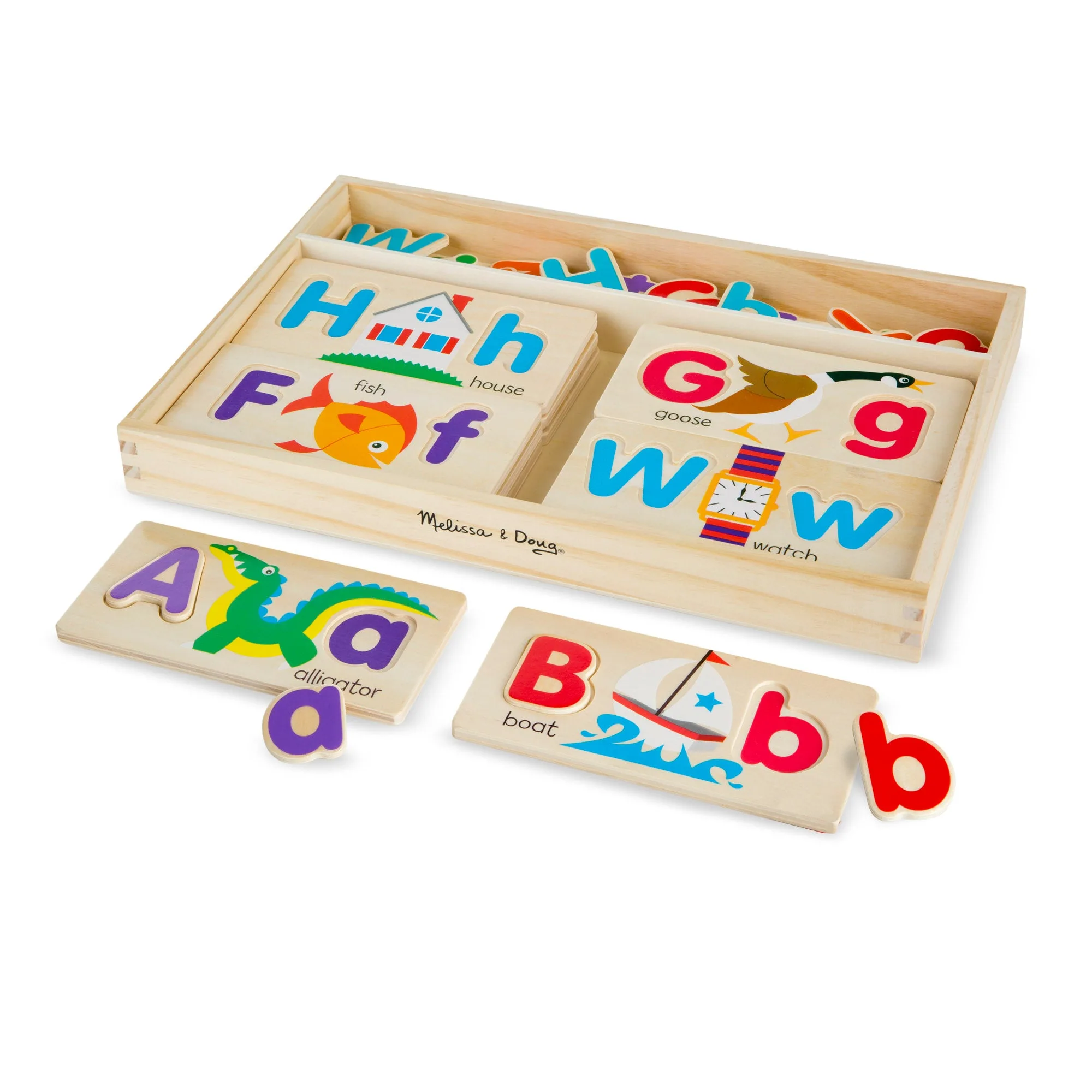
These sturdy wooden boards combine visual, tactile, and auditory learning. Each board shows a letter, its uppercase and lowercase forms, and a familiar picture (like A for apple). This multi-sensory approach helps children connect the abstract letter symbol with a concrete image and sound, which is a key step in early literacy.
The self-correcting nature of the puzzle—each letter piece fits only its correct spot—gives immediate feedback, so kids learn from mistakes without frustration. This builds confidence as they practice.
Common Mistakes to Avoid
Don't rush through all 26 letters at once. Start with just a few boards, especially the first letter of your child's name. Overwhelming a preschooler with the full alphabet can lead to disengagement.
Avoid focusing only on letter naming. Pair each letter with its sound and the picture word. For example, say 'B says /b/ like ball' rather than just 'This is B.' This builds phonics skills that support reading later.
Step-by-Step Guide to Using ABC Picture Boards
- Start with a few favorite letters: Choose 3-5 boards that include the first letter of your child's name and letters from familiar words (like M for mom or D for dog). Place the boards and letter pieces on a flat surface. Limit the set to avoid overwhelming your child; you can add more boards as they gain confidence.
- Model the matching process: Pick one board and say the letter name, then trace the uppercase and lowercase cutouts with your finger. Say the letter sound (e.g., 'S says /s/') and point to the picture. Show your child how to place the letter pieces into the correct slots. Common mistake: Skipping the sound. Always say the sound along with the name to build phonics awareness.
- Let your child try independently: Hand your child a board and the matching letter pieces. Encourage them to find the correct slot for each piece. If they struggle, offer a verbal hint (e.g., 'Which letter makes the /b/ sound?') rather than placing it for them. Resist the urge to correct immediately; allow a few seconds of trial and error to develop problem-solving skills.
- Play a letter-sound matching game: After your child can match letters, flip the boards face down. Say a letter sound (e.g., /k/) and ask your child to find the board with that letter and picture. This reinforces listening and letter-sound association. If your child struggles, reduce the number of boards to 2-3 to keep the game achievable and fun.
- Extend the learning with real objects: Once your child masters a few boards, gather small toys or household items that start with those letters (e.g., a toy car for C). Place the item next to the corresponding board and say the letter and sound together. This real-world connection deepens understanding and makes learning feel like play.
Product Facts
-
ABC Picture Boards: Each board features a letter of the alphabet with uppercase and lowercase cutouts and a coordinating picture. This design lets children practice letter recognition and phonics in one activity, reinforcing the connection between letters, sounds, and real-world objects.
ABC Picture Boards