Why Use an Air Flow Splitter?
If you have more than one air-powered device in your aquarium—such as an air stone, sponge filter, or breeding box—you might be wondering how to run them all from a single air pump without losing control over each line. An air flow splitter solves this by dividing the pump's output into multiple streams, each with its own valve for independent adjustment.
The Castle Dawn Aquatics 304 Stainless Steel Air Flow Control Valve is built for this exact job. Its 304-grade stainless steel construction withstands up to 4kg of pressure—double that of cheaper chromium copper valves—making it a reliable choice for both freshwater and saltwater setups.
Setting Up Your Air Flow Splitter
Follow these steps to connect and adjust your splitter correctly.
- 1. Choose the right splitter size: The splitter is available in 1-way through 6-way versions. Select the number of outlets that matches the devices you plan to run. All variants fit tubing up to 4mm inner diameter, which is standard for most aquarium airline tubing.
- 2. Connect the air pump to the splitter inlet: Attach the main airline tubing from your air pump to the single inlet port on the splitter. Ensure the tubing is pushed fully onto the barb to prevent air leaks.
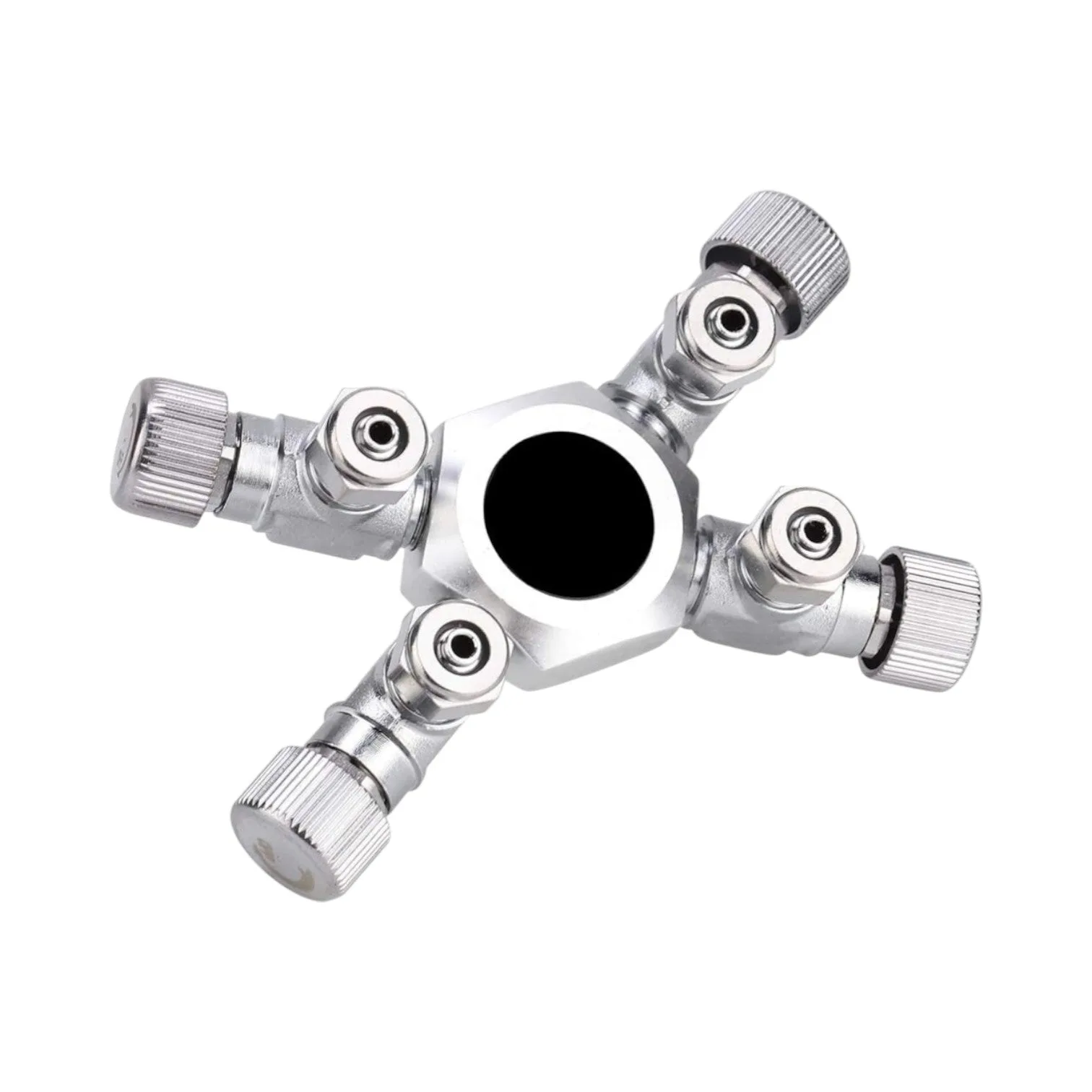
- 3. Attach device lines to the outlets: Connect separate tubing from each outlet to your air stone, sponge filter, CO₂ diffuser, or other device. Each outlet features an individual turn valve for precise airflow control.
- 4. Adjust airflow to each device: Turn each valve to increase or decrease airflow to the connected device. This allows you to fine-tune the bubble rate or flow strength independently, even if the devices have different resistance levels.
- 5. Check for leaks and secure connections: After setup, inspect all connections. If you notice reduced flow, ensure tubing is cut squarely and pushed on firmly. The 304 stainless steel construction resists corrosion, but the tubing connection is the most common point for minor leaks.
Key Specifications of the 304 Stainless Steel Splitter
-
Stainless Steel Aquarium Air Flow Splitter 4mm Lever Control Valve: Crafted from 304-grade stainless steel, this valve can withstand pressures of up to 4kg, doubling the strength of similar valves made from chromium copper (2kg limit). Higher pressure tolerance means the splitter can handle stronger air pumps without risk of failure, making it suitable for larger or high-output setups.
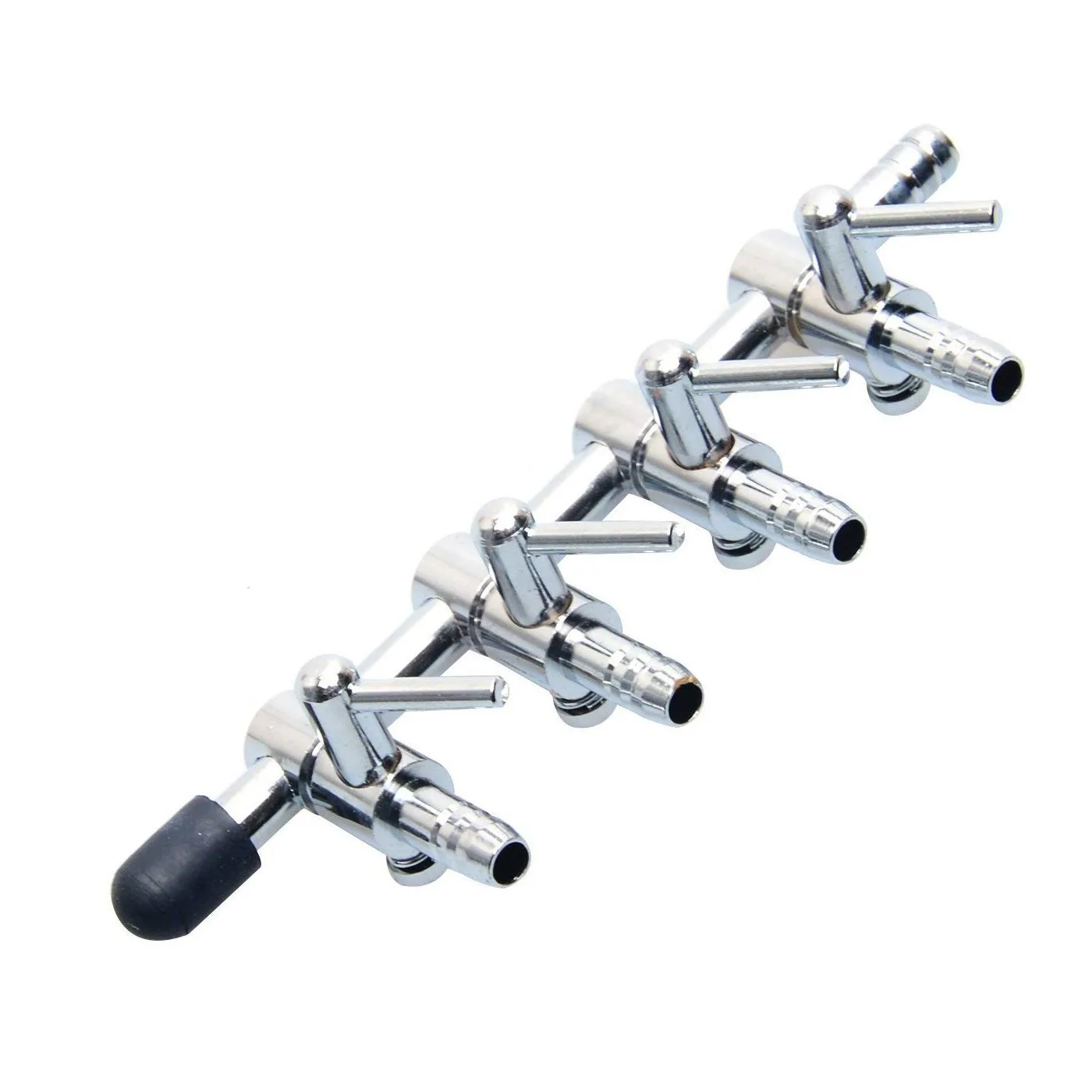
Stainless Steel Aquarium Air Flow Splitter 4mm Lever Control Valve
-
Stainless Steel Aquarium Air Flow Splitter 4mm Lever Control Valve: Compatible with up to 8mm tubing, this valve is suitable for both freshwater and saltwater aquariums. The universal fit means you can use it with standard airline tubing found in most aquarium stores, and the corrosion-resistant stainless steel is safe for marine environments.
-
Stainless Steel Aquarium Air Flow Splitter 4mm Lever Control Valve: Each outlet is equipped with its own turn valve, giving you precise control over airflow to multiple devices such as air stones, sponge filters, or breeding boxes. Individual valves let you balance airflow between devices with different resistance, so you can run a high-flow air stone alongside a gentle sponge filter from the same pump.
Choosing Between Variants
The splitter is offered in 1-way through 6-way configurations. If you only need to split between two devices, a 2-way splitter keeps the setup compact. For a multi-tank or multi-device system, a 4-way or 6-way splitter gives you room to expand later. All variants share the same build quality and 4mm tubing compatibility, so your choice depends on how many outputs you need today.
What the Product Information Does Not Cover
The supplied details do not specify the exact airflow reduction per outlet or the maximum recommended pump power. If you are using a very high-output pump, start with the valves fully open and gradually close them to avoid over-pressurizing the splitter. The 4kg pressure rating provides a generous safety margin, but it is always wise to monitor the system during initial use.