Quick answer
Use your all-purpose natural cleaning cloth damp (not soaking) for daily wiping, then rinse and hang to dry after each use to prevent odor and extend its life.
Why the two sides matter
A natural cleaning cloth often has two distinct textures: a soft organic cotton side for gentle tasks like wiping countertops or glass, and a rougher sisal side for scrubbing stuck-on food or soap scum. Using the wrong side can scratch delicate surfaces or leave the tough side underused. Check which side is which before you start.
When to replace your cloth
Even with proper care, natural fiber cloths wear out. Replace the cloth when it develops a persistent sour smell after washing, when the sisal fibers start shedding excessively, or when the cotton side becomes thin. Most reusable cloths last 2–3 months with regular use and proper drying.
Step-by-step guide to using a natural cleaning cloth
- Wet the cloth and wring it out: Run the cloth under warm water until fully saturated, then wring it firmly so it is damp, not dripping. A soaking cloth leaves streaks and takes longer to dry, which can lead to mildew. Damp cloth cleans better and dries faster than a wet one.
- Fold the cloth into a clean working surface: Fold the damp cloth into quarters so you have four clean sides. Use one side for a surface, then flip to a fresh side for the next area. Common mistake: using the same dirty side across multiple surfaces, which spreads bacteria. Folding gives you four clean surfaces per wash.
- Use the correct side for the task: For gentle jobs like wiping counters, glass, or stainless steel, use the organic cotton side. For scrubbing pots, baked-on food, or bathroom tiles, flip to the sisal side. Using sisal on non-stick pans or polished surfaces can cause scratches. Match the side to the surface to avoid damage.
- Rinse thoroughly after each use: Rinse the cloth under running water until the water runs clear, squeezing out food particles and soap residue. Leftover soap or debris traps bacteria and causes odors. Do not let the cloth sit in the sink. A thorough rinse prevents smells and keeps the cloth fresh.
- Hang to dry in a well-ventilated area: After rinsing, hang the cloth over a dish rack, hook, or towel bar so both sides get air. Avoid leaving it crumpled on the counter or in a damp pile. A cloth that stays wet for hours will develop mildew and need early replacement. Proper drying is the single most important step for cloth longevity.
Product facts
-
Kitchen Dish Cloths • All-Purpose Natural Cleaning Cloth: Two-sided design: 100% soft organic cotton on one side and hard-wearing natural sisal fibres on the other. You can switch between gentle wiping and tough scrubbing without needing a second cloth, reducing waste and clutter.
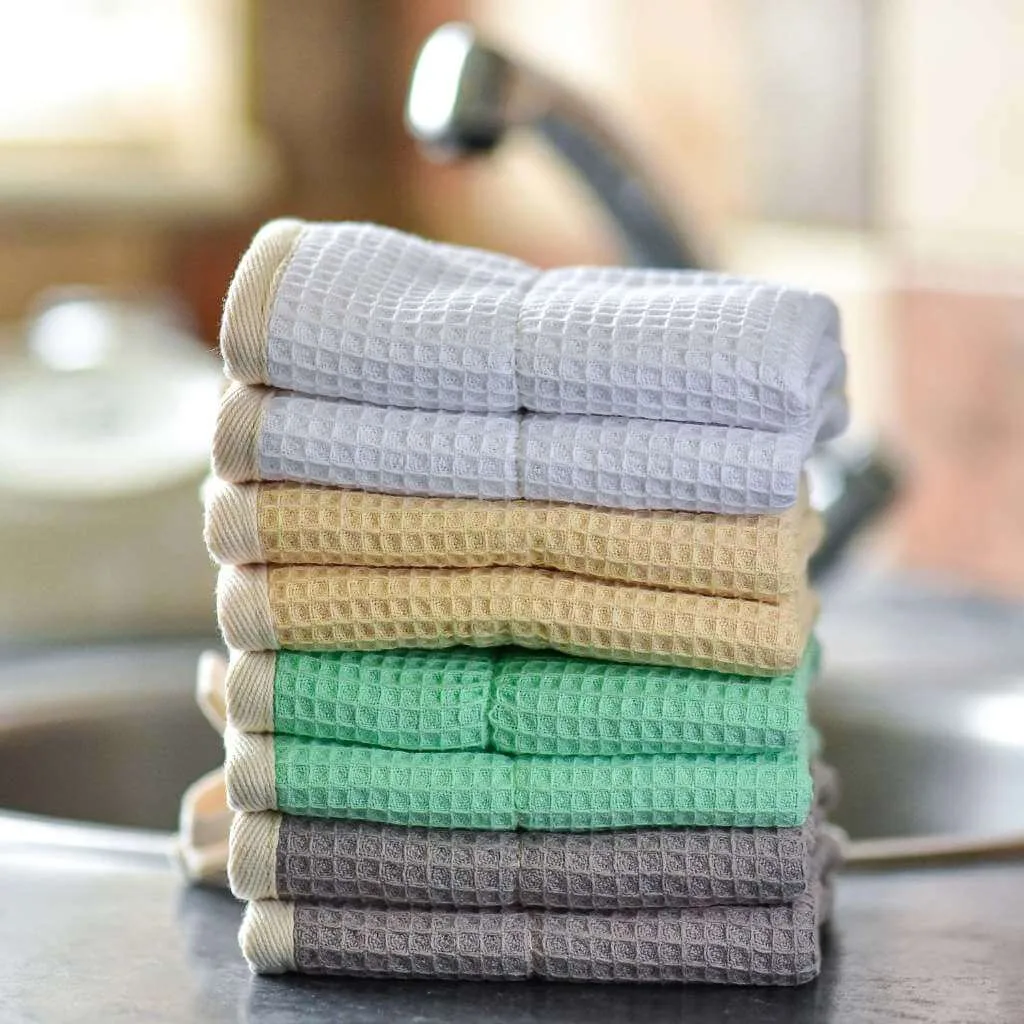
Kitchen Dish Cloths • All-Purpose Natural Cleaning Cloth