Quick Answer
To use aloe vera for skin healing, start with pure aloe vera gel or fresh leaf. Cleanse the area, apply a thin layer, and let it absorb. Repeat 2-3 times daily for burns, acne, or dryness. Always patch test first and avoid products with added alcohol or fragrances.
aloe vera
Aloe vera is a go-to remedy for soothing sunburns, calming acne, and hydrating dry skin. Its natural cooling properties and nutrient-rich gel make it a versatile addition to any skincare routine. But to get the best results, you need to apply it correctly and choose the right form.
In this guide, we’ll walk you through the step-by-step process of using aloe vera for skin healing, highlight common mistakes to avoid, and share tips on selecting a high-quality product that supports your skin’s recovery.
Why Aloe Vera Works for Skin
Aloe vera gel contains compounds like polysaccharides and antioxidants that help soothe irritation, support moisture retention, and create a protective barrier on the skin. These properties make it effective for minor burns, sunburn, and dry patches. It also has a cooling effect that can reduce redness and discomfort.
However, not all aloe products are created equal. Many commercial gels contain added alcohol, fragrance, or artificial colors that can irritate sensitive skin. For best results, choose a pure aloe vera gel or use the fresh leaf directly. If you have specific skin concerns like acne or eczema, look for products that combine aloe with other soothing ingredients.
- Always check the ingredient list for added alcohol or synthetic additives.
- Patch test on a small area before applying to larger skin surfaces.
How to Apply Aloe Vera for Burns and Sunburn
For minor burns or sunburn, aloe vera can provide immediate relief. Start by cooling the skin with cold water for 10-15 minutes. Gently pat the area dry, then apply a generous layer of pure aloe vera gel. Allow it to absorb without rubbing. Reapply every few hours as needed.
Avoid using aloe on open blisters or broken skin. If the burn is severe or covers a large area, seek medical attention. Aloe is a supportive remedy, not a substitute for professional care.
- Keep aloe vera gel in the refrigerator for an extra cooling effect.
Using Aloe Vera for Acne and Blemishes
Aloe vera’s anti-inflammatory properties can help calm active acne and reduce redness. After cleansing your face, apply a thin layer of pure aloe gel to the affected areas. Leave it on for 15-20 minutes, then rinse with lukewarm water. You can also use it as a spot treatment overnight.
If you have oily skin, aloe vera is lightweight and non-comedogenic, meaning it won’t clog pores. However, if you’re using prescription acne treatments, check with your dermatologist before combining them with aloe.
- Use aloe vera gel as a base for a DIY face mask by adding a few drops of tea tree oil (if tolerated).
Aloe Vera Face Mask for Hydration
For a hydrating face mask, mix two tablespoons of pure aloe vera gel with one teaspoon of honey or a few drops of your favorite facial oil. Apply evenly to your face, avoiding the eye area. Leave on for 15 minutes, then rinse with warm water. This mask helps lock in moisture and leaves skin feeling soft.
You can also apply aloe vera gel as a leave-on moisturizer. After cleansing, massage a pea-sized amount onto damp skin. This is especially beneficial for people with dry or sensitive skin.
- Always perform a patch test before trying a new face mask recipe.
Step-by-Step: How to Use Aloe Vera for Skin Healing
- Choose the right aloe: Select a pure aloe vera gel with minimal ingredients or use fresh aloe leaf. Avoid products with added alcohol, fragrance, or artificial colors. Checkpoint: Look for '100% aloe vera' or a short ingredient list.
- Clean the skin: Wash the area with a gentle cleanser and pat dry. For burns, cool the skin first with cold water. Checkpoint: Ensure skin is clean to prevent trapping dirt or bacteria.
- Apply a thin layer: Use your fingertips to apply a thin, even layer of aloe vera gel to the affected area. Gently massage until absorbed. Checkpoint: Don't overapply; a little goes a long way.
- Leave on and let it absorb: Allow the gel to absorb fully. For burns, reapply every few hours. For acne, you can leave it on overnight as a spot treatment. Checkpoint: If you experience any irritation, discontinue use and consult a dermatologist.
- Follow with moisturizer (optional): If your skin feels tight, follow with a gentle moisturizer to lock in the benefits. For oily skin, aloe alone may be sufficient. Checkpoint: Choose a non-comedogenic moisturizer if you're prone to breakouts.
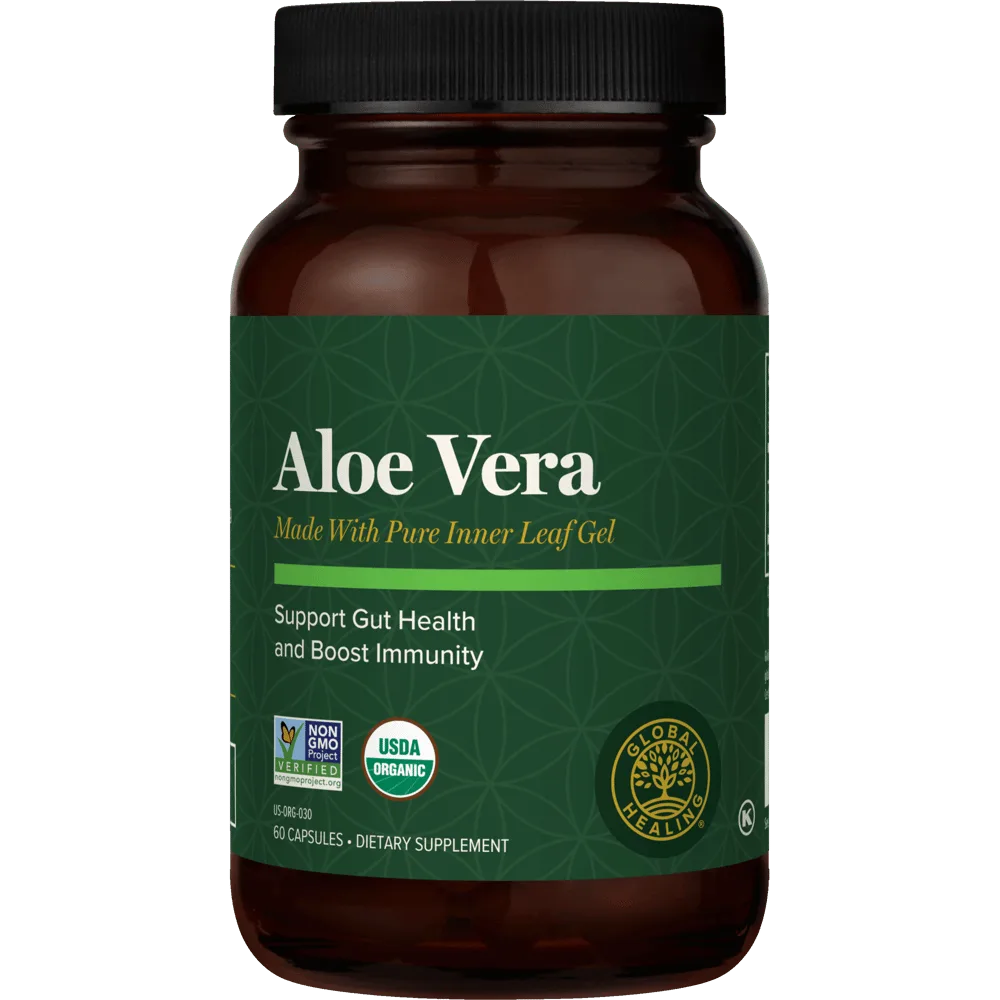
Choosing a Quality Aloe Product at Global Healing
- Vein Health: Healthy circulation relies on strong, durable blood vessels, but our modern lifestyle can often take a toll on our vein and artery health. Prolonged sitting or standing and lack of exercise can compromise the integrity of our blood vessels and increase the appearance of unsightly spider veins on the skin's surface. While not an aloe product, Vein Health supports circulation, which is essential for delivering nutrients to the skin and promoting overall skin health. Healthy blood flow can aid in the skin's natural healing process.
- Iron: Iron is a formidable essential nutrient that fuels red blood cell production, sustains energy levels, and optimizes oxygen utilization. Our plant-based formula is made with iron extracted from curry tree leaves and blended with organic thyme and echinacea root. Adequate iron levels are important for oxygen transport to skin cells. Pairing aloe vera's topical benefits with internal iron support can enhance your skin's vitality and recovery.
Aloe vera is a versatile and effective natural remedy for a range of skin issues, from burns to acne. By following these steps and choosing a high-quality product, you can harness its healing properties safely. Remember to patch test and listen to your skin's needs. For overall skin health, consider supporting your body with proper nutrition and circulation-boosting habits.