Quick answer
Using ankle restraints safely starts with choosing cuffs that fit snugly without cutting off circulation, agreeing on a clear safeword, and keeping a quick-release method accessible at all times.
Why fit and material matter for safety
Ankle restraints that are too tight can cause numbness or bruising, while loose cuffs may slip and cause friction burns. Heavy-duty materials like stainless steel offer a secure, authentic feel but require careful adjustment to avoid pinching. Leather or padded cuffs distribute pressure more evenly, making them a better choice for longer sessions.
Always check the inner circumference of the cuffs before use. If the product listing does not specify adjustable sizing, assume a one-size-fits-most design and test the fit on the widest part of your ankle before locking in.
Communication and consent are non-negotiable
Before any session, both partners should agree on a safeword that immediately stops all activity. For non-verbal situations, establish a signal like dropping a held object or tapping out twice. Never use ankle restraints on someone who cannot clearly communicate, whether due to intoxication, language barriers, or pre-existing conditions.
Step-by-step: Using ankle restraints safely
- Check fit before locking: Place the cuff around the ankle and tighten until it is snug but allows one finger to slide between the cuff and skin. If the cuff has a locking mechanism, test it unlocked first to confirm the range of adjustment. A common mistake is overtightening for security—leave that finger gap to maintain circulation.
- Set a safeword and release plan: Agree on a clear safeword (e.g., 'red') and a non-verbal signal. Keep the key or quick-release mechanism within arm's reach of the restrained person, not just the dominant partner. Never use restraints without a backup release method—buckles can jam, and keys can be dropped.
- Monitor during use: Check the restrained person's toes and skin every 10–15 minutes for color changes, coldness, or numbness. If any of these occur, release immediately and adjust the fit before continuing. Numbness or tingling means the cuff is too tight—do not ignore it.
- Remove and inspect after use: Unlock or unbuckle the cuffs gently. Check the ankles for redness, marks, or broken skin. Clean the cuffs with a damp cloth and mild soap, then dry thoroughly before storing. Leaving restraints on too long can cause skin irritation—always remove and check after 30–60 minutes of continuous wear.
Recommended product for secure restraint
-
Prowler RED Heavy-Duty Ankle Cuffs: The Prowler RED Heavy-Duty Ankle Cuffs are made from heavy-duty stainless steel, creating an authentic feel to your prisoner pleasure session. The weight and strength of stainless steel provide a secure restraint that stays in place, but you must check the fit carefully to avoid discomfort during extended use.
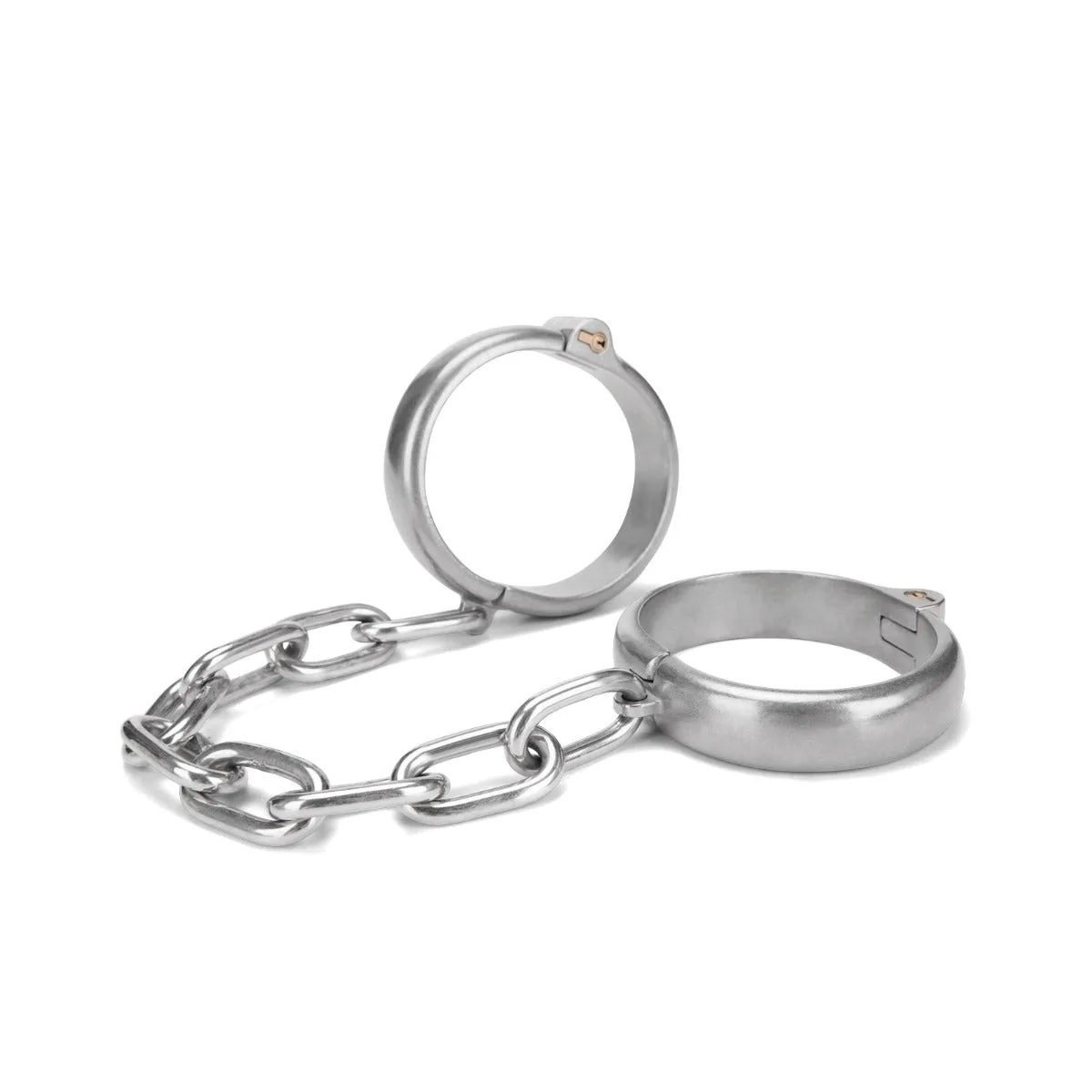
Prowler RED Heavy-Duty Ankle Cuffs