Quick answer
Start with a small, soft-tipped spoon like the organic bamboo Baby's Feeding Spoons (6M+). Offer a tiny amount of puree or soft food, and let your baby explore at their own pace.
Why material matters for first spoons
Plastic spoons can contain chemicals that leach into warm food. Bamboo is naturally antimicrobial and free of BPA, phthalates, and other additives. The USDA certified organic bamboo used in Baby's Feeding Spoons (6M+) is a safe, sustainable choice that feels gentle on tender gums.
When to introduce a spoon
Most babies are ready for solids around 6 months, but readiness cues matter more than age. Look for good head control, the ability to sit with support, and interest in your food. If your baby pushes the spoon out with their tongue, they may not be ready yet. Wait a few days and try again.
Step-by-step guide to using a baby feeding spoon
- Prepare the spoon and food: Wash the spoon with warm soapy water before first use. Scoop a very small amount of puree or mashed food onto the tip. The spoon end is intentionally small to fit your baby's mouth comfortably. Common mistake: loading the spoon too full. A pea-sized amount is enough for the first tries.
- Offer the spoon to your baby: Hold the spoon near your baby's mouth and let them open up. Do not scrape the food off on their top lip or gums. Allow them to suck or nibble the food off the spoon at their own pace. Checkpoint: if your baby turns away or clamps their mouth shut, they are full or not ready. Stop and try again later.
- Let your baby practice self-feeding: Once your baby shows interest, place the spoon in their hand and guide it toward their mouth. The handle is designed to be large enough for parents' hands, but your baby can still grip it with practice. Expect mess and let them explore. Common mistake: taking over too quickly. Let your baby hold the spoon even if most food ends up on the tray. This builds motor skills and confidence.
- Clean and store the spoon properly: Rinse the spoon immediately after use to prevent food from drying on the bamboo. Hand wash with mild soap and air dry. Do not soak or put in the dishwasher, as prolonged moisture can damage bamboo. Checkpoint: inspect the spoon regularly for splinters or cracks. Replace if damaged to keep your baby safe.
Product highlights
-
Baby's Feeding Spoons (6M+): Made from USDA certified organic bamboo, these baby feeding spoons are a healthy alternative to plastic. Bamboo is naturally free of BPA and phthalates, so you don't have to worry about chemicals leaching into your baby's first foods.
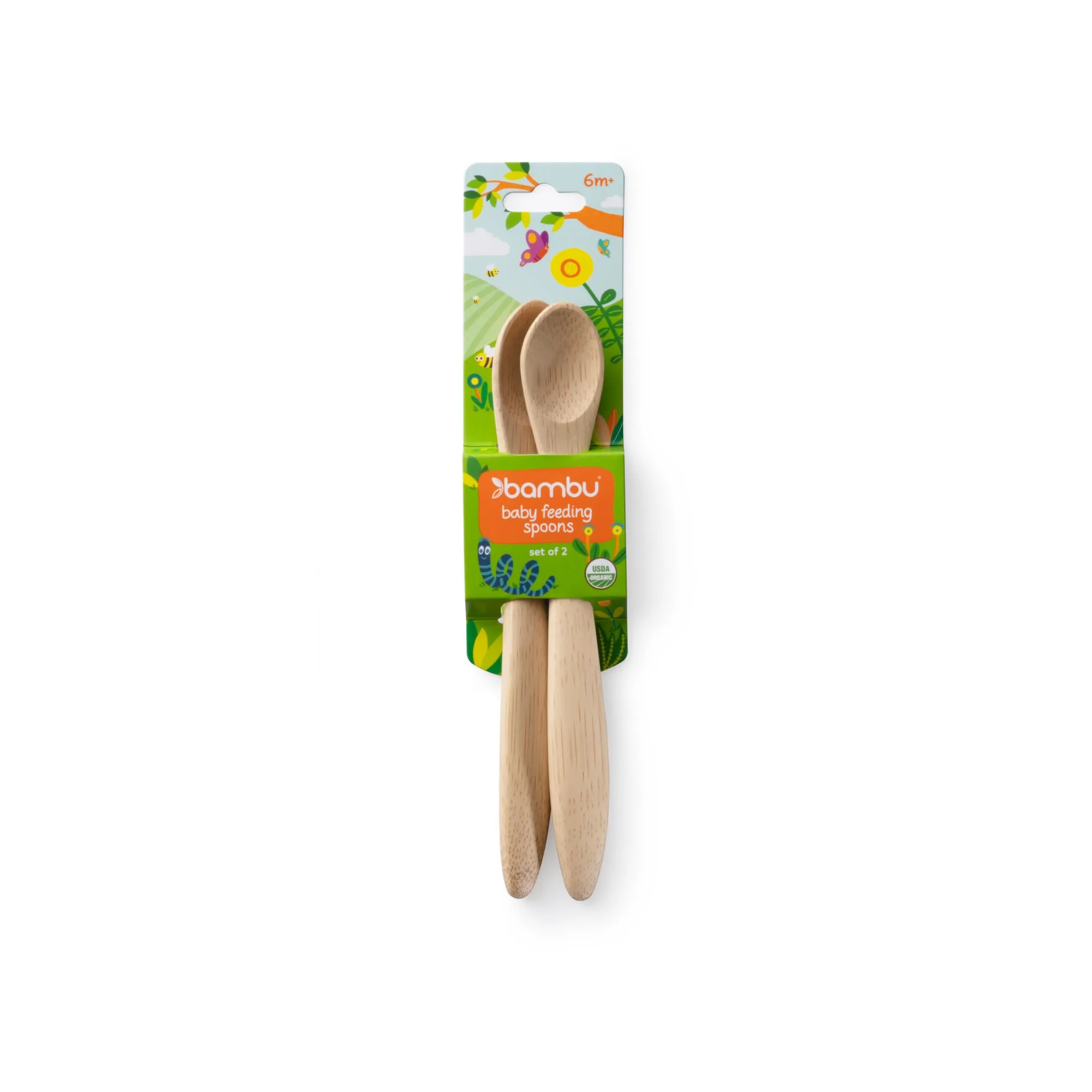
Baby's Feeding Spoons (6M+)