Quick answer
For most families starting baby-led weaning, a spoon designed for self-feeding—like the ezpz Tiny Spoon—supports independence and reduces frustration. Focus on size, material, and handle design that fits your baby's grip.
Why spoon design matters for baby-led weaning
Baby-led weaning encourages babies to feed themselves from the start. A spoon that is too large, too shallow, or too slippery can make this frustrating. The right spoon helps your baby learn the motor skills needed to scoop and bring food to their mouth.
Look for a spoon with a short, wide handle that is easy for a small hand to grasp. A soft, shallow bowl helps prevent overloading and makes it easier for your baby to get food into their mouth without gagging.
Material and safety considerations
Silicone spoons are popular because they are gentle on gums and easy to clean. However, some babies prefer a firmer feel. Stainless steel spoons are durable but can be too heavy or cold for a beginner. Always choose food-grade, BPA-free materials regardless of type.
The ezpz Tiny Spoon is made from soft, food-grade silicone that is gentle on gums and easy for little hands to hold. Its one-piece design means no parts to break or lose.
When a standard baby spoon isn't enough
Many standard baby spoons are designed for adult-led feeding—long handles for the parent, small bowls for the baby. These are less effective for self-feeding because the baby cannot grip the handle properly or control the angle.
A spoon designed for self-feeding, like the ezpz Tiny Spoon, has a shorter handle and a wider grip area. This allows the baby to hold it with a palmar grasp and bring it to their mouth more accurately.
Decision rules for choosing baby-led weaning spoons
- Handle length and shape: Choose a spoon with a short, chunky handle (about 3-4 inches) that your baby can wrap their whole hand around. Avoid long, thin handles meant for adult use.
- Bowl depth and material: A shallow, soft silicone bowl prevents overloading and is gentle on gums. Deep bowls or hard plastic can cause gagging or discomfort.
- Ease of cleaning: One-piece silicone spoons are dishwasher-safe and don't trap food in crevices. Avoid spoons with removable parts or hollow handles.
- Age and developmental stage: Babies around 6 months with a palmar grasp need a spoon they can hold with their whole hand. Around 9-12 months, they may transition to a smaller handle as their pincer grasp develops. If your baby is under 9 months, prioritize a spoon with a thick handle. For older babies, a slightly narrower handle may work.
Product facts
-
Baby-Led™ Tiny Spoons (5-Pack): The ezpz Tiny Spoon is designed to help baby learn how to feed independently with unique features that make it the most functional, developmentally appropriate infant spoon on the market. Its short, wide handle and soft silicone bowl are specifically shaped for a baby's palmar grasp, making self-feeding easier and more successful from the first try.
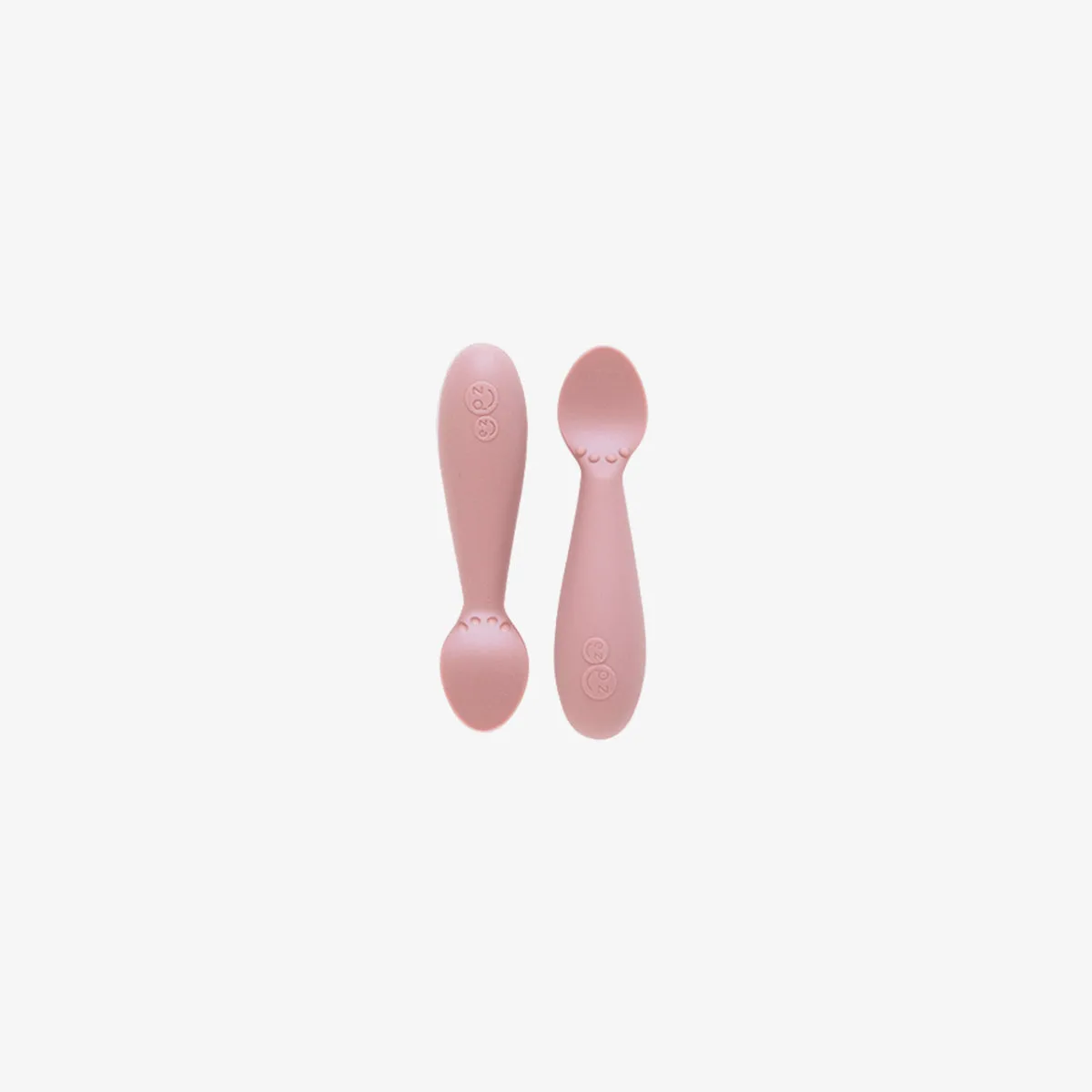
Baby-Led™ Tiny Spoons (5-Pack)
Who should buy this spoon
Best for
- Parents starting baby-led weaning with a 6-month-old
- Babies who need a soft, gentle spoon for sensitive gums
- Families who want a dishwasher-safe, one-piece utensil
Not for
- Parents who prefer a metal spoon for durability
- Babies who have already developed a pincer grasp and need a smaller spoon