Quick Answer
Choose a short safety bar if you primarily squat and bench inside a compact rack, and a long safety bar if you need wider catch points or extra barbell storage. Measure your rack's interior width before ordering.
Short vs Long: What's the Real Difference?
The main difference between a short and long safety bar is the width of the catch surface. A short bar takes up less room inside the rack, which can be helpful if you often move around the barbell or use attachments. A long bar spans more of the rack's interior, giving you a larger target area when you fail a rep.
Both styles are sold as single pieces for the left or right side, so you need two bars to support a barbell. This also means you can replace just one side if it gets damaged, instead of buying a full set.
Fit and Compatibility: Measure Before You Buy
Safety bars are not one-size-fits-all. The bar must match the pin spacing and the width of your rack's uprights. If you have an Asuna power rack or another Sunny Health & Fitness model, check the product page or your rack's manual for the exact dimensions.
If you're unsure which length fits, measure the interior width of your rack between the uprights. A short bar is typically for narrower racks, while a long bar suits wider racks. When in doubt, contact the manufacturer with your rack model number.
Budget and Value
Short safety bars are usually more affordable, making them a budget-friendly option for basic home gyms. Long bars cost a bit more but offer a wider catch area, which some lifters consider worth the extra expense.
Remember that you need two bars (one for each side), so factor that into your total cost. Buying both at once ensures they match and saves on shipping.
Decision Rules: Short or Long?
- Measure your rack's interior width: Use a tape measure to find the distance between the two uprights. If it's under 40 inches, a short bar likely fits; if it's over 40 inches, a long bar is probably needed. Always double-check the product dimensions against your rack's manual before ordering.
- Consider your primary lifts: If you mostly squat and bench, a short bar is usually enough. If you do heavy rack pulls or fail reps often, a long bar gives you a bigger safety margin. Think about the exercises you'll do most, not just the ones you hope to try.
- Factor in barbell storage: Safety bars can double as storage for barbells. A long bar offers more horizontal space for storing multiple bars, while a short bar may be enough for a single bar. If you plan to store bars on the safety bars, count how many you need to hold.
Product Facts
-
Power Rack Safety Bar (Short) - Available in Right or Left Side: This 1-piece short safety bar is for the LEFT or RIGHT side of the power rack. You'll need to order two—one for each side—to support a barbell, and you can replace only the damaged side if needed.
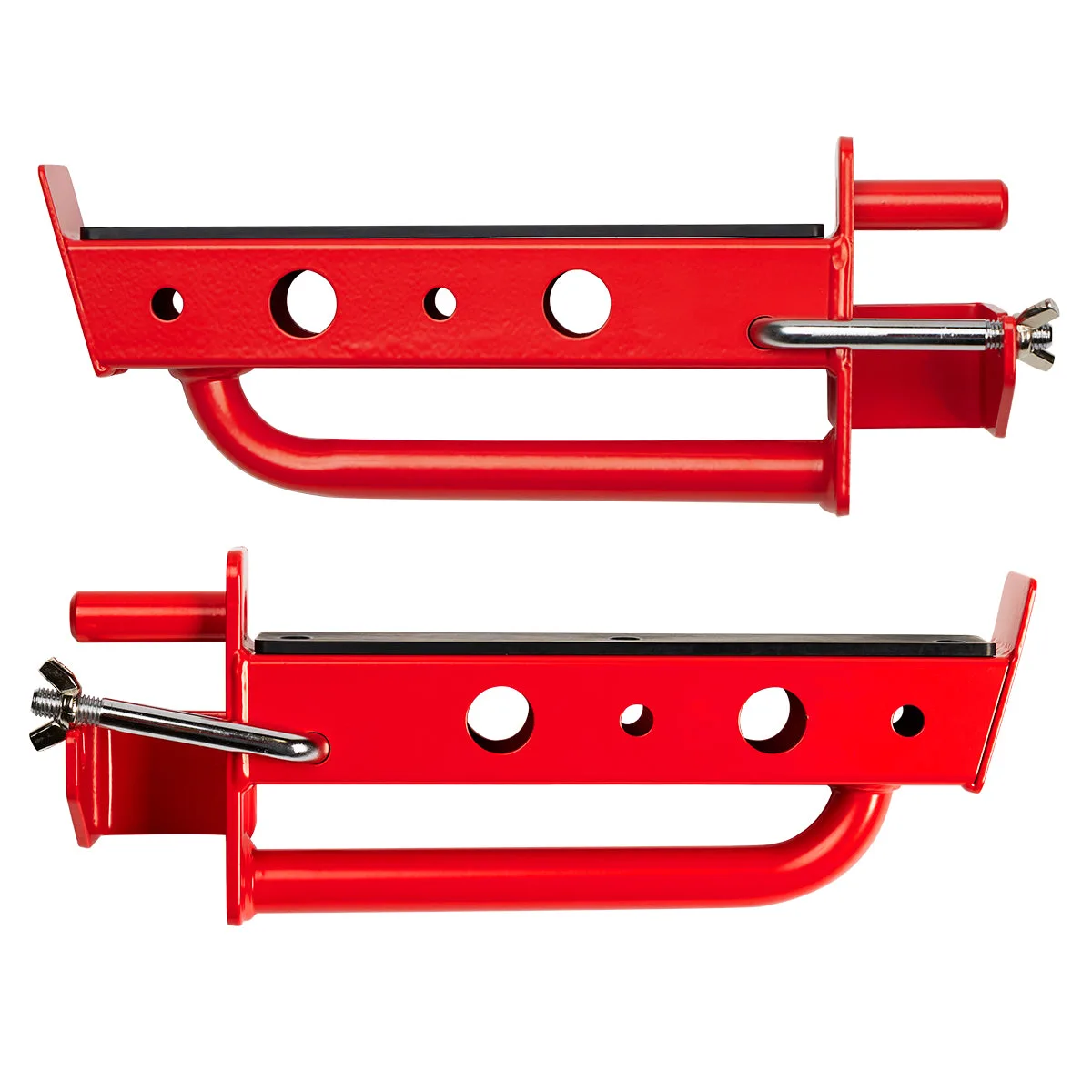
Power Rack Safety Bar (Short) - Available in Right or Left Side
-
Power Rack Safety Bar (Long) - Available in Right or Left Side: This 1-piece long safety bar is for the LEFT or RIGHT side of the power rack. A longer bar provides a wider catch surface, which can be more forgiving during heavy lifts.
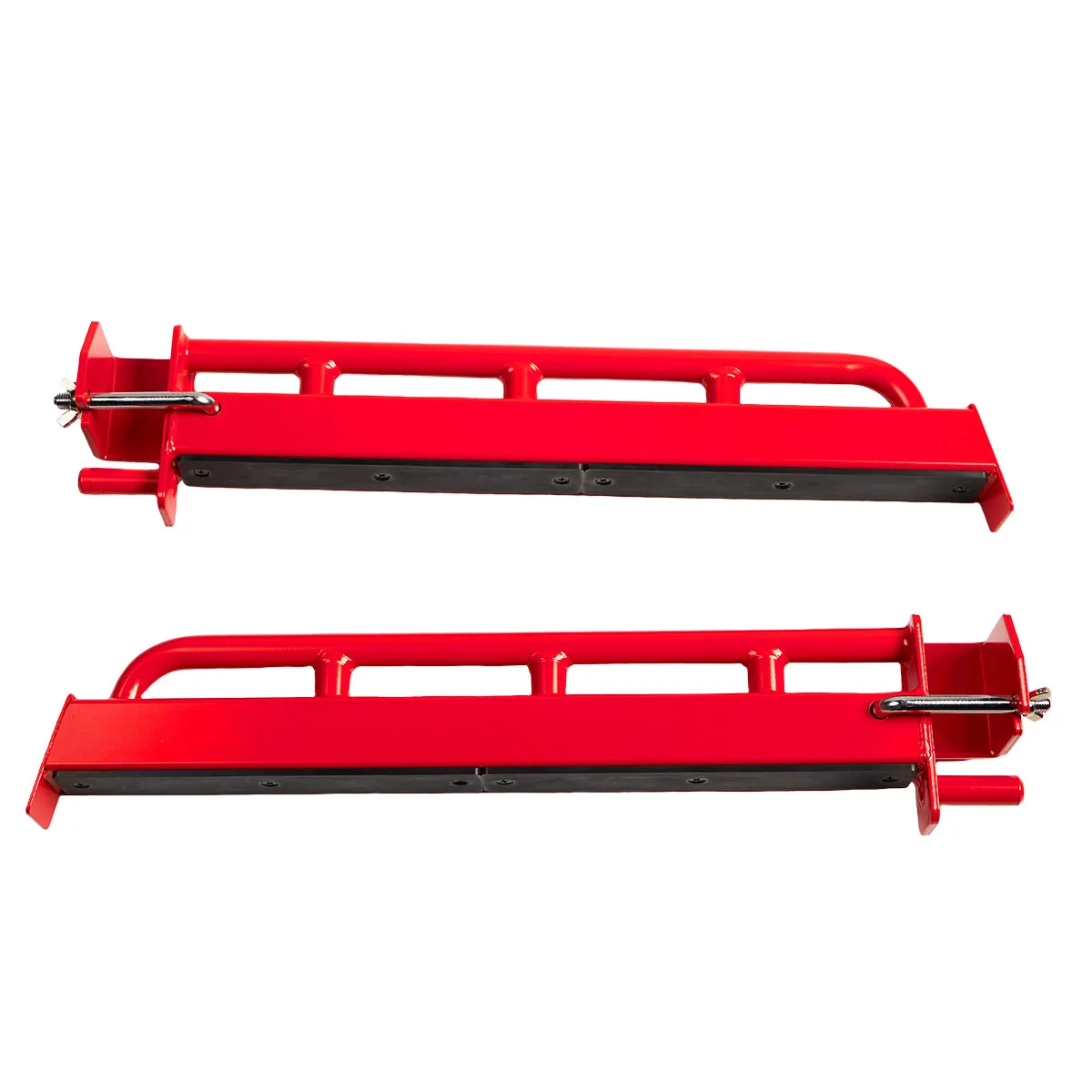
Power Rack Safety Bar (Long) - Available in Right or Left Side
Fit Guidance
Best for
- Short safety bar: home gyms with a compact rack and basic barbell work
- Long safety bar: lifters who want a wider catch area and extra barbell storage
Not for
- Short safety bar: racks with wide interior spacing or users who often fail heavy lifts
- Long safety bar: extremely narrow racks where a long bar won't fit