Quick answer
Use a body sock by having your child step inside the stretchy fabric and engage in guided movements or quiet play to deliver calming deep pressure and improve body awareness.
Why a body sock works for calming and focus
A body sock provides gentle, all-over deep pressure that can help children with autism feel grounded and organized. The snug, see-through Lycra material gives proprioceptive input—the sense of where your body is in space—which often has a calming effect.
Because the sock is stretchy and allows movement, it supports both active sensory seeking and quiet self-regulation. The key is matching the activity to your child's current sensory needs.
Step-by-step: How to use a body sock for calming and focus
- 1. Choose the right size and setting: Select a body sock that fits snugly but allows free movement—it should not be too tight or too loose. Set up in a quiet, clutter-free space where your child feels safe. A common mistake is using the sock in a busy or noisy area, which can overstimulate rather than calm.
- 2. Help your child enter the sock: Open the Velcro closure and have your child step in, pulling the sock up to their shoulders or head, depending on comfort. Fasten the closure securely but not too tight. Let them adjust and get used to the sensation before starting any activity. Checkpoint: If they resist, let them hold the sock or play with it outside first to build familiarity. Never force entry; let the child explore at their own pace.
- 3. Start with slow, gentle movements: Guide your child to try slow stretches, rocking side to side, or curling into a ball. These movements provide calming deep pressure. A common mistake is rushing into fast or bouncy movements, which can be alerting instead of calming. Stick with slow, rhythmic motions for focus.
- 4. Add a calming activity inside the sock: Once comfortable, encourage quiet activities like lying down and pressing hands against the fabric, or making slow shapes with their body. The see-through material lets them watch their own movements, which can be grounding. Checkpoint: If they seem restless, switch to a different slow motion or take a break. Watch for signs of overstimulation—redness, rapid breathing, or pulling at the fabric—and stop if needed.
- 5. End with a gentle transition: Slowly unzip the Velcro and help your child step out. Offer a few minutes of quiet time before moving on to the next activity. A common mistake is abruptly ending the session, which can leave the child feeling disoriented. A smooth transition helps maintain the calming effect.
Product used in this guide
-
Body Sock: The body sock is a pillowcase-like sack made of four-way Lycra with a loop-closed entrance and Velcro fasteners. The see-through material lets kids see the shapes they create while inside a private domain for kinesthetic exploration. The stretchy, see-through design allows children to move freely while receiving deep pressure input, making it ideal for both active calming activities and quiet focus time.
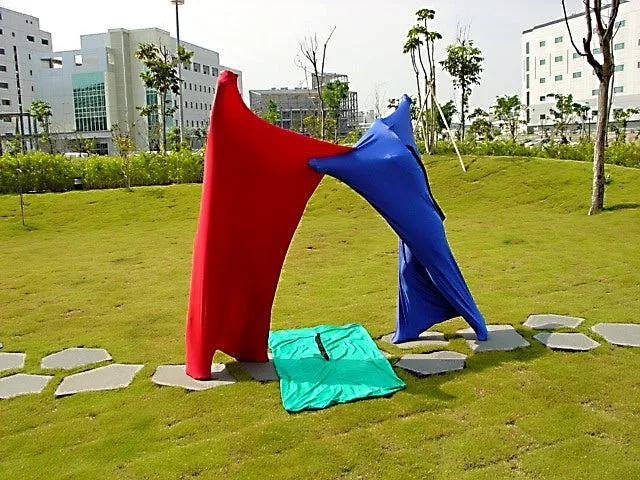
Body Sock