Quick Answer
For babies with sensitive skin, choose a butterfly shield pacifier made from natural rubber and follow a strict hygiene routine. The open shield design reduces skin contact, while regular cleaning and proper fit prevent irritation.
Why the Butterfly Shield Helps Sensitive Skin
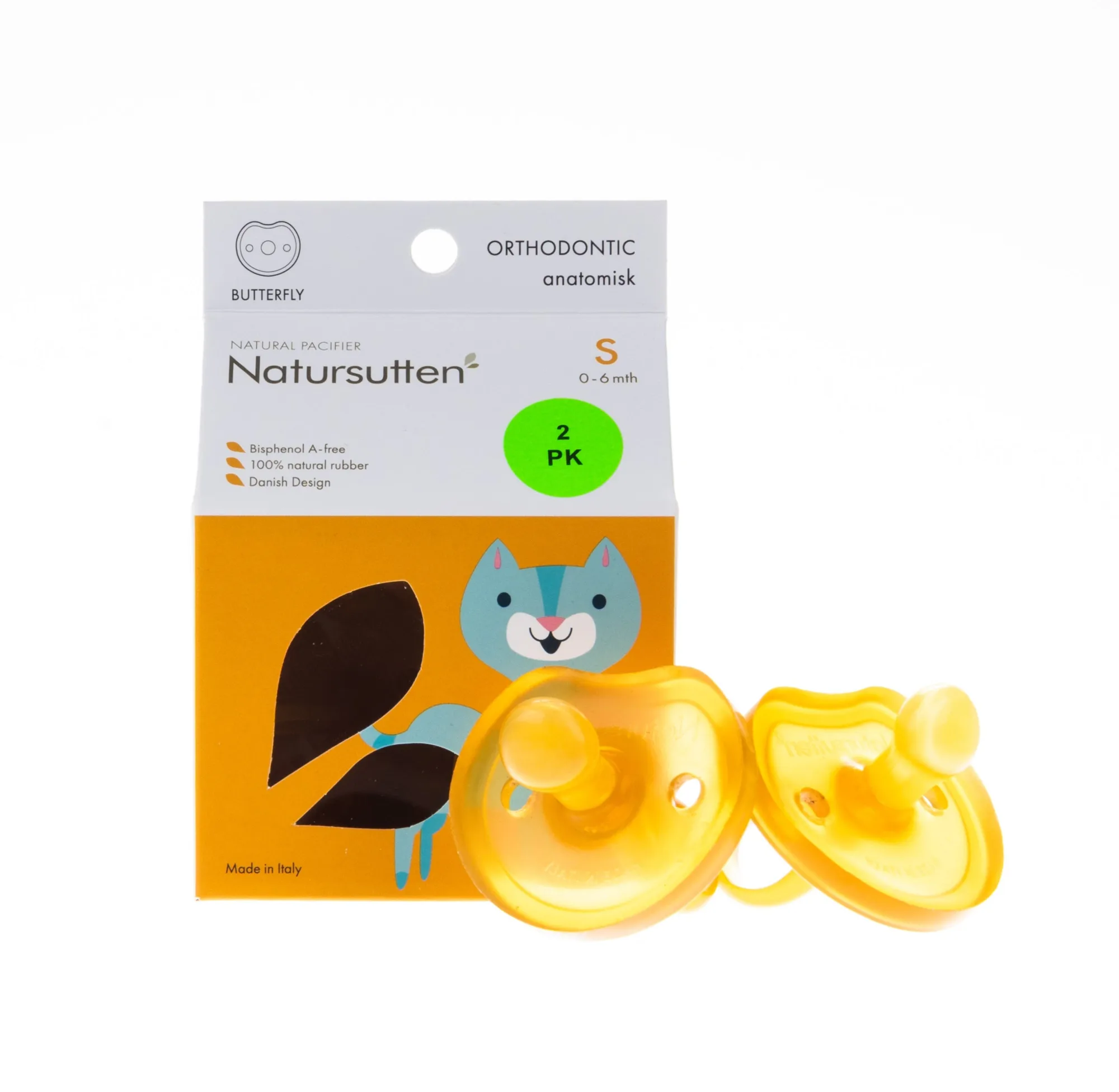
The butterfly shape of a pacifier shield is designed with curved cutouts that minimize contact with your baby's cheeks and nose. This reduces friction and trapped moisture, two common triggers for skin irritation. Unlike round shields that press flat against the face, a butterfly shield allows airflow, which helps keep the skin dry.
Natural rubber is another key factor. The Natursutten Butterfly Shield Pacifier is made from 100% pure natural rubber from the Hevea tree, with no synthetic fillers or BPA. This material is softer and more flexible than silicone, making it gentler on delicate skin. However, natural rubber can degrade faster than silicone, so you need to inspect it regularly for signs of wear.
When to Avoid Using a Butterfly Shield Pacifier
If your baby has a known latex allergy, natural rubber pacifiers are not suitable. Although the rubber is from a different source than latex gloves, cross-reactivity is possible. In that case, look for a silicone pacifier with a butterfly shield instead.
Also, if your baby's skin shows persistent redness or rash even after switching to a butterfly shield, consult your pediatrician. The shield shape helps, but it is not a cure-all for all skin sensitivities.
Step-by-Step Guide: Using a Butterfly Shield Pacifier for Sensitive Skin
- Step 1: Clean the pacifier before first use: Boil the pacifier for 5 minutes or wash it in hot, soapy water and rinse thoroughly. Natural rubber can absorb odors, so avoid harsh detergents. Check that the shield is intact and the nipple is not sticky. First-time cleaning removes manufacturing residues that could irritate sensitive skin.
- Step 2: Check the fit against your baby's face: Place the pacifier in your baby's mouth. The butterfly shield should rest comfortably against the cheeks without pressing too hard. You should be able to slide a finger between the shield and the skin. If the shield leaves deep marks, the pacifier is too tight or the wrong size. A proper fit prevents pressure points that can cause redness or indentations.
- Step 3: Clean after every use: Rinse the pacifier with warm water and mild soap after each use, especially if it has fallen on the floor. Dry it with a clean cloth. Avoid using antibacterial wipes or alcohol, as these can dry out the natural rubber and cause cracking. Regular cleaning prevents buildup of saliva and bacteria that can aggravate sensitive skin.
- Step 4: Inspect the pacifier daily for wear: Look for cracks, stickiness, or changes in color. Natural rubber ages faster than silicone. If the nipple becomes sticky or the shield shows rough edges, replace the pacifier immediately. A damaged pacifier can harbor bacteria and irritate the skin. Replace natural rubber pacifiers every 4–6 weeks, or sooner if signs of wear appear.
- Step 5: Rotate between multiple pacifiers: Having two or more pacifiers in rotation allows each one to dry fully between uses. This reduces moisture-related irritation. The Natursutten Butterfly Shield Pacifier comes in a set of two, making rotation easy. Dry pacifiers are less likely to cause fungal or bacterial skin issues.
Product Highlight
-
Natursutten Butterfly Shield Pacifier (Set of Two): The Natursutten Butterfly Shield Pacifier is crafted from 100% pure, all-natural rubber from the Hevea Brasiliense tree, with a seamless one-piece mold that has no hidden crevices for bacteria. This means fewer places for dirt and moisture to accumulate, which reduces the risk of skin irritation for sensitive babies.
Natursutten Butterfly Shield Pacifier (Set of Two)