Quick answer
To reduce litter tracking, place a cat litter mat directly outside the litter box, choose one with a non-slip backing and a paw-friendly surface, and clean it regularly to keep it effective.
Why a litter mat helps
Cat litter mats work by giving your cat a textured surface to step on after using the box. The soft, comfortable surface opens up your cat's paws to dislodge trapped litter without harming them, so less litter ends up on your floor.
A mat with a non-slip backing stays firmly in place, which is important because a sliding mat can become a tripping hazard and may not catch litter effectively. It also prevents moisture and particles from reaching your floor, protecting your flooring from stains and wear.
Trade-offs and limitations
No mat catches 100% of tracked litter. Some litter will still escape, especially if your cat jumps out of the box or has long fur. You may need to sweep or vacuum more often, but a mat significantly reduces the amount that spreads.
Mats also require regular cleaning. If you let litter and dust build up, the mat becomes less effective and can start to smell. A quick shake or vacuum every few days keeps it working well.
Step-by-step guide to using a cat litter mat
- Place the mat correctly: Position the mat directly in front of the litter box entrance, on the side your cat usually exits. Make sure it lies flat and covers the area where your cat steps after using the box. If your cat tends to jump out, place the mat a little further from the box to catch litter on landing.
- Choose the right mat size: Select a mat that is at least as wide as the litter box opening. A larger mat gives your cat more surface to step on, which increases the chance of dislodging trapped litter. If you have multiple cats or a large litter box, consider using two mats side by side for better coverage.
- Clean the mat regularly: Shake the mat outside or over a trash bin every few days to remove loose litter. For a deeper clean, rinse it with water and mild soap, then let it dry completely before placing it back. Avoid using harsh chemicals that might irritate your cat's paws. Always dry the mat thoroughly to prevent mold or odors.
- Monitor and adjust: Watch how much litter still ends up on the floor. If you see a lot of tracking, try repositioning the mat or using a different mat with a more textured surface. If your cat avoids the mat, it may be uncomfortable or slippery. Check the surface and backing to ensure it's cat-friendly and non-slip.
Product spotlight
-
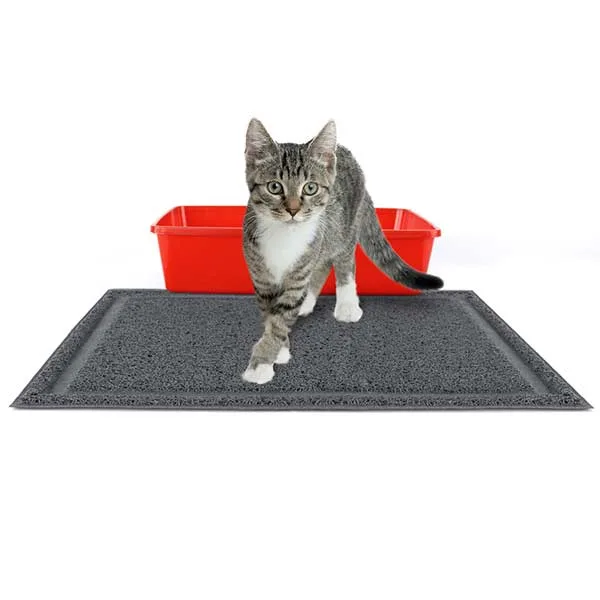
Purrshire Cat Litter Mat: The Purrshire Cat Litter Mat has a soft, cat-friendly surface that opens up your cat's paws to dislodge trapped litter without harming them. This means your cat is more likely to step on the mat and leave litter behind, rather than tracking it through your home.
Purrshire Cat Litter Mat
-
Purrshire Cat Litter Mat: Made from PVC rubber with a non-slip backing, it keeps the mat firmly in place and prevents moisture and particles from reaching your floor. A stable mat is safer and more effective, and the moisture barrier helps protect your flooring from damage.