Quick answer
Offer insoluble chicken grit free-choice in a separate dish starting at 6 weeks old. Grit stays in the gizzard to grind whole grains, so your birds get full nutrition from their feed.
Why grit matters for digestive health
Chickens don't have teeth. Instead, they swallow grit—small, insoluble crushed rock—that lodges in their gizzard. As the gizzard contracts, the grit acts like a mill, grinding whole grains and fibrous material into digestible particles. Without enough grit, chickens can't break down whole grains properly, which reduces nutrient absorption and can lead to impacted crops or poor growth.
Insoluble grit (the kind made from crushed granite or flint) never dissolves. It stays in the gizzard for weeks, slowly wearing down as it works. That's why you don't need to replace it daily—just keep the dish topped up and let your birds self-regulate.
When to start offering grit
Chickens that eat only commercial crumble or pellet feed don't need grit—those feeds are already ground. But once you introduce whole grains, scratch, or let your birds forage, grit becomes essential.
For young birds, wait until they are at least 6 weeks old. Before that, their digestive systems are still developing, and very fine starter feed doesn't require grinding. The Grower/Grown-Up Chicken Grit from Small Pet Select UK is sized specifically for birds 6 weeks and older, so it's safe to offer as soon as they transition to grower feed or start getting whole grains.
Grit vs. oyster shell: not the same thing
A common mix-up is using oyster shell (calcium) as grit. Oyster shell dissolves in the digestive tract and is meant to provide calcium for eggshell formation. It doesn't stay in the gizzard and won't help grind food. Insoluble grit is for digestion; oyster shell is for laying hens. Keep two separate dishes if your flock needs both.
How to offer chicken grit: 4 simple steps
- Choose the right grit size: Select a grit formulated for your birds' age. For chickens 6 weeks and older, use a grower/grown-up grit like Small Pet Select UK's Grower/Grown-Up Chicken Grit. Chicks under 6 weeks need a finer chick grit, not the larger particles. Using the wrong size can cause choking or inefficient grinding.
- Set up a separate dish: Place grit in a small, sturdy bowl or feeder separate from their main feed and water. Keep it in a dry area of the coop or run so the grit doesn't get muddy or moldy. Chickens will eat it as needed—no need to mix it into their food. A separate dish lets birds self-regulate; never force-feed grit.
- Offer grit free-choice at all times: Keep the dish filled and accessible 24/7, especially if your flock eats whole grains, scratch, or forages outdoors. Check the dish weekly and top it off. Because insoluble grit doesn't dissolve, you won't need to replace the entire batch often—just refresh as they eat it. If you see whole grains in droppings, your birds likely need more grit.
- Monitor and adjust as needed: Watch your flock's droppings and appetite. Undigested whole grains in poop are a clear sign they need more grit. Also, if you switch from pellets to a whole-grain feed, increase grit availability for the first week. Healthy birds will eat a small amount daily, so a 2 lb bag can last a small flock several weeks. Grit is cheap insurance against poor digestion—don't skip it when feeding whole grains.
Product used in this guide
-
Grower/Grown-Up Chicken Grit (6+ Weeks): Made up of insoluble crushed rock, grit remains in the bird’s gizzard to help with digestion and grind food as it passes through. This means you can offer it free-choice and trust that it will keep working for weeks, not just a single feeding.
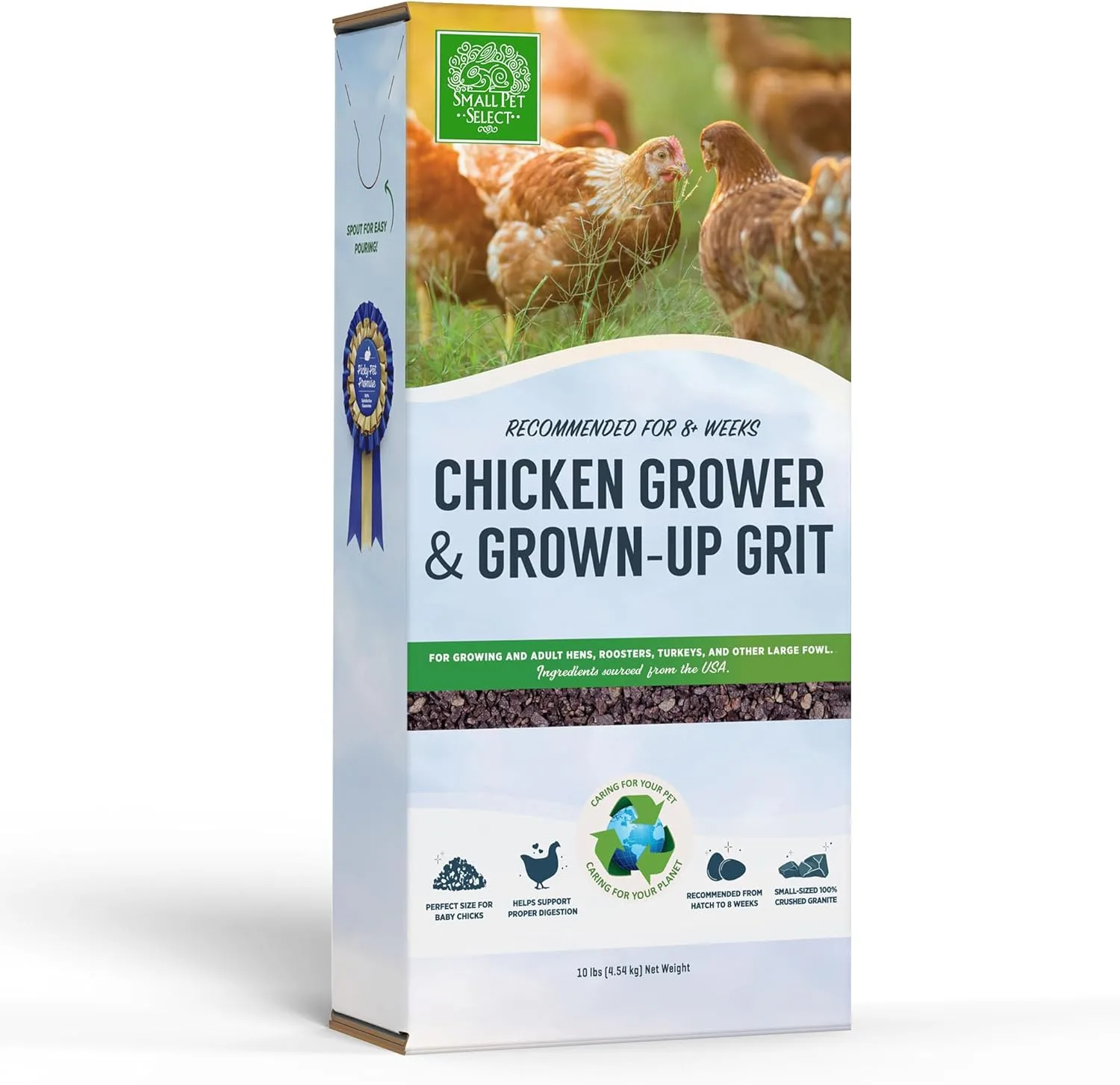
Grower/Grown-Up Chicken Grit (6+ Weeks)