Quick answer
Chlorhexidine solution is an effective antiseptic for cleaning minor wounds on dogs. Use it at the correct dilution (2% or less) and avoid contact with eyes, ears, and deep tissue.
Why chlorhexidine works for pet wounds
Chlorhexidine is a broad-spectrum antiseptic that kills bacteria, fungi, and some viruses. It stays active on the skin longer than many other cleansers, which helps prevent infection during healing. For superficial cuts, scrapes, and minor abrasions, it is a reliable first-line cleaner.
A 2% chlorhexidine solution is the standard concentration for veterinary use. Higher concentrations can irritate tissue, so always check the label. The Chlohexidine Solution from thetopdogpetstore contains exactly 2% chlorhexidine gluconate, making it ready to use for external wound cleaning without further dilution.
When not to use chlorhexidine
Do not use chlorhexidine in deep puncture wounds, body cavities, or on large open burns. It can delay healing if it contacts internal tissues. For deep or heavily bleeding wounds, seek veterinary care immediately. Also avoid using it near the eyes, inside the ears if the eardrum may be damaged, or on surgical sites unless directed by your vet.
Step-by-step wound cleaning with chlorhexidine solution
- Gather supplies and prepare the area: Collect chlorhexidine solution, sterile gauze pads or cotton balls, clean water or saline, and gloves if desired. Place your dog in a calm, well-lit area. Have treats ready for positive reinforcement. Mistake: Using cotton swabs that can leave fibers in the wound. Stick to gauze or lint-free pads.
- Rinse the wound with clean water or saline: Flush away visible dirt, debris, and loose hair from the wound surface. Use a gentle stream from a syringe or squeeze bottle. Pat the area dry with a clean gauze pad—do not rub. Checkpoint: If bleeding does not slow after gentle pressure, stop and see a vet.
- Apply the chlorhexidine solution: Pour a small amount of chlorhexidine solution onto a sterile gauze pad. Gently dab or wipe the wound and the skin around it. Do not pour the solution directly into deep wounds or body cavities. Mistake: Scrubbing vigorously can damage new tissue. Use gentle dabbing motions only.
- Let the solution sit for 30–60 seconds: Allow the chlorhexidine to contact the wound for at least half a minute to maximize its antiseptic effect. Do not rinse it off unless your vet advises it—drying in place extends protection. Checkpoint: If your dog licks the area excessively, use an Elizabethan collar to prevent ingestion.
- Monitor the wound and repeat as directed: Clean the wound once or twice daily until it heals. Watch for signs of infection: increased redness, swelling, discharge, or foul odor. If these appear, consult your veterinarian. Mistake: Over-cleaning can delay healing. Stick to the recommended frequency and let the wound rest between cleanings.
Product used in this guide
-
Chlohexidine Solution: Contains 2% Chlorhexidine Gluconate for external use only. The 2% concentration is the standard strength for safe and effective wound cleaning on dogs—no dilution required.
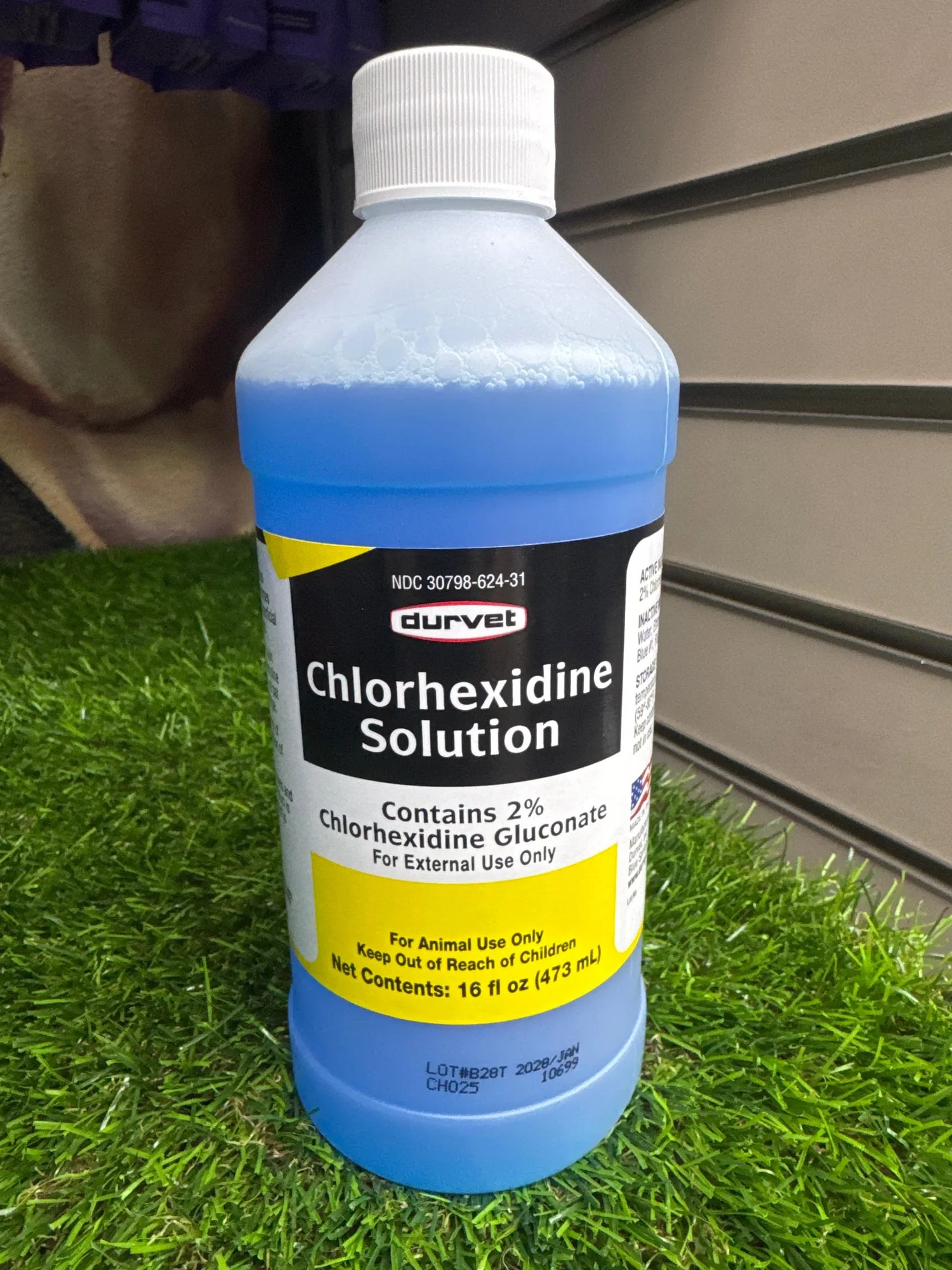
Chlohexidine Solution