Quick answer
Using a cloth swim diaper is simple: pull it up like a snug pair of shorts, check the leg and waist elastics for a gentle seal, and snap the sides if needed for extra security. At the beach, rinse sand out before changing to keep the diaper clean.
Why cloth swim diapers work differently than regular diapers
Cloth swim diapers are designed to contain solid waste while letting water flow through, so they don't swell up like a disposable diaper. They use a waterproof outer layer (often TPU) and a soft inner layer that won't absorb pool water, keeping your baby comfortable and mobile.
At the beach, sand can get trapped inside the elastics, so a quick rinse before removal helps prevent grit from scratching your baby's skin or damaging the diaper's waterproof lining.
How to put on and use a cloth swim diaper
- Check the fit before heading out: Hold the diaper up to your baby's waist. The elastic should sit snugly against the skin without leaving deep marks. Most cloth swim diapers fit a wide weight range—for example, the Groovy Summer-Swimmer fits roughly 15–45 lbs. If the diaper gapes at the legs or waist, it's too big; if it's hard to pull up, it's too small. A proper fit is the single most important factor for leak prevention.
- Pull up and adjust the elastics: Pull the diaper up like a pair of shorts, making sure the leg elastics sit right in the crease of the thigh, not bunched up. Smooth the waist elastic so it's flat against the belly. The elastics should be stretchy but not loose—if they roll or sag, adjust them before the next step. Bunched elastics are the most common cause of leaks; always smooth them flat.
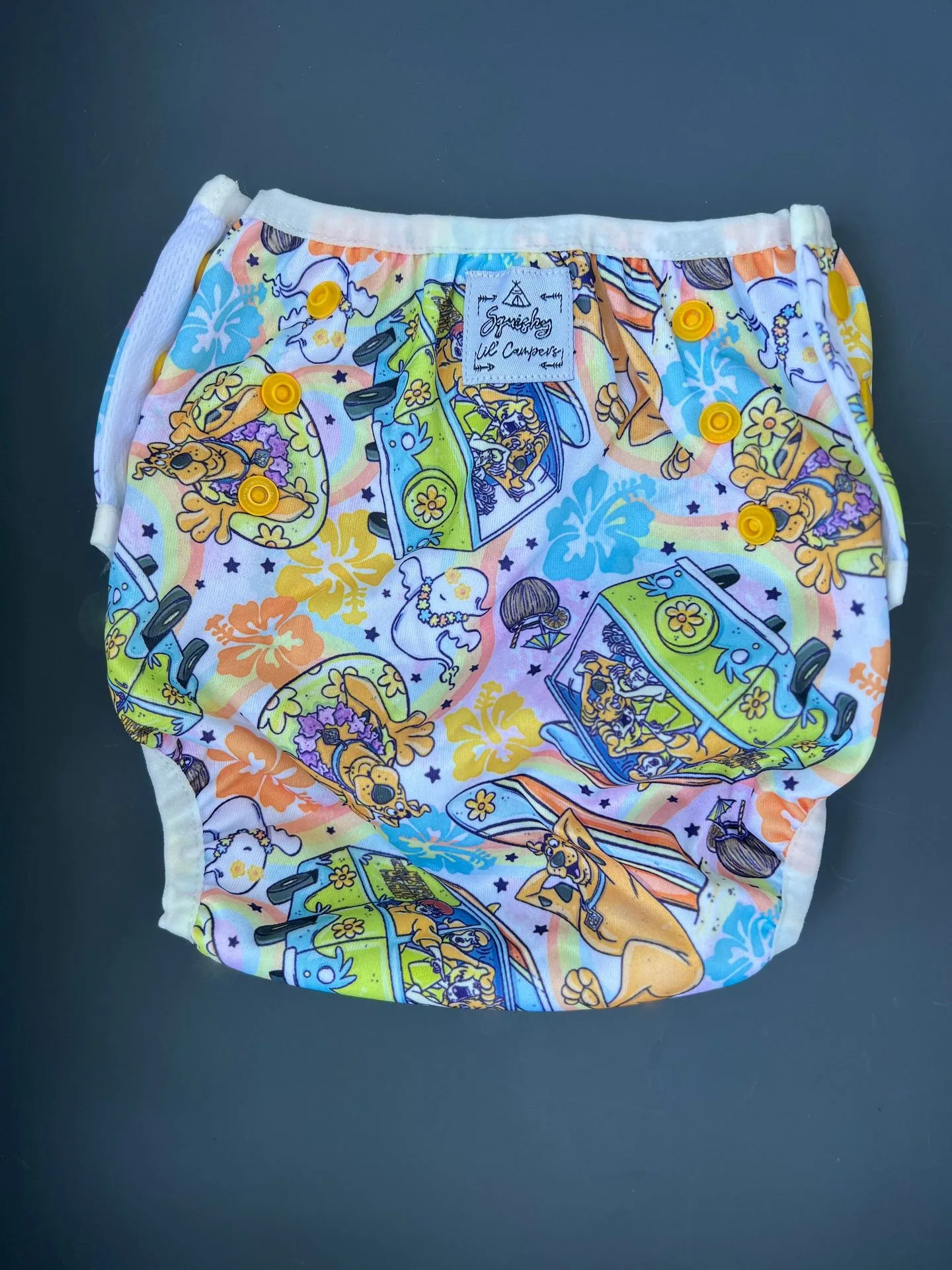
- Snap the sides for extra security: If your cloth swim diaper has snaps at the sides (like the Groovy Summer-Swimmer), fasten them after pulling up the diaper. Snaps add a backup layer of closure, especially helpful during active play or if your baby is a wiggler. They also make diaper changes easier—just unsnap instead of pulling down a wet diaper. Use snaps for active days; skip them for quick changes if the elastic fit is already snug.
- Change promptly after water time: Remove the wet swim diaper as soon as you're done swimming. At the beach, rinse the diaper with fresh water first to remove sand, then pull it off. A wet cloth swim diaper left on can cause skin irritation, and sand left inside the elastics can degrade the waterproof layer over time. Rinse sand out before removing to protect the diaper and your baby's skin.
- Rinse and store until wash day: Rinse the diaper in cool water until the water runs clear, then wring it out gently. Store it in a wet bag until you can wash it. Do not let a wet swim diaper sit in a plastic bag for more than a few hours—it can develop mildew. Wash with cloth diaper-safe detergent on a warm cycle. A quick rinse and airy storage prevent odors and extend the diaper's life.
Product spotlight
-
Groovy Summer-Swimmer: This swim diaper is lined with TPU on the outside and layered with AWJ on the inside. The elastics around the waist and legs are super stretchy and also come equipped with snaps. The TPU outer layer keeps messes contained, while the AWJ inner layer lets water pass through without absorbing it, so the diaper stays light and comfortable in the water.
Groovy Summer-Swimmer