Quick answer
To use contact nipple shields for latch issues, choose the correct size, center the shield over your nipple, and guide your baby to latch deeply. Use only under professional advice and plan to wean off gradually as latch improves.
When to consider nipple shields
Nipple shields are a temporary tool for latch challenges like flat or inverted nipples, tongue tie, or an overactive letdown. They can also help if your baby is premature or has difficulty latching due to size. Always consult a lactation consultant or healthcare provider before starting, as improper use can reduce milk transfer or cause nipple confusion.
Common mistakes to avoid
Using the wrong size shield is the most frequent error — a shield that is too small can pinch, while one too large may slip. Also, avoid leaving the shield on for the entire feeding if your baby latches well without it after a few minutes. Relying on shields long-term without addressing the underlying issue may lead to decreased milk supply.
Step-by-step guide to using contact nipple shields
- Step 1: Choose the right size: Measure your nipple diameter at the base (not the areola) and select a shield size that fits snugly but not tightly. The nipple should fit into the tunnel without rubbing the sides. Lansinoh Contact Nipple Shields come in multiple sizes — check the packaging or consult a lactation professional. A properly fitted shield should stay in place without suction marks on your areola.
- Step 2: Sterilize and position the shield: Boil the shield for 5 minutes or use a steam sterilizer before first use. Wash with warm soapy water between feedings. To position, turn the shield inside out partially, center it over your nipple, then flip the outer rim back so it adheres gently to your breast. The nipple should be centered in the tunnel. Moistening the shield slightly can help it stick better to your skin.
- Step 3: Help your baby latch: Bring your baby to the breast with their mouth wide open, aiming the nipple toward the roof of their mouth. Ensure their lips flange outward over the shield rim, not just the tip. If the shield slips or the baby loses suction, reposition and try again. A deep latch means the baby's chin touches your breast and their nose is free — avoid pressing on the shield.
- Step 4: Monitor feeding and wean off gradually: Watch for audible swallows and check that the baby is transferring milk (breast feels softer after feeding). Once latch improves (often within a few days to weeks), try removing the shield mid-feed or for the next feeding. Wean slowly to avoid engorgement or nipple confusion. If you notice decreased wet diapers or baby seems unsatisfied, reassess with a lactation consultant — the shield may need resizing or discontinuation.
Product spotlight
-
Contact Nipple Shields: Lansinoh Contact Nipple Shields are ultra-thin, super-soft, and flexible 100% silicone, designed to help moms with latch-on challenges related to flat or inverted nipples, tongue tie, or overactive let-down. The thin silicone material allows for better nipple stimulation and milk flow compared to older, thicker shields, helping maintain milk supply while addressing latch issues.
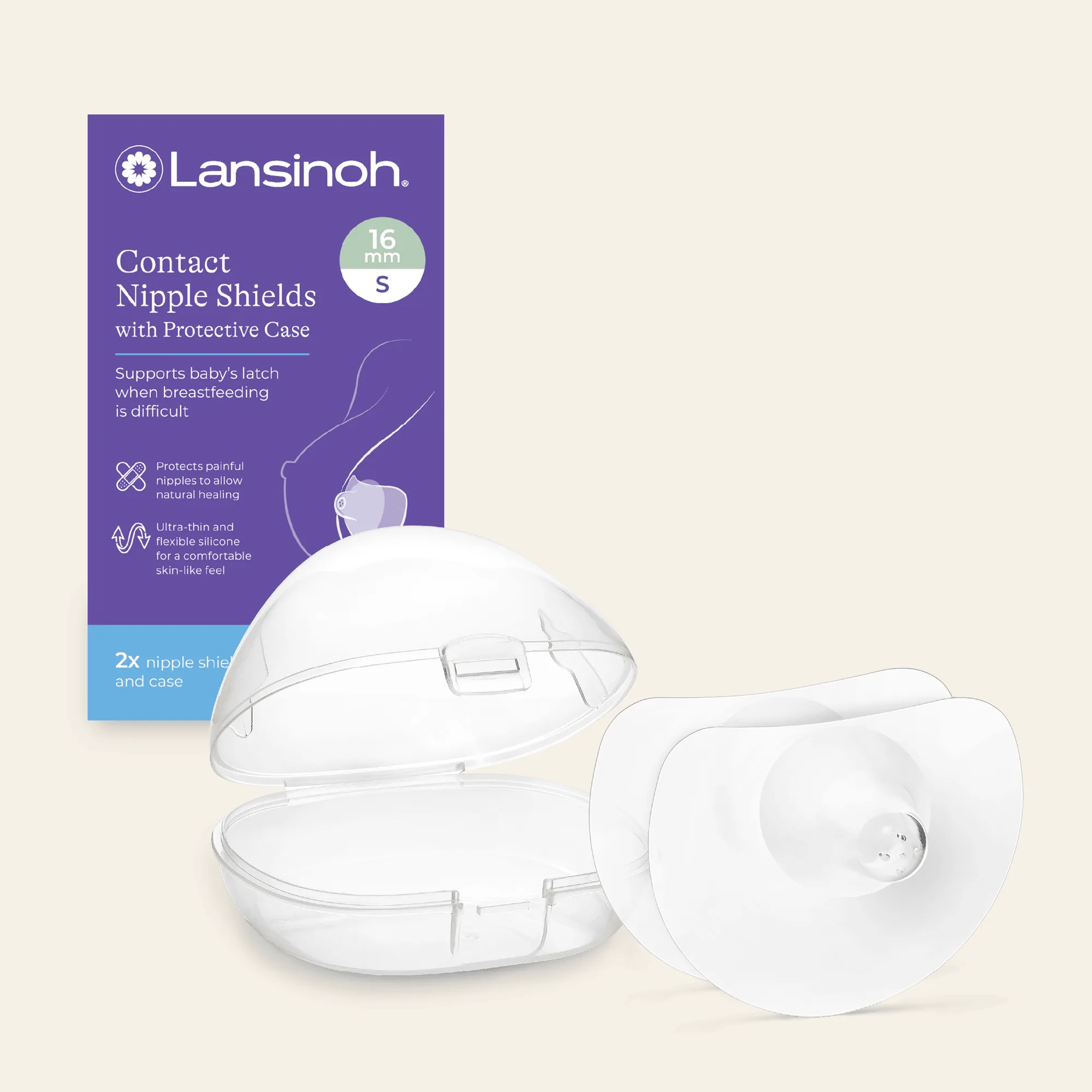
Contact Nipple Shields