Quick Answer
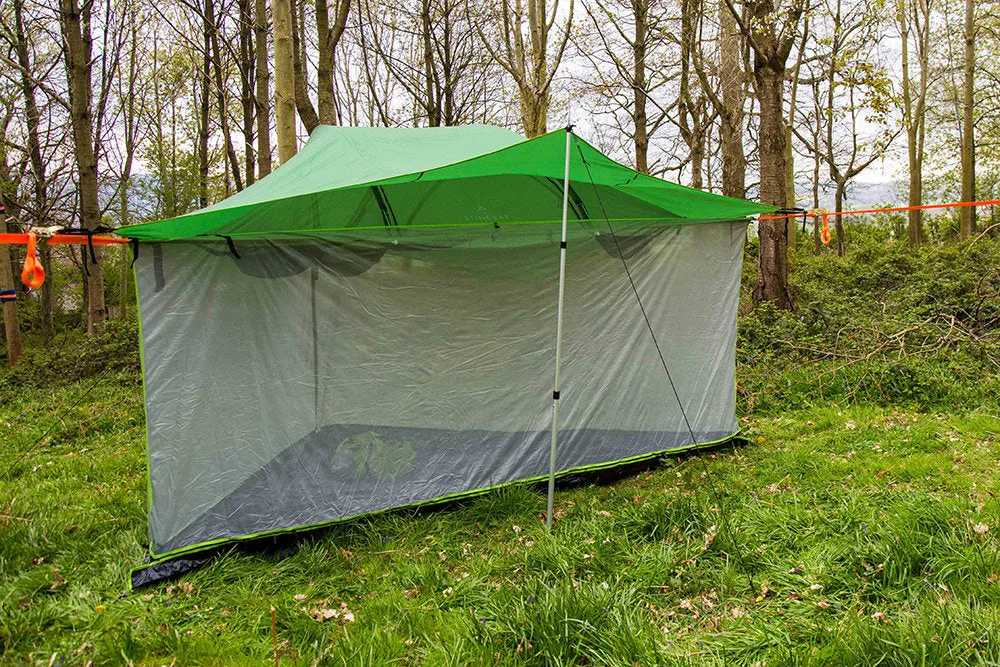
A conversion kit lets you set up your tree tent on the ground when no suitable trees are available. The process involves attaching a ground stack frame to your tent's suspension points, then staking it securely. This creates a stable, elevated platform that keeps you off the damp ground.
What You Need for a Ground Setup
To convert your tree tent to a ground setup, you'll need a ground conversion kit specific to your tent model. Most kits include a lightweight frame, ground stakes, and guy lines. You'll also need a tarp or footprint to protect the tent floor from abrasion and moisture. A rubber mallet helps drive stakes into hard soil without damaging them.
Before you start, check the ground for sharp rocks, roots, or debris that could puncture the tent floor. Clear the area to create a flat, smooth surface roughly the size of your tent's footprint. This prep work prevents damage and ensures a comfortable night's sleep.
Step-by-Step Ground Conversion Process
- Assemble the Ground Stack Frame: Lay out all frame components on your cleared ground. Connect the poles according to the kit instructions, ensuring each joint clicks or locks fully. A common mistake is forcing connections out of sequence—check the diagram first. Dry-fit the frame before attaching the tent to avoid rework.
- Attach the Tent to the Frame: Place your tree tent on top of the assembled frame. Connect the tent's corner loops or webbing straps to the corresponding attachment points on the frame. Work in a cross pattern (opposite corners first) to keep tension even. Uneven tension can cause the tent to sag; adjust each strap incrementally.
- Stake the Frame Securely: Drive stakes through the frame's stake loops at a 45-degree angle away from the tent. Use all provided stake points—skipping one reduces stability. In sandy or loose soil, use longer stakes or bury the stakes deeper. A loose stake is the most common cause of an unstable ground setup.
- Adjust Tension and Guy Lines: Tighten all webbing straps until the tent fabric is taut but not stretched to distortion. Attach guy lines to the frame's outer loops and stake them out for extra wind resistance. Check that the tent floor is evenly suspended above the ground. A properly tensioned tent sheds rain and resists wind better than a loose one.
- Add a Ground Cloth or Tarp: Place a footprint or tarp under the tent, extending slightly beyond the edges. This protects the tent floor from punctures and keeps moisture from wicking up. Fold any excess tarp under to prevent rain from pooling on top. A tarp that extends too far can collect water—trim or fold it to size.
Recommended Products for Ground Conversion
- Stingray Ground Stack Top Up Bundle: Add a full enclosed and protected under your existing 3-Person Tree Tent, by adding a Ground Conversion Kit and Double Bubble. This area can be used as a living room, storage, or extra sleeping for 3 more guests. If you already own a 3-person tree tent, this bundle gives you a dedicated ground-level space that doubles your usable area without buying a second tent.