Quick answer
Start by introducing all five Feelings Family Hand Puppets as a set, letting the child explore their textures and crinkle sounds before assigning any emotion. Then move through a predictable sequence: name each feeling, act out a small scenario, and let the child direct the puppet's response. Keep the puppets in the child's hands for at least half the session so the work stays playful rather than interrogative.
Why the five-puppet set works for emotional disclosure
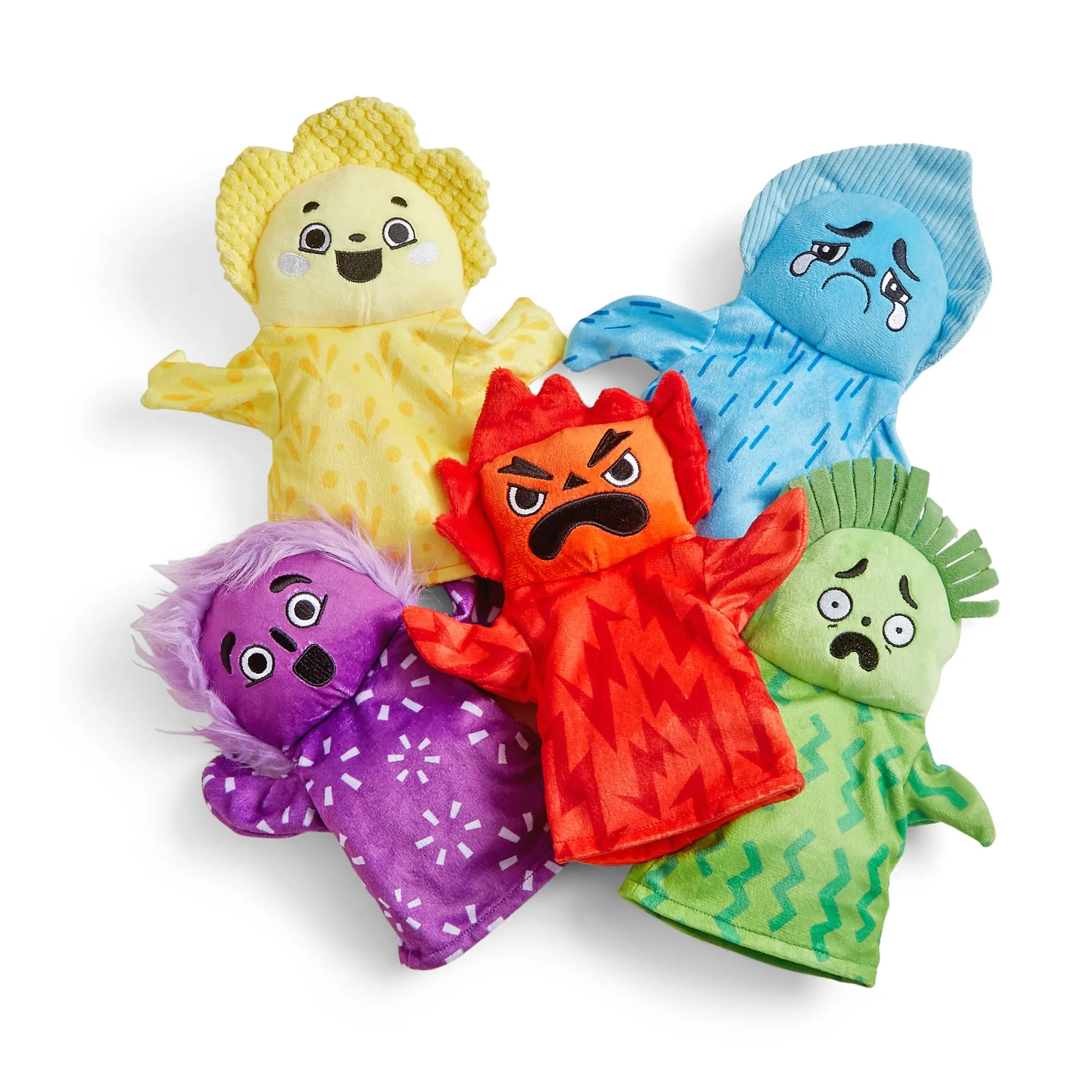
Feelings Family Hand Puppets cover scared, angry, happy, sad, and surprised. That range matters because children often lack the vocabulary to say 'I felt left out' or 'I was worried,' but they can point to a puppet and say 'this one.' The soft textures and crinkle sounds add a sensory layer that can hold a child's attention when direct questions feel too intense. In practice, the puppets become a safe third party: the child can project a difficult feeling onto the puppet without owning it immediately.
safe
Set up the space before the child arrives
Have all five puppets visible but not lined up like a test. Place them in a soft basket or on a low cushion within the child's reach. If you use a puppet theatre, keep it optional for the first few sessions; some children find the stage too performative and do better with puppets on the floor. Check that the crinkle material still works and that no puppet is missing, since an incomplete set can limit the child's choices later.
Step-by-step: running a puppet session
- Introduce the puppets as a group: Let the child touch each puppet, squeeze the crinkle material, and choose one to hold first. Do not name the emotions for them yet. Common mistake: launching into 'This is the angry puppet' before the child has had a chance to explore. Checkpoint: the child should be holding at least one puppet before you ask any feeling question.
- Name the feelings together: Once the child is comfortable, go through the five puppets and invite the child to label each one. If they hesitate, offer a choice: 'Is this one scared or surprised?' Using puppets in therapy works best when the child feels like the expert. Common mistake: correcting the child's label too quickly. Checkpoint: the child has named at least three of the five puppets in their own words.
- Act out a small, familiar scenario: Pick a low-stakes situation the child knows, such as losing a game or saying goodbye to a parent. Use two puppets to show a brief interaction, then pause. Common mistake: making the scenario too emotionally loaded on the first try. Checkpoint: the child stays engaged and does not withdraw or change the subject.
- Hand the story over to the child: Ask the child to make the puppets finish the scene or start a new one. Stay quiet and let them lead. This is where puppet therapy techniques do their real work, because the child reveals what they expect from the feeling. Common mistake: interrupting to interpret. Checkpoint: the child directs at least one puppet action without your prompting.
- Link the puppet feeling back to the child: After the play, use a gentle bridge: 'That puppet felt really mad when his tower fell. Have you ever felt that way?' Keep it as an invitation, not a demand. Common mistake: pushing for a personal disclosure before the child is ready. Checkpoint: the child makes a verbal or nonverbal connection between the puppet and their own experience.
- Close with a regulating action: End by having the child put the puppets back in their basket or give one a final hug. If the child is activated, squeeze the crinkle sounds together as a calming finish. Common mistake: ending abruptly while the child is still in a heightened state. Checkpoint: the child transitions out of the puppet play without distress.
Product facts that shape how you use these puppets
- Feelings Family Hand Puppets: Feelings Family Hand Puppets include five puppets representing scared, angry, happy, sad, and surprised, with soft textures and crinkle sounds. The five-emotion range lets you cover common therapy themes without switching materials, and the sensory features give you a nonverbal way to help a child regulate during a session.
- Wizard Puppet: The Wizard Puppet is a 14-inch glove puppet that accommodates adult-size hands, with a mouth that opens and arms that can be moved with two fingers. If you want to model a scenario or play a 'helper' character alongside the feelings puppets, this puppet's size and mouth movement make it easier for an adult to demonstrate without the child feeling watched.
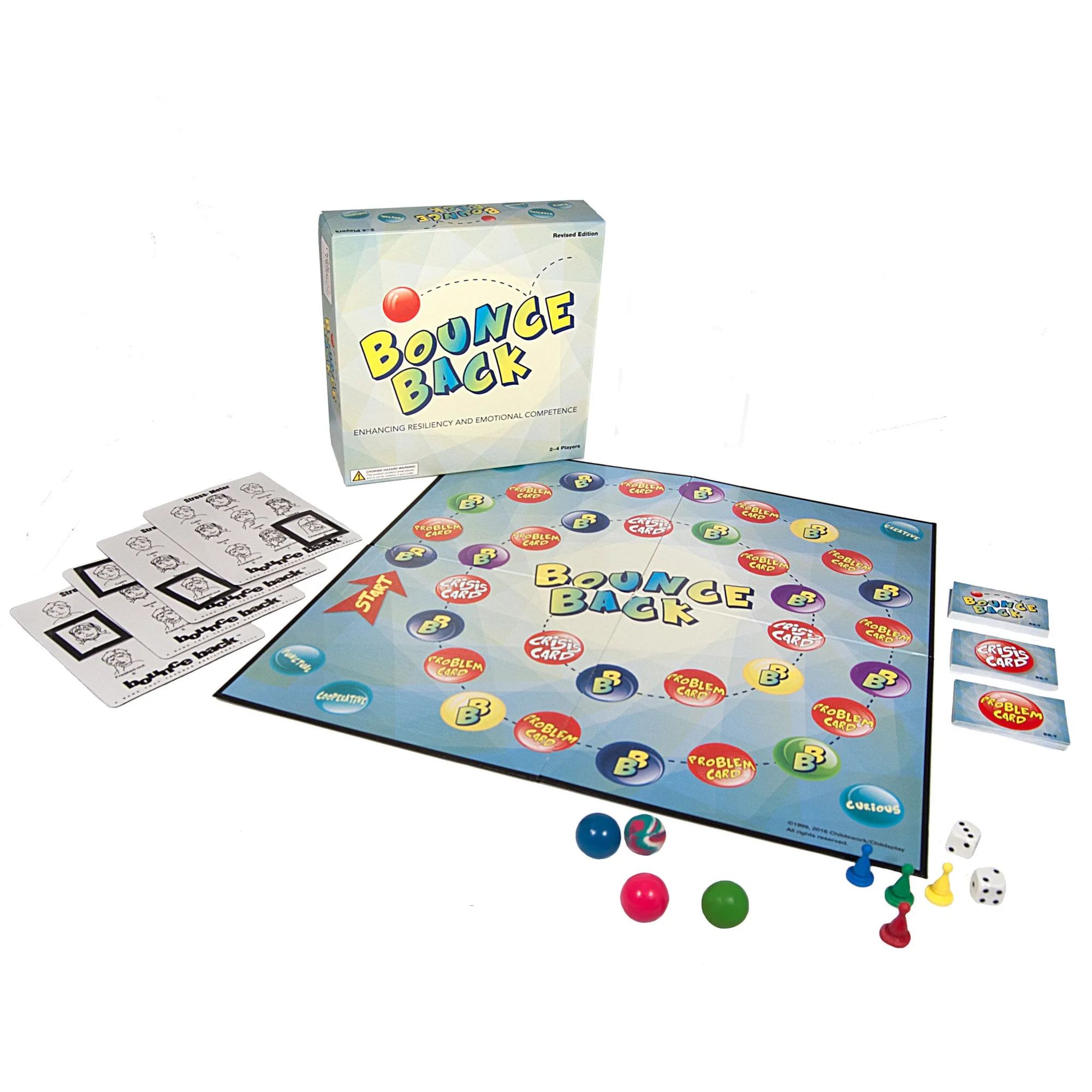
- Bounce Back Board Game: Children's Version - Ages 8-12: Bounce Back Board Game: Children's Version is for ages 8-12, for 4 players, and includes cards, balls, stress magnets, and 90 question cards about resiliency skills. For older children who have moved past puppet play, this game offers a structured way to keep working on insight, humor, and persistence after the puppets have opened up the conversation.