Quick answer
Yes, you can make dough in a food processor. It handles pizza, bread, and pastry dough quickly, but you must avoid over-processing to keep the texture right.
Why use a food processor for dough?
A food processor mixes and kneads dough faster than by hand and with less effort than a stand mixer. It works especially well for pastry dough, where keeping ingredients cold is key. For bread dough, the food processor can develop gluten quickly, but you need to watch the timing to avoid overheating the dough.
What dough works best?
Food processors excel at pastry dough (pie crust, biscuits) because the blades cut cold butter into flour without warming it. Pizza dough and some bread doughs also work, but very stiff doughs (like bagels) may strain the motor. Stick to recipes designed for food processors or adapt by reducing liquid slightly.
How to make dough in a food processor
- Step 1: Prepare your ingredients: Measure dry ingredients (flour, salt, sugar) into the work bowl. Pulse a few times to combine. For pastry, keep butter and liquid ice cold. Cold ingredients prevent the dough from overheating during processing.
- Step 2: Add fat (if using): For pastry, add cold cubed butter or shortening. Pulse in short bursts until the mixture looks like coarse crumbs with pea-sized butter pieces. Do not run continuously. Over-processing melts the fat, making pastry tough.
- Step 3: Add liquid gradually: With the motor running, pour cold water (or milk/egg) through the feed tube in a steady stream. Stop as soon as the dough starts to clump together. Too much liquid makes dough sticky; add less than the recipe says, then adjust.
- Step 4: Knead the dough: For bread or pizza dough, process for 30-45 seconds until the dough forms a smooth ball. For pastry, stop as soon as it clumps; do not knead. Kneading pastry develops gluten and ruins flakiness.
- Step 5: Check the texture: Turn the dough out onto a lightly floured surface. It should be soft and slightly tacky but not sticky. If it's dry, add a teaspoon of water and pulse briefly. If the dough feels warm or sticky, refrigerate it for 15 minutes before shaping.
- Step 6: Rest and shape: Wrap the dough in plastic wrap and let it rest for 30 minutes (pastry) or 1 hour (bread) at room temperature. This relaxes the gluten and makes rolling easier. Skipping the rest leads to shrinkage during baking.
Our recommended food processor for dough
-
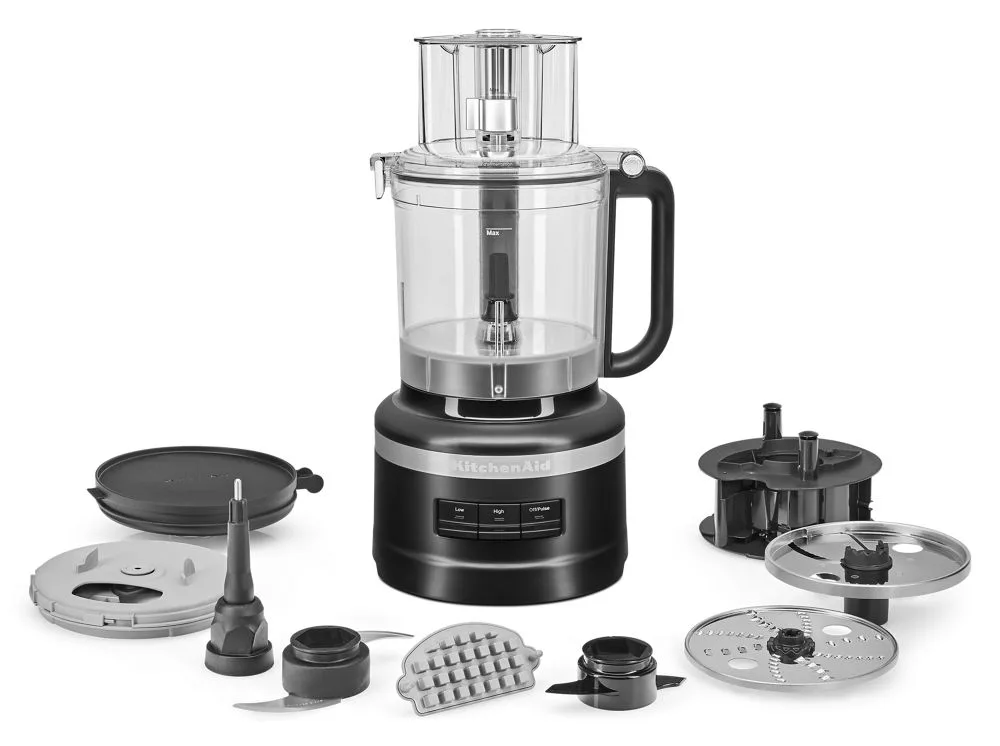
Black Matte: This KitchenAid® Food Processor in Black Matte is designed for versatile food preparation, including chopping, slicing, and shredding. Its powerful motor and sharp blades handle dough mixing and kneading efficiently, making it a reliable choice for home bakers.
Black Matte