Quick answer
Set a fixed 10-minute slot right after snack, choose one deck and one goal per week, and run a three-part loop: quick review, new cards, then a two-minute game. Keep the cards visible and stop while it is still fun. A set like the Geography Flash Cards – 338 World & USA Learning Cards makes this easy because you can pull just the countries, states, or landmarks you are working on.
Set up the 10-minute after-school slot
The routine works best when it happens at the same time each day, right after a snack and before screens. Put the deck on the table the night before so there is no hunting for it. Ten minutes is enough for about 30–40 cards if you keep a steady pace; longer sessions tend to turn into negotiations. If your child is younger, start with five minutes and add a minute each week.
Pick one focus per week, not the whole deck
A 338-card set can overwhelm if you shuffle everything together. Choose one thread for the week — for example, U.S. states, or flags of Europe — and pull only those cards. This keeps the review pile small enough to finish, which matters more than covering every card. Write the week's focus on a sticky note on the box so everyone remembers.
Run the three-part loop: review, new, game
Start with five cards from yesterday (review), then introduce three to five new cards, then finish with a fast game like 'beat the timer' or 'find the capital.' The game is not extra — it is what makes the new facts stick. Keep a small 'known' pile and a 'practice' pile so your child can see progress without you saying it.
Use the cards away from the table
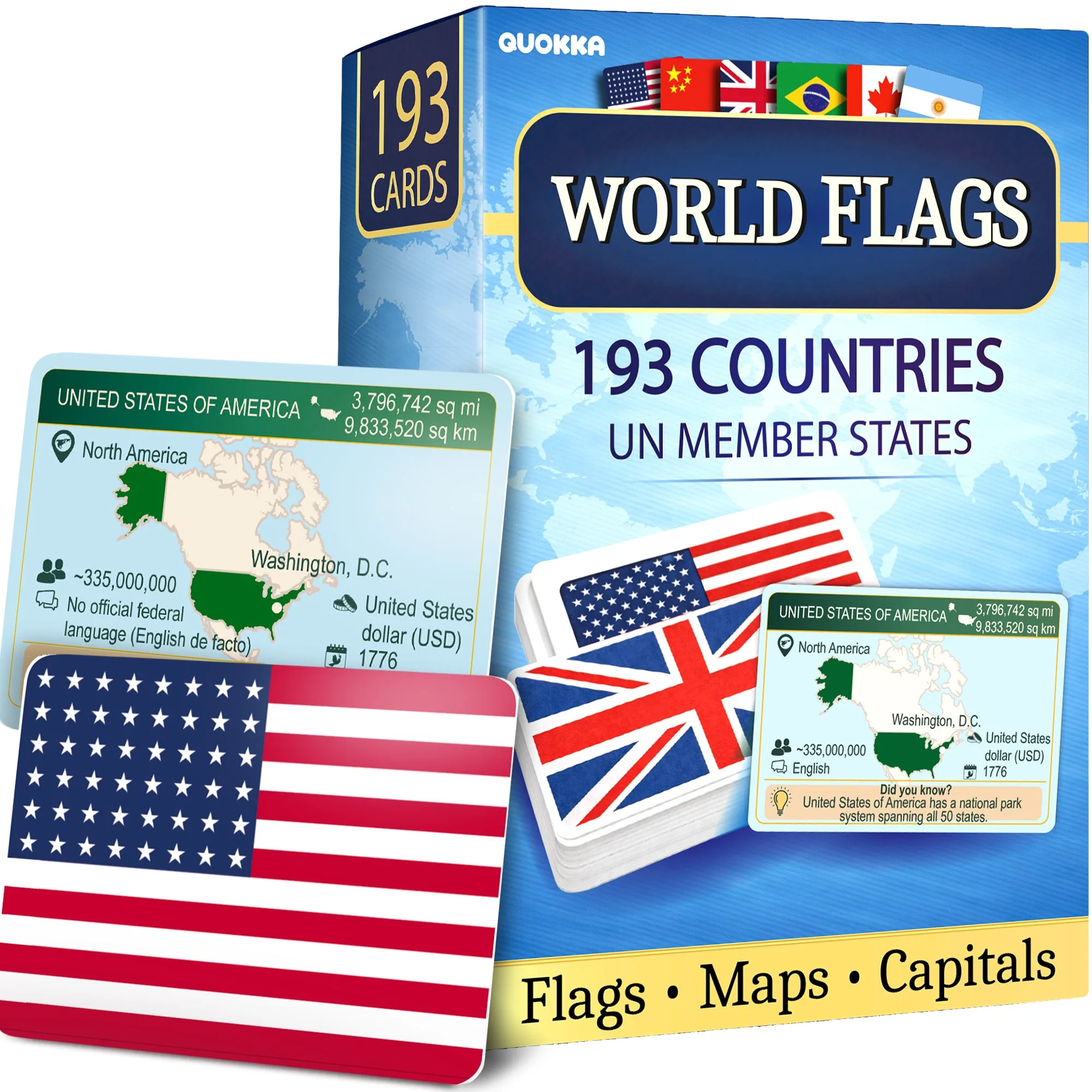
Geography is not just a table subject. Take a few cards in the car, to a waiting room, or to the park. Ask your child to spot a flag or landmark card that matches something they see or read. This turns practice into noticing, which is the real goal of an after-school routine. If you are using the World Flags Flash Cards – 193 Country Geography Trivia Cards, the maps and capitals on the back make these easy to use in short bursts.
Keep a simple progress marker
You do not need a chart with stickers unless your child likes that. A rubber band around the 'known' pile is enough. Once a week, count how many cards moved from practice to known. If the number stalls, change the focus or drop to fewer new cards — do not push through frustration.
Your after-school geography routine, step by step
- 1. Anchor the time: Choose a fixed 10-minute slot right after snack. Put the deck on the table before your child sits down. Common mistake: starting the routine only when everyone is already tired or hungry. Checkpoint: if you miss a day, do not double up the next day — just restart the 10 minutes.
- 2. Pull one focus for the week: From the 338 geography cards, select only the states, countries, or landmarks you are working on. Store the rest out of sight. Common mistake: shuffling the whole deck and spending the session sorting instead of learning. Checkpoint: your practice pile should fit in one hand.
- 3. Review five, add three: Begin with five cards from yesterday, then introduce three new ones. Say the answer, then have your child repeat it. Common mistake: introducing ten new cards because the first three felt easy. Checkpoint: if your child misses more than two in a row, go back to review only.
- 4. Finish with a two-minute game: Play 'beat the timer' or 'find the capital' with the cards you just used. Keep score loosely. Common mistake: turning the game into a test with consequences. Checkpoint: end while your child still wants one more round.
- 5. Move the known cards: At the end, move any card answered correctly twice into the known pile. Use a rubber band or a separate bag. Common mistake: leaving known cards in the practice pile, which makes the pile feel endless. Checkpoint: once a week, count the known pile and celebrate the number.
- 6. Take five cards on the go: Slide five cards into your bag for car rides or waiting rooms. Ask your child to spot a flag or landmark that matches something they see. Common mistake: treating geography practice at home as table-only. Checkpoint: if the cards get lost, use a small zip pouch — not the whole box.
Product facts
- Geography Flash Cards – 338 World & USA Learning Cards: 338 educational flash cards with 193 UN countries, 50 US states, 46 presidents, 37 landmarks, 7 continents, and 5 oceans. You can run a different weekly focus for months without buying another set, and pull just the USA learning cards or world geography cards you need.
- World Flags Flash Cards – 193 Country Geography Trivia Cards: 193 UN member states with flags, maps, capitals, and country facts; designed for kids, teens, adults, and families. A lighter, portable deck for car rides or trivia nights when you want flags and capitals only.
- Flash Cards Addition & Subtraction for Kids | 338 Cards: 338 cards split into 169 addition and 169 subtraction cards, color-coded with sorting rings, 6.92 x 4.72 inches. If your after-school slot is math, the color-coding and rings keep the routine just as simple.