Quick answer
Start by pulling one Gratitude Card each morning, reflect on the prompt for a few minutes, and jot down what comes to mind. Repeat daily to train your brain to notice what is already good in your life.
Why a Daily Gratitude Practice Works
We are experts at focusing on what is missing from our lives. Dissatisfaction can drive ambition, but it also drags us down by making us overlook what is already good. A daily gratitude practice flips that default: it trains your mind to stop, take stock, and recognize what isn't imperfect or appalling.
Gratitude Cards offer a structured way to do this without relying on your own memory or creativity each day. Each card presents a specific prompt that guides your reflection, so the practice stays fresh and doesn't become a repetitive chore.
5 Steps to Build Your Daily Gratitude Practice
- Choose a consistent time and place: Pick a moment that already exists in your day — right after your morning coffee, before bed, or during a lunch break. Keep the cards somewhere visible, like on your nightstand or desk. Common mistake: skipping because you forgot. A visible spot and a tied-to-existing-habit time make it stick.
- Pull one card without overthinking: Shuffle the deck and draw a single card. Don't try to pick one that 'feels right' — randomness is part of the practice. Read the prompt aloud or silently. Checkpoint: if you find yourself searching for a 'better' card, remind yourself that the practice is about accepting whatever comes up.
- Reflect for two to three minutes: Set a timer if it helps. Sit quietly with the prompt and let your mind wander to specific people, moments, or things that connect to it. Avoid general answers — aim for concrete examples. Common mistake: rushing to the next task. The reflection is the core of the practice, not the card itself.
- Write down one thing that came to mind: Keep a small notebook or a notes app handy. Write one sentence about what you noticed — for example, 'I felt grateful for the way my partner made me laugh this morning.' The act of writing deepens the memory. Checkpoint: if you can't think of anything, that's okay. Write 'nothing came today' and move on. The habit matters more than the content.
- End with a simple acknowledgment: Close by saying (out loud or silently) 'I am grateful for that.' This verbal cue signals to your brain that the practice is complete and reinforces the positive emotion. Common mistake: treating the practice as a checklist item. The acknowledgment turns a task into a meaningful ritual.
About Gratitude Cards
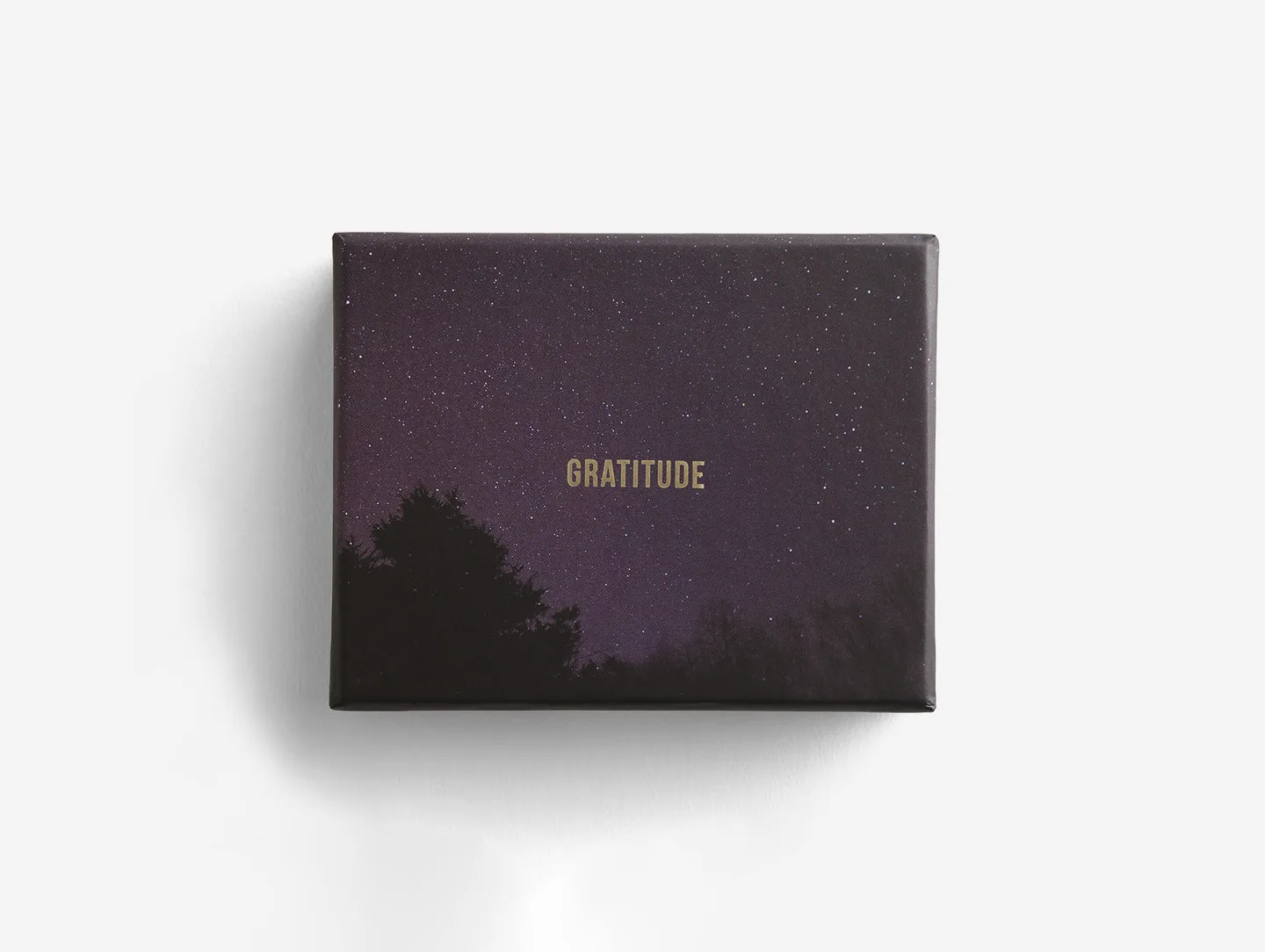
- Gratitude Cards: 60 cards to remind us of the many reasons we have to be thankful With 60 unique prompts, you can pull a different card each day for two months before repeating, keeping your daily practice varied and engaging.