Quick Answer
Use a griddle thermometer to check both your cooking surface and your protein's internal temperature. For surface heat, an infrared thermometer for griddle gives instant readings; for proteins, a probe thermometer is essential. Always account for carryover cooking by pulling meat 5°F before your target.
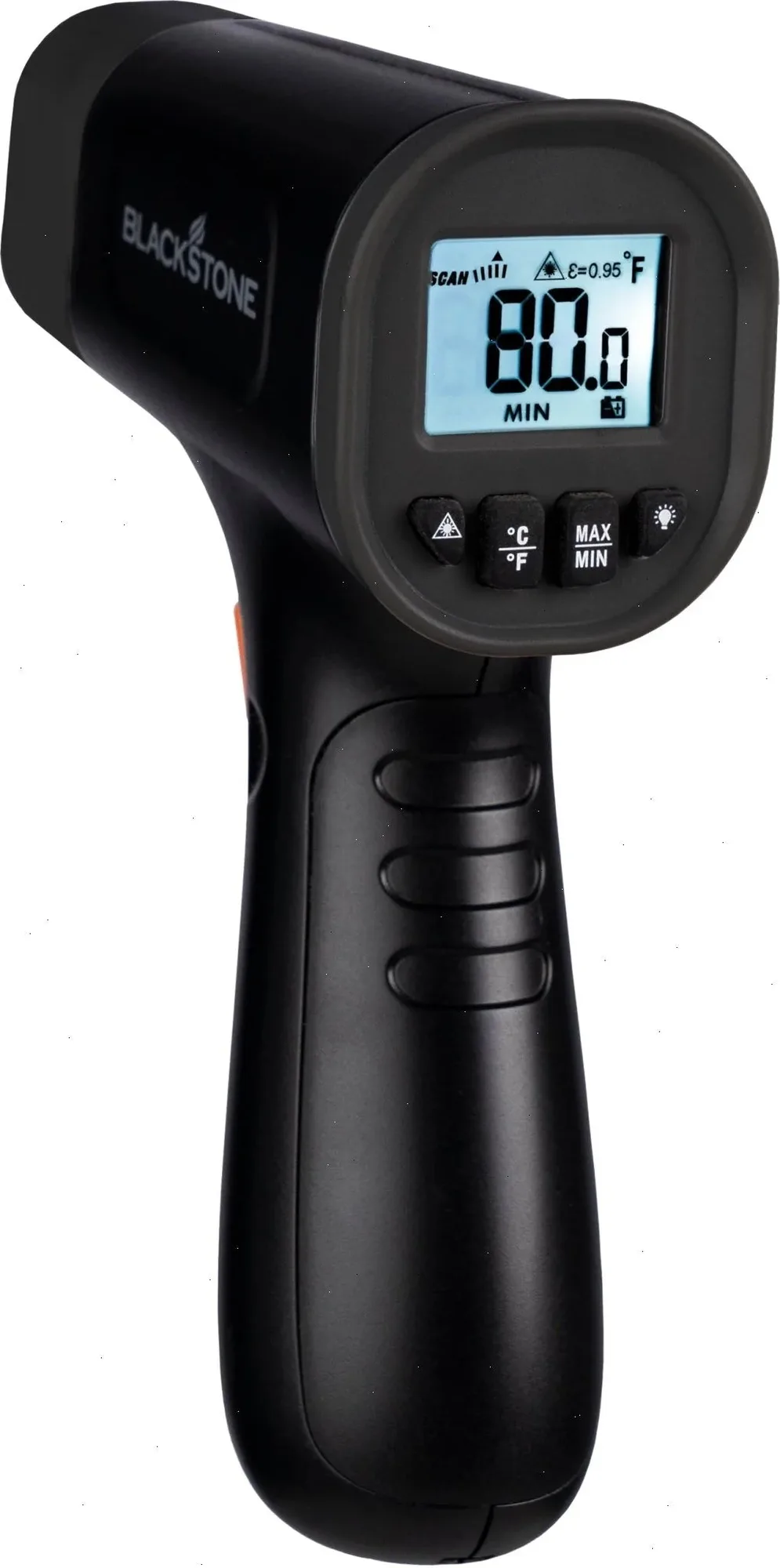
infrared thermometer
Perfectly cooked proteins start with knowing your temperatures—both on the griddle surface and inside the meat. A griddle thermometer helps you avoid guesswork and ensures your chicken, steak, or fish comes out juicy and safe every time.
Whether you're using a built-in thermometer or a separate infrared thermometer for griddle, the key is consistency. This guide walks you through the steps to measure surface heat, check internal temps, and avoid common mistakes that lead to overcooked or undercooked meals.
Why Surface Temperature Matters
The griddle surface temperature determines how your protein cooks. Too low, and you'll get steaming instead of searing; too high, and the outside burns before the inside finishes. Most proteins need a surface temp between 350°F and 450°F for a good sear, but delicate items like fish prefer lower heat.
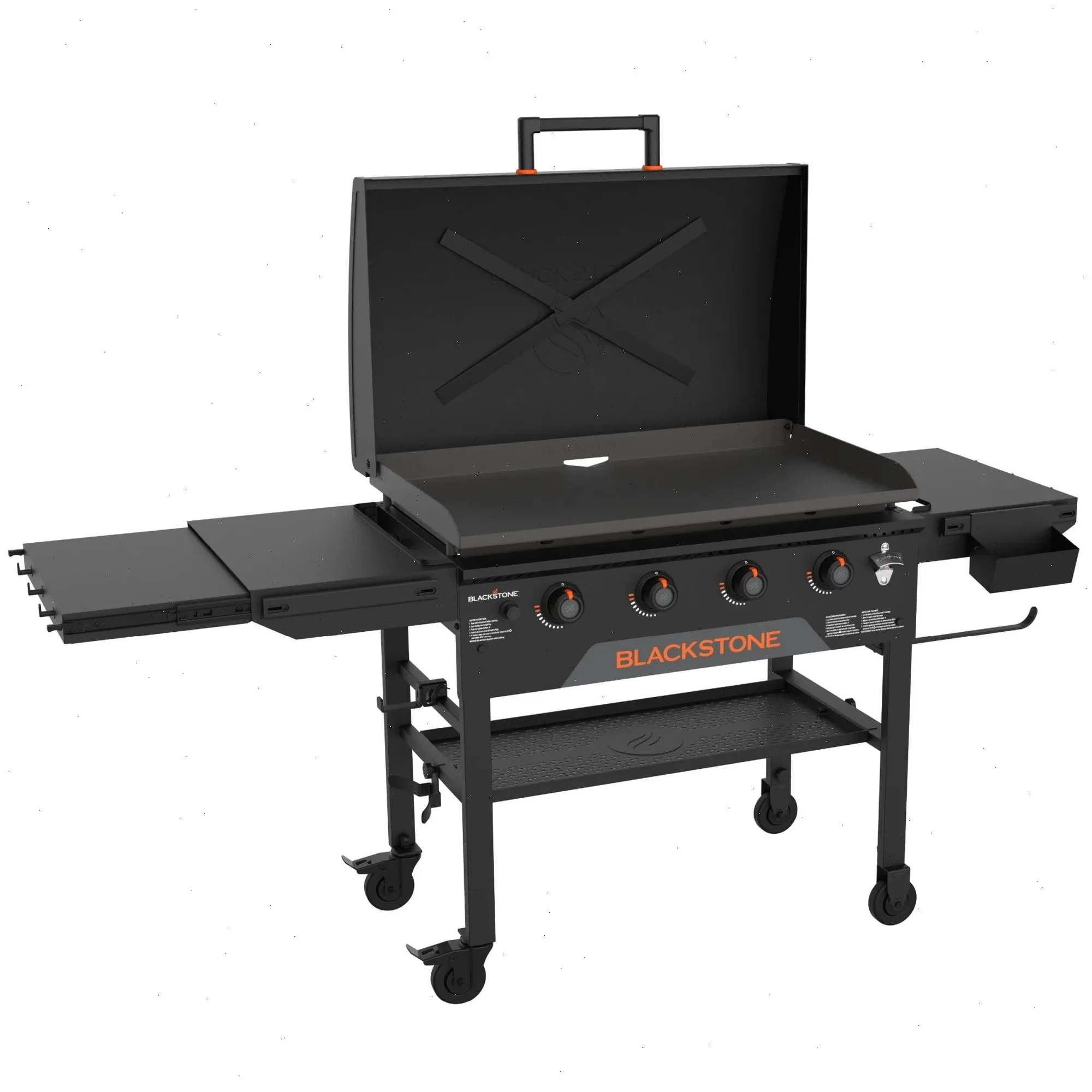
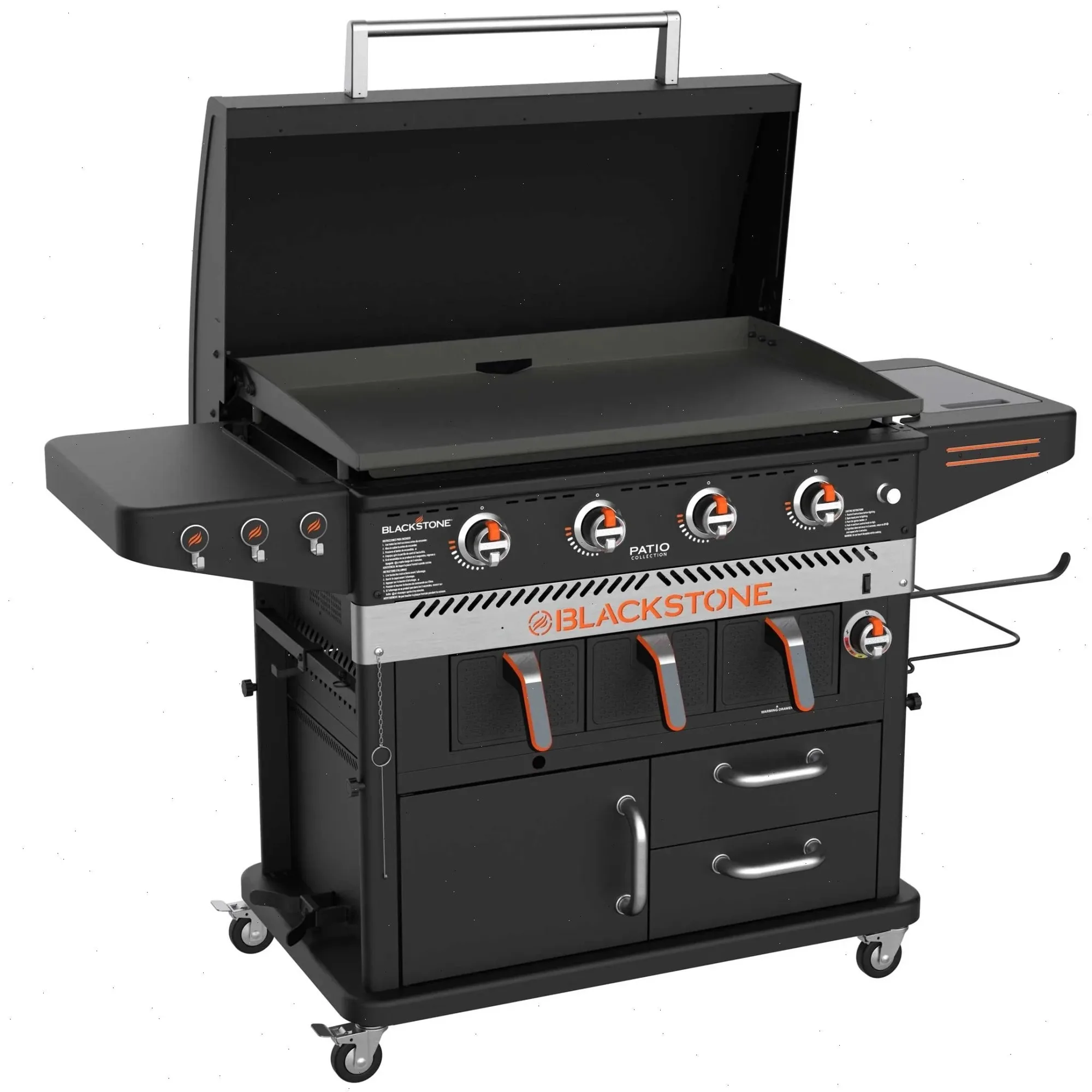
An infrared thermometer for griddle lets you check the surface instantly without touching the cooking surface. This is especially useful on griddles with multiple heat zones, like the Iron Forged 36” Griddle with Cabinet, which offers four independent zones—each can be set to a different temperature for different foods.
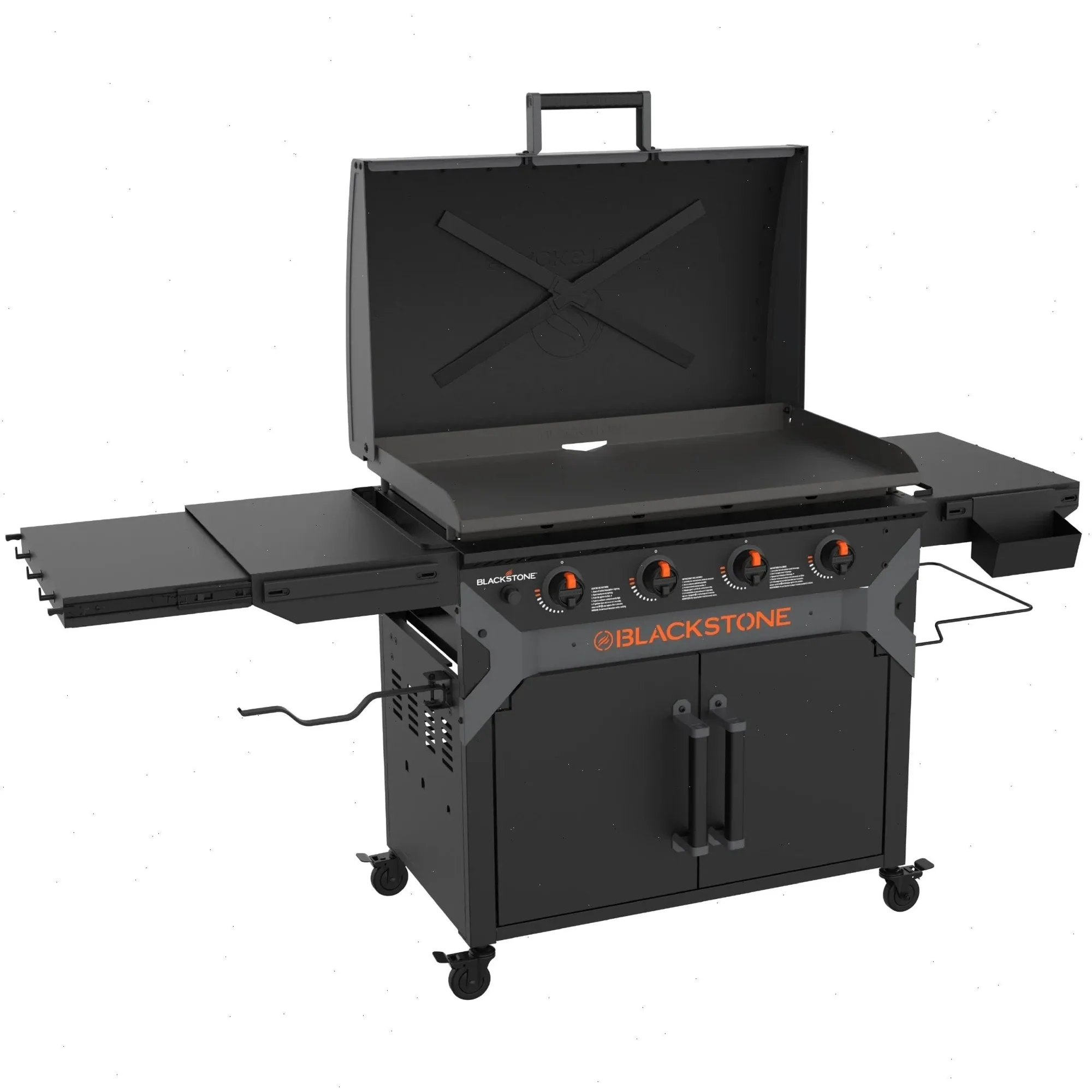
Iron Forged 36” Griddle with Cabinet
- Use an infrared thermometer to check the surface in multiple spots, as hot spots are common.
Choosing the Right Thermometer
There are two main types: surface thermometers (like infrared) and probe thermometers for internal temps. For griddle cooking, you'll likely need both. An infrared thermometer for griddle is great for checking the cooking surface, while a probe thermometer is essential for measuring the internal temperature of your protein.
When selecting a probe thermometer, look for one with a thin tip for quick readings and a digital display. Some models have wired probes that can stay in the meat while it cooks, which is handy for larger cuts. Avoid glass thermometers that can break on the griddle surface.
- Keep a probe thermometer with a long cable for monitoring meat while it cooks.
Step-by-Step: Using Your Griddle Thermometer
Start by preheating your griddle for at least 10 minutes. Then use an infrared thermometer to check the surface temperature in several spots. Adjust the burners to even out hot spots. Once the surface is ready, place your protein on the griddle.
Insert a probe thermometer into the thickest part of the protein, avoiding bone and fat. For thin cuts, you can check with an instant-read thermometer after flipping. Remember that the temperature will rise about 5°F after you remove the meat from the heat, so pull it off slightly before your target.
- Clean your probe thermometer between readings to avoid cross-contamination.
How to Use a Griddle Thermometer: Step-by-Step
- Preheat and Check Surface: Turn on your griddle and preheat for at least 10 minutes. Use an infrared thermometer for griddle to measure the surface temperature in multiple spots. Checkpoint: Aim for 350–400°F for most proteins. If you see more than a 25°F difference between spots, adjust the burners.
- Place Protein and Insert Probe: Once the surface is ready, place your protein. Insert a probe thermometer into the thickest part, avoiding bone and fat, to get an accurate internal reading. Checkpoint: For thin cuts, use an instant-read thermometer after flipping. Avoid touching the griddle surface with the probe.
- Monitor and Pull Early: Watch the internal temperature as it rises. Remove the protein from the griddle when it's 5°F below your target to account for carryover cooking. Verdict: Let the protein rest for 3–5 minutes. The temperature will continue to rise, and you'll hit your target perfectly.
Griddle Thermometer Product Facts
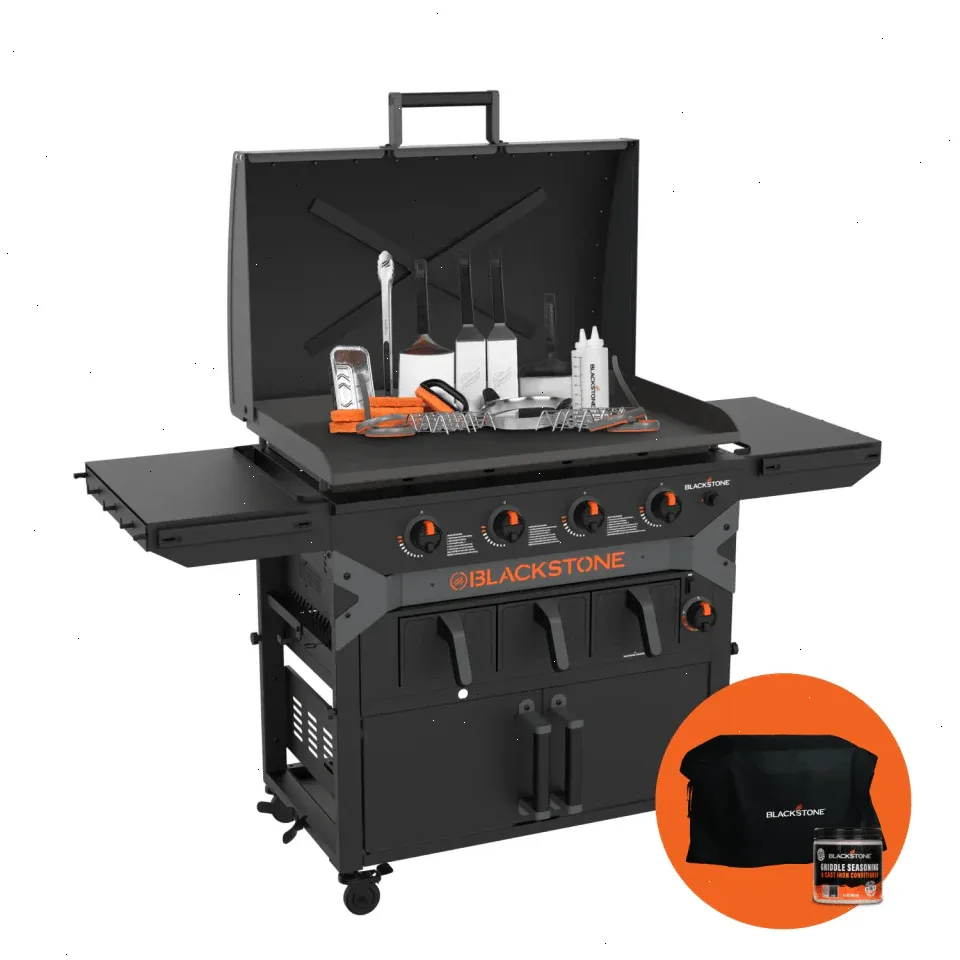
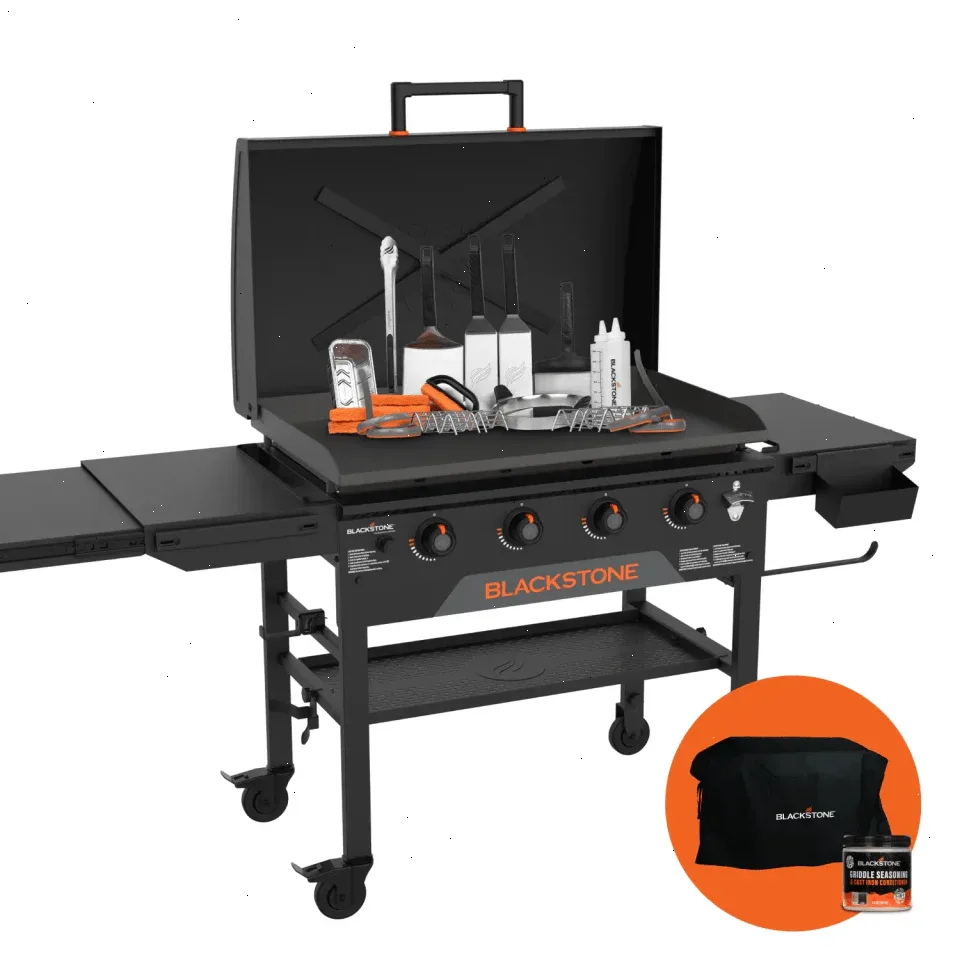
- Iron Forged 36” Griddle with Cabinet: The Blackstone Iron Forged 36” Griddle with Cabinet is a culinary powerhouse. Its sleek design with Omnivore Griddle Plate Technology delivers unparalleled power and efficiency with every cook. Four independently controlled heat zones offer maximum control, while the reinforced ‘X’ brace hood protects your griddle between uses. With four independent heat zones, you can cook different proteins at different surface temperatures simultaneously, making a griddle thermometer even more valuable for managing each zone.
- Professional Griddle Cleaning Toolkit: Keep your griddle spotless with the 19pc Griddle More Cleaning Kit, designed to make maintenance effortless and efficient. This all-inclusive kit features everything you need to tackle tough grime and maintain a pristine cooking surface. A clean griddle surface ensures accurate temperature readings and prevents residue from burning onto your food, so your thermometer gives you reliable data every time.
Using a griddle thermometer takes the guesswork out of cooking proteins. With a reliable infrared thermometer for griddle surface checks and a probe for internal temps, you can achieve consistently juicy and safe results. Remember to account for carryover cooking and always clean your thermometers between uses.