Quick answer
To get a straight paper cut with a guillotine, align your paper against the back fence and side guide, hold it firmly, and press the blade down in one smooth motion.
Why a guillotine gives cleaner cuts than scissors
Unlike scissors, which can wander along the cut line, a guillotine's fixed blade and back fence keep the paper locked in place. This eliminates the wiggle that causes uneven edges, especially on long cuts. The hardened stainless steel blade slices through multiple sheets at once, making it ideal for card making and scrapbooking where precision matters.
Small vs. large guillotine: which to choose
The main trade-off is portability versus capacity. A small guillotine (like the Crafter's Companion Small Guillotine) fits neatly on a desk and handles standard A4 or letter-size paper. A large guillotine extends further with an extendable ruler, letting you trim larger sheets like 12x12 scrapbook paper or poster board. If you mostly cut card blanks and smaller projects, the small size saves space. For mixed media or oversized paper, the large version is worth the extra room.
Step-by-step: cutting straight with a guillotine
- 1. Set up the guillotine on a flat, stable surface: Place the guillotine on a non-slip mat or table. Ensure the back fence and side guide are clean and free of paper dust. A wobbly surface shifts your alignment. Check that the base doesn't slide when you press down.
- 2. Align your paper against the back fence and side guide: Slide the paper until the edge you want to cut is flush against the back fence and the adjacent edge touches the side guide. This locks the paper at a 90-degree angle. Common mistake: aligning only one edge causes a skewed cut. Run your finger along the fence to confirm the paper is fully seated.
- 3. Hold the paper firmly with your non-cutting hand: Place your hand flat on the paper, keeping fingers away from the blade path. The paper must not shift when the blade comes down. A common mistake is gripping too close to the cut line, which can pinch or tear the paper. Keep your hand at least 2 inches from the cutting edge.
- 4. Press the blade down in one smooth, steady motion: Use your dominant hand to lower the blade handle. Do not jerk or pause mid-cut—this creates a jagged edge. Let the blade do the work; forcing it can dull the blade or tear the paper. If you feel resistance, stop and check for misalignment rather than pushing harder.
- 5. Lift the blade and remove your cut piece: After the cut, raise the blade fully before pulling out the paper. Dragging the paper under a partially raised blade can scratch the surface or cause a second unwanted cut. Clean the blade with a soft cloth after every few cuts to maintain sharpness.
Recommended guillotines
-
Crafter's Companion Guillotine (Small): The Small Guillotine has a hardened stainless steel blade and an integrated scoreboard with 0.25-inch line spacing. You can score and cut in one tool, saving time on card folds and precise creases.
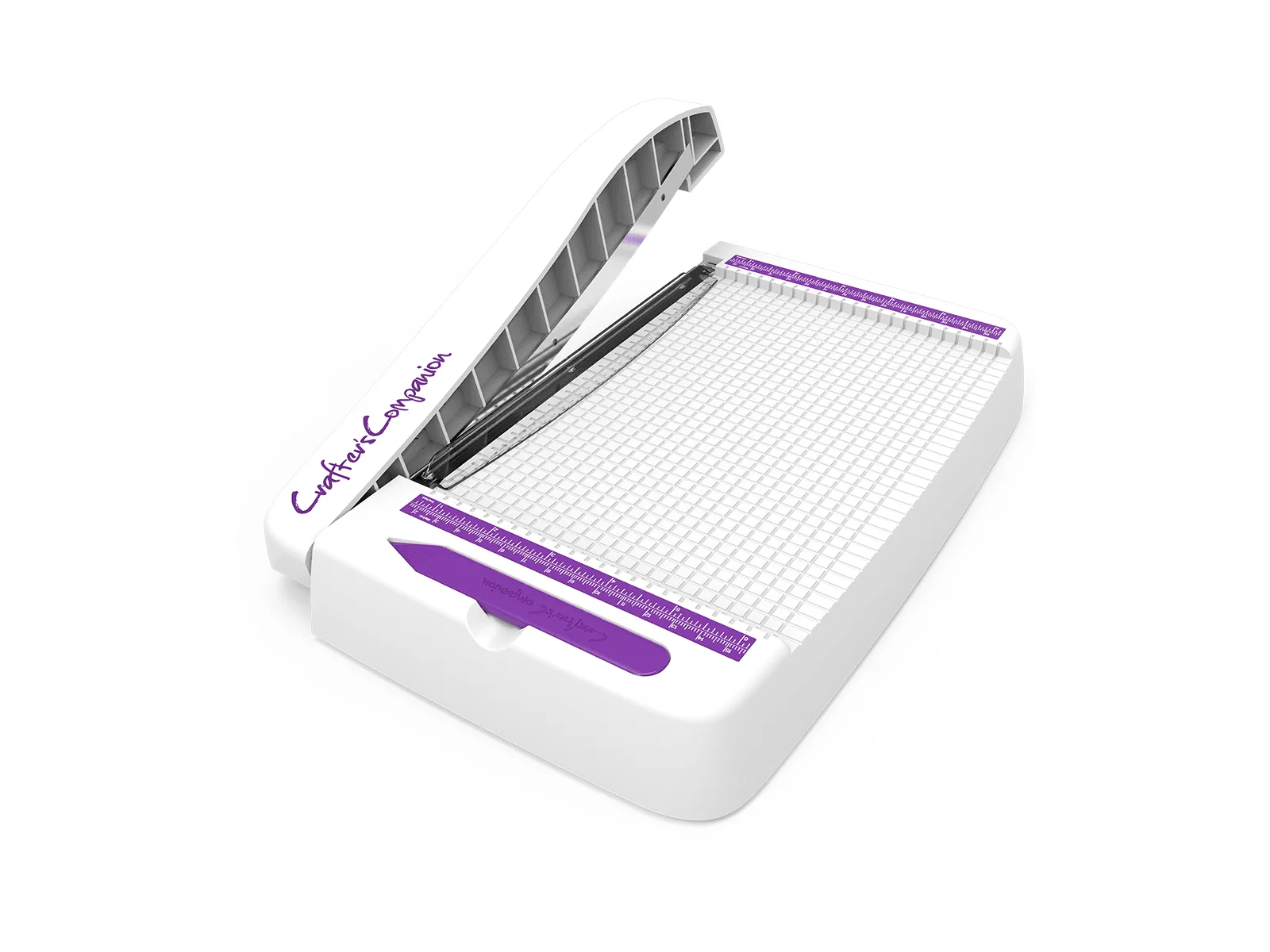
Crafter's Companion Guillotine (Small)
-
Crafter's Companion - Guillotine (Large): The Large Guillotine features an extendable ruler for precise measuring and a finger guard for added safety. The extendable ruler helps you measure larger sheets accurately, while the finger guard reduces the risk of accidental cuts.
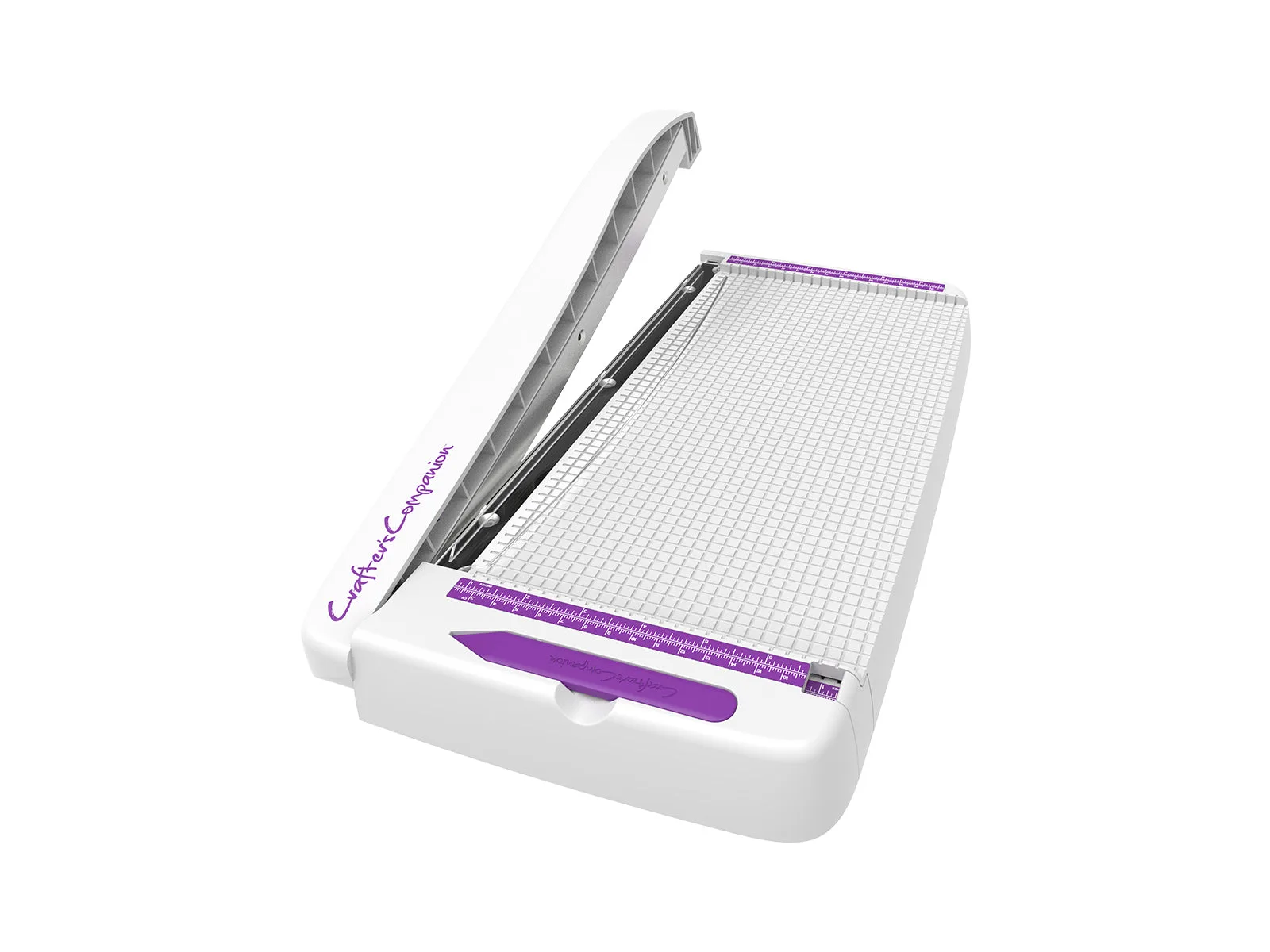
Crafter's Companion - Guillotine (Large)