Quick answer
Start with a simple story your child already knows, then let the puppet characters lead the action. The key is to keep the puppet's movements and voice consistent so the story feels real and engaging.
Why hand puppets work for early literacy
Hand puppets turn abstract story elements into visible, touchable characters. When a child sees a puppet move and speak, the story becomes easier to follow and remember. This direct engagement supports vocabulary building and narrative comprehension better than passive listening.
Choosing the right puppet set
A set with multiple familiar characters gives you more story options without requiring extra props. For example, the Disney Mickey Mouse & Friends Soft & Cuddly Hand Puppets includes four classic characters (Mickey, Minnie, Donald, and Goofy) that children already recognize. Each puppet is about 10 inches tall and fits both small and adult hands, making it easy for parents and kids to take turns.
Steps to use hand puppets for storytelling
- Pick a story you both know: Choose a short, familiar tale like a nursery rhyme or a favorite picture book. The child already knows the plot, so they can focus on the puppet's actions instead of trying to follow a new story. Common mistake: jumping into a new story. Stick with known material until the child is comfortable.
- Give each puppet one clear voice and movement: Assign a distinct pitch or accent and a simple repeated gesture (like a wave or a nod) to each character. Keep these consistent every time that puppet appears. If the voice keeps changing, the child gets confused. Write a quick note if you need to remember.
- Let the child control one puppet: Hand the child a puppet and let them decide what their character does. Ask open questions like 'What does Minnie want to do next?' instead of directing the scene. Avoid correcting their choices. The goal is confidence, not accuracy.
- Add simple sound effects or props: Use a knock on the table for a door, a crinkled paper for footsteps, or a real toy prop. These cues help the child connect the puppet's world to real objects. Too many props distract from the puppet. Stick to one or two per story.
- Repeat the same story with small changes: Retell the same tale a few times, letting the child change one thing each time (a different ending, a new character, a different problem). This builds flexible storytelling skills. Resist the urge to introduce a completely new story every session. Repetition is how kids internalize narrative structure.
Product facts
-
Disney Mickey Mouse & Friends Soft & Cuddly Hand Puppets: Includes four Disney characters (Mickey, Minnie, Donald, Goofy) in soft, washable fabric. Familiar characters lower the barrier for hesitant storytellers, and washable fabric means the puppets survive messy play and snack time.
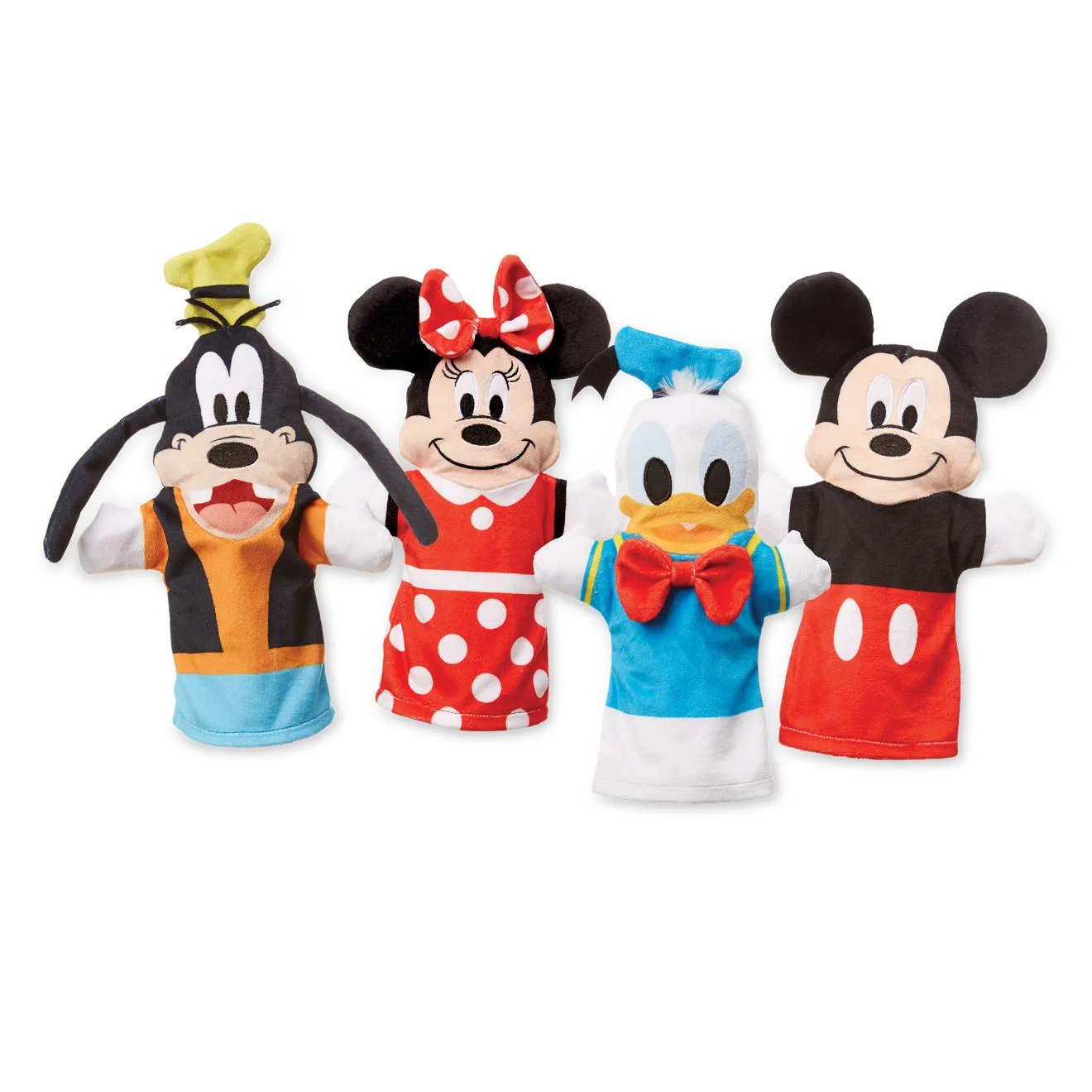
Disney Mickey Mouse & Friends Soft & Cuddly Hand Puppets