Quick answer
To run hands-free safely, attach the jogging leash to a well-fitted harness, keep the handle within reach, and use short, consistent training sessions to build your dog's focus.
Why a jogging leash changes your run
A jogging leash is designed to keep your hands free while you run, but it only works if you attach it correctly and manage the slack. The stretching rubberized material absorbs sudden pulls, which protects your shoulders and keeps your dog from yanking you off balance. This makes it a practical choice for outdoor training, hiking, or forest walks where terrain can change quickly.
Know when a jogging leash is not the right tool
A jogging leash is not a substitute for a no-pull harness or a training collar. If your dog still pulls hard or reacts to other dogs, work on leash manners separately before running hands-free. The stretchy material helps with sudden yanks, but it cannot correct a dog that is not yet leash-trained.
Also, this leash is not designed for stationary tethering or tying your dog. Use it only during active movement such as jogging, hiking, or walking.
How to Use a Jogging Leash Safely
- Attach the leash correctly: Clip the jogging leash to a well-fitted harness (not a collar) to avoid neck strain. Ensure the clip is fully closed and the leash is not twisted before you start. Check the clip and harness connection before every run.
- Adjust the length and tension: Hold the leash at a comfortable length that gives your dog enough room to move without tangling around your legs. Keep a slight tension so you can feel your dog's pace and react quickly. Practice adjusting the length at a walk before you run.
- Start with a warm-up walk: Walk for 5–10 minutes to let your dog warm up and focus. This also lets you check the leash attachment and your dog's energy level before increasing speed. A short warm-up reduces the risk of sudden pulls when you start running.
- Maintain a consistent pace and direction: Keep a steady rhythm and avoid sudden stops or turns. The stretching rubberized material dampens sudden pulls, but abrupt changes can still startle your dog or cause you to lose balance. If your dog lunges, slow down gradually rather than jerking the leash.
- Use the leash's shock absorption: Let the leash's stretch work for you: keep a relaxed grip and allow the rubberized section to absorb initial tension before you brace. This reduces strain on both of you. Practice a few walks before running so you both learn how the stretch feels.
- Stay aware of your surroundings: Keep the leash short enough to avoid tangles but long enough for natural movement. Watch for cyclists, other dogs, and uneven terrain, and slow to a walk when passing hazards. When you need both hands, use the built-in handle to keep the leash secure during sudden stops.
Product facts
-
Jogging Leash: The Jogging Leash is made of a stretching rubberized material that resists environmental effects and dampens sudden pulls. This stretch helps absorb the shock of sudden lunges, reducing strain on your arm and your dog's neck during runs.
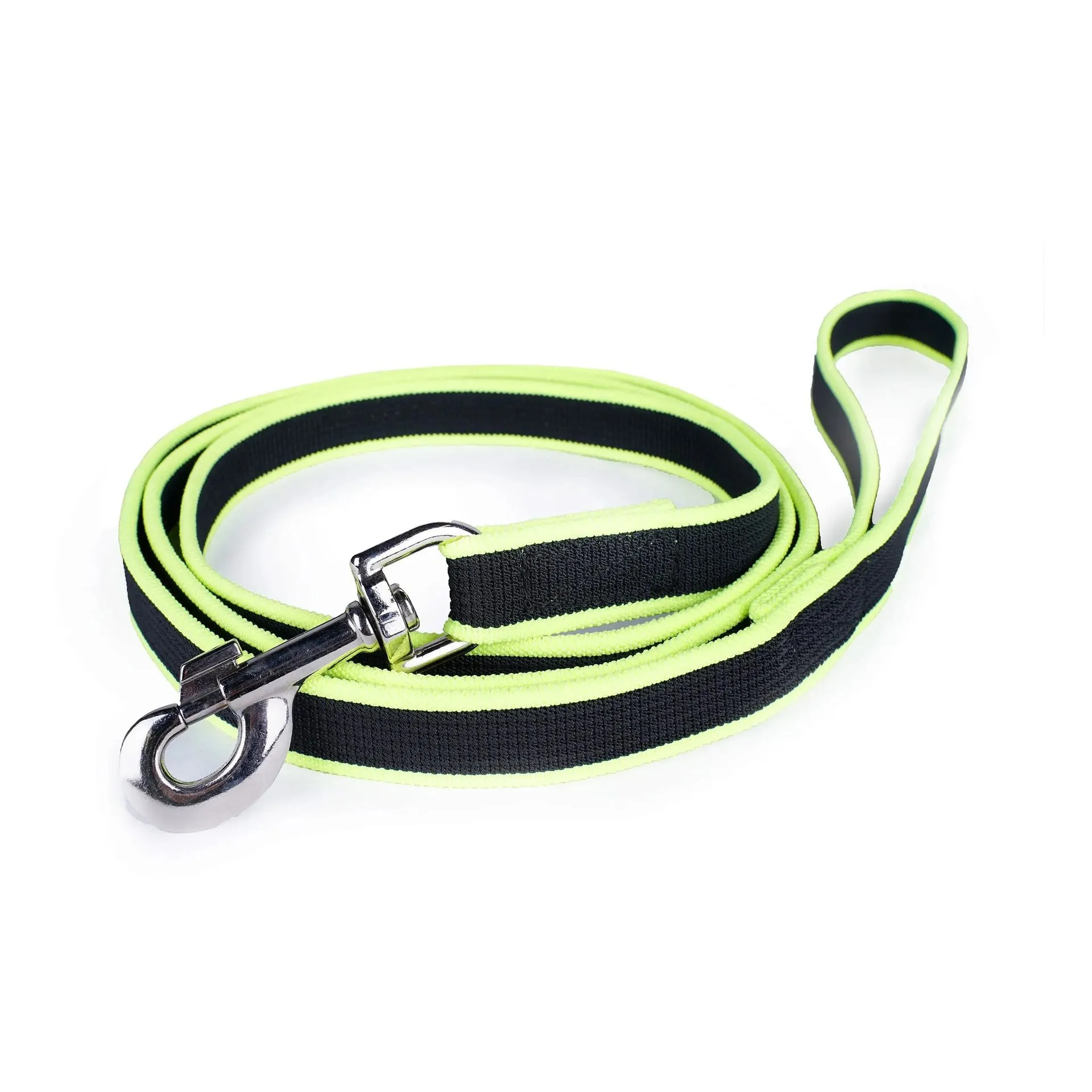
Jogging Leash