Quick answer
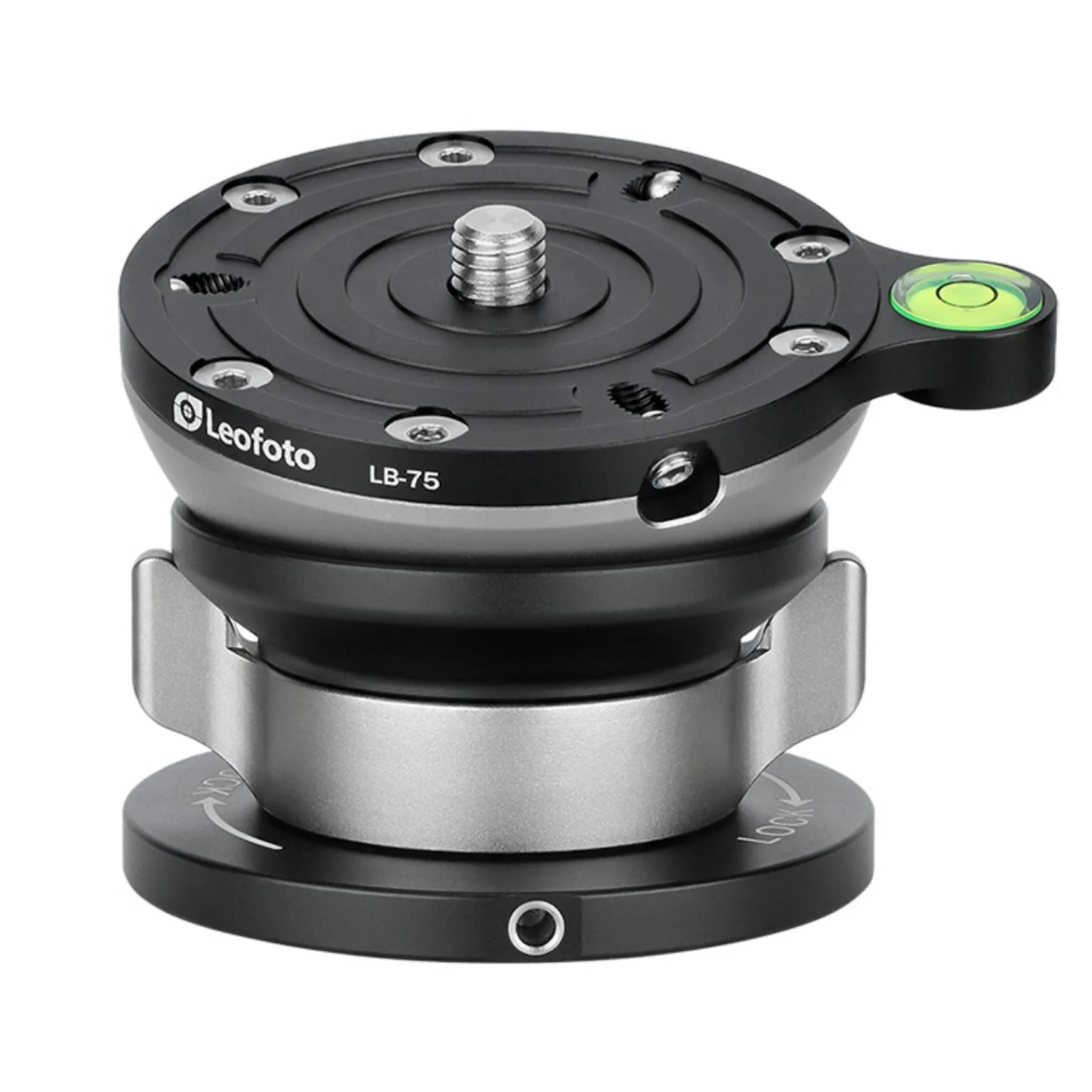
To use the Leofoto LB-75 leveling base for panoramic shots, mount it between your tripod and head, level the base using its -15/+15 degree tilt range, then rotate the base for each frame while keeping the horizon level. This eliminates the need to adjust tripod legs for leveling, making it faster and more precise than a ball head alone.
Why a leveling base beats a ball head for panoramas
A ball head can level a camera, but it moves in all directions at once. That makes fine adjustments frustrating and can introduce drift between shots. The Leofoto LB-75 leveling base sits under your head and tilts only on two axes, so you can level the camera without disturbing your composition or panning axis. It supports up to 25kg, enough for most gimbal and fluid head setups.
Step-by-step setup for perfect panoramas
Follow these steps in order. Each step includes a common mistake to avoid.
1. Mount the LB-75 on your tripod. Screw the base onto your tripod's 3/8" stud. Checkpoint: Ensure the base is snug but not over-tightened; you'll need to adjust it later.
2. Attach your tripod head. Screw your ball head, gimbal, or fluid head onto the LB-75's top stud. Mistake: Forgetting to tighten the head's locking screw, causing it to rotate during panning.
3. Level the base. Use the LB-75's adjustment knob to tilt the base until the built-in bubble level is centered. Checkpoint: The bubble must be perfectly centered, not just close.
4. Set your camera and lens. Mount your camera and balance it on the head. Mistake: Not balancing the load, which can cause the head to slip when tilted.
5. Compose and focus. Frame your first shot and set focus to manual to prevent changes between frames.
6. Rotate for each frame. Loosen the base's pan lock and rotate the entire head and camera assembly. Mistake: Rotating only the head's pan base, which can introduce parallax if the camera isn't centered over the rotation axis.
7. Overlap by 30%. Take each shot with 30% overlap with the previous one. Checkpoint: Use a remote release or self-timer to avoid shake.
8. Stitch in software. Import images into panorama software and stitch.
Choosing the right head for your panorama workflow
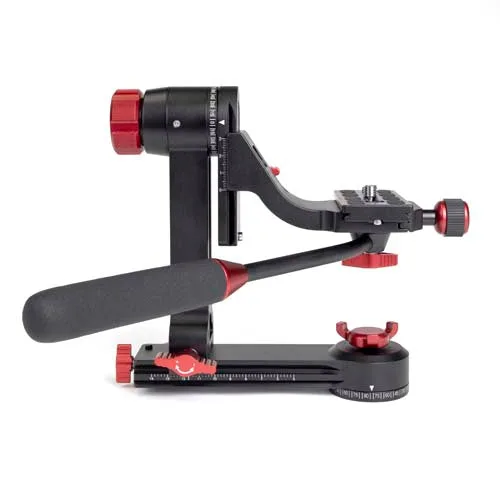
The LB-75 works with ball heads, gimbal heads, and fluid heads. For multi-row panoramas, a gimbal head like the PM GH26 Professional Gimbal Head offers separate controls for swing arm and rotating base, making it easier to adjust without disturbing level. For single-row landscapes, a ball head like the Manfrotto Element Big Tripod Kit's ball head is sufficient and lighter. Consider your typical subject: if you shoot wildlife or sports panoramas, a gimbal head provides smoother tracking.
Step-by-step panoramic technique with the LB-75
- Mount and level the base: Attach the LB-75 to your tripod, then mount your head. Use the adjustment knob to center the bubble level. Checkpoint: The bubble must be perfectly centered before proceeding.
- Balance your camera: Mount your camera and lens, then balance the load on the head so it stays in place when tilted. Mistake: Skipping balance causes the head to droop during panning.
- Pan and shoot with overlap: Loosen the base's pan lock and rotate the entire assembly for each frame, overlapping by 30%. Checkpoint: Use a remote release to avoid shake.
Product facts
- Leofoto LB-75 75mm Levelling Base: The Leofoto LB-75 is a precision-engineered levelling base designed to provide a rock-solid foundation for professional tripod setups. Ideal for use with gimbal heads, fluid heads, and ball heads, it ensures your gear is perfectly level, even on uneven terrain. This means you can achieve a level horizon quickly without adjusting tripod legs, saving time and ensuring consistent panoramas.
- Leofoto LB-75 75mm Levelling Base: Base Diameter 75mm, Height 59mm, Weight 322g, Maximum Load 25kg, Tilting Range -15/+15 Degrees. The 25kg load capacity supports heavy telephoto lenses and gimbal heads, while the ±15° tilt range handles most uneven terrain.
- PM GH26 PROFESSIONAL GIMBAL HEAD: A highly adjustable Gimbal Head capable of traditional gimbal action as well as controlled, fluid-like movements for both still photography and videography. The PM GH26 Gimbal Head consists of 3 parts which can quickly be separated for portability. For panoramic photography, a gimbal head allows smooth rotation and easy balancing of long lenses, and its modular design makes it easy to pack.