Quick answer
Metal O-rings serve as junction connectors in bag hardware, linking two pieces of leather or webbing. Use them wherever a strap needs to pivot or attach securely.
Where O-rings fit in bag design
O-rings work best at stress points where a strap meets a bag body or where two straps join. Because they are round and smooth, they allow movement without binding or wearing the strap material. This makes them ideal for tote bags, backpacks, and crossbody designs.
Limitations to keep in mind
Metal O-rings are not load-rated like climbing hardware. For heavy loads, double-check the ring thickness and strap width. They also require a way to close the connection—usually by sewing or using a second ring—so plan your assembly sequence.
Frequently asked questions
Where do I place O-rings on a bag?
Attach O-rings at junction points—for example, where a shoulder strap meets the bag side or where a removable crossbody strap clips on. The ring acts as a pivot, letting the strap lie flat against the bag.
How do I attach an O-ring to leather?
Fold the leather or webbing end through the ring, then sew across the strap close to the ring. A bar tack or box stitch keeps the ring secure. For heavier loads, use a second ring or a rivet through the folded layers.
Can I use O-rings with hardware other than leather?
Yes. O-rings work with nylon webbing, cotton tape, or canvas straps. The same attachment method applies: fold the material through the ring and stitch. For metal-on-metal connections, pair the O-ring with a swivel snap or lobster clasp. Check that the strap width matches the ring opening (1" in this case) before cutting your material.
Hardware spotlight
-
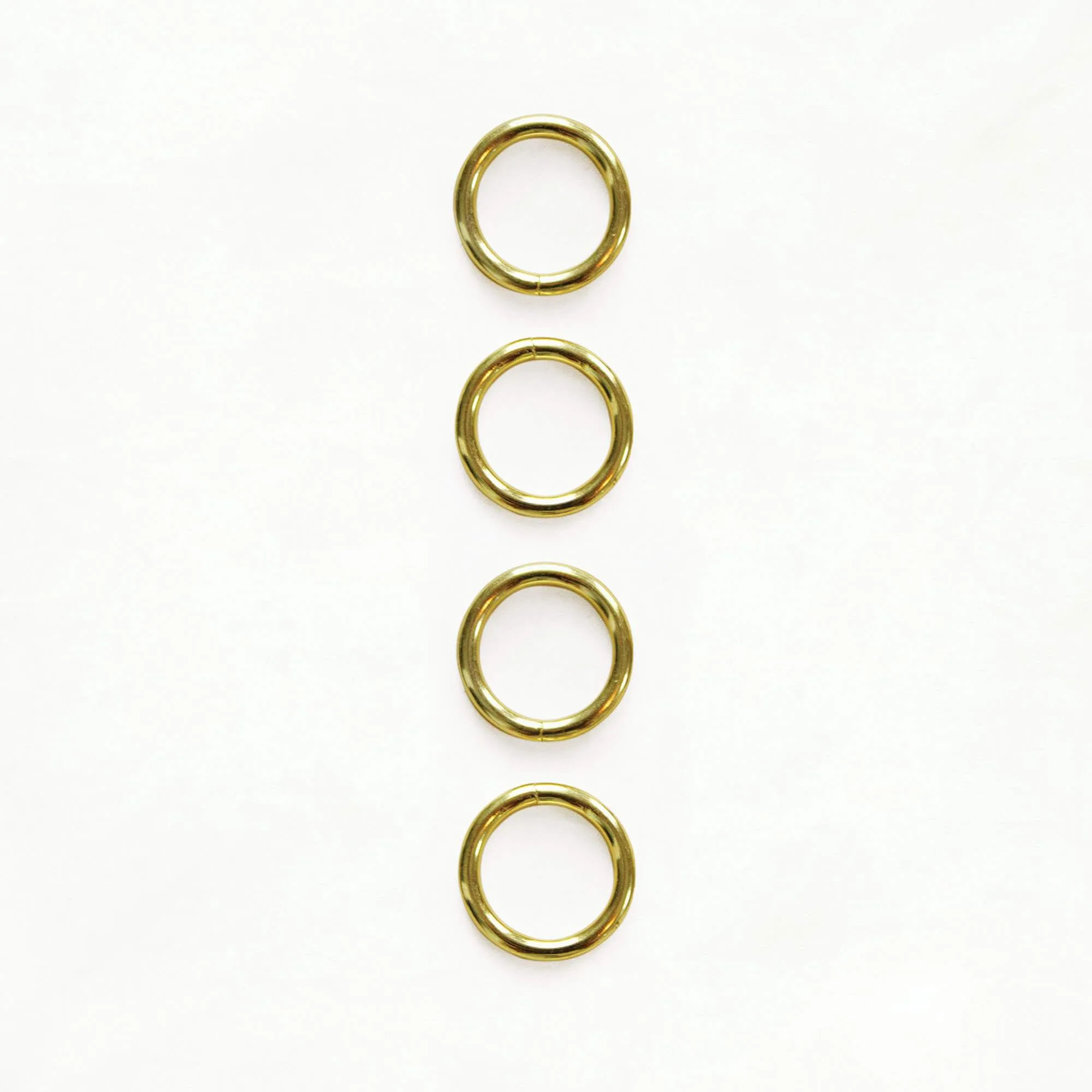
Metal O-Rings: Fits 1"-wide leather straps. Sold in packs of 4. You can use a single ring as a connector or pair two rings for a more adjustable strap attachment.
Metal O-Rings