Quick answer
For reliable leak protection, place the pad with the fold-over flap facing up and inward, change it whenever it feels damp, and wash it in cold water before reuse.
Why placement matters
Where you position a nursing pad affects how well it catches leaks. Because milk often releases from the lower part of the breast, the pad should sit below the nipple and curve upward. The fold-over flap on organic nursing pads helps create a natural silhouette while keeping the pad in place, but it only works if you orient it correctly.
A pad that rides too high or sits crooked can shift during movement, leaving gaps where leaks escape. Taking a few extra seconds to smooth the pad against your skin and align it with your bra's seam prevents most common leaks.
Reusable vs. disposable trade-offs
Reusable nursing pads absorb just as well as disposables, but they need a little more attention. You must change them more often if your flow is heavy, and they require washing between uses. In exchange, you avoid the harsh chemicals sometimes found in disposable pads and save money over time.
If you are out and about, carrying a small wet bag or laundry bag makes it easy to store used pads until you get home. This keeps the rest of your diaper bag clean and prevents odors.
Step-by-step: Use your nursing pads
- Position the pad correctly: Place the pad inside your bra with the fold-over flap facing up and toward the center of your chest. Smooth it flat against your breast, making sure the lower edge sits just below the nipple.
- Check the flap alignment: Fold the flap over the top of the pad so it lies flat against your skin. This keeps the pad from bunching and creates a smooth line under your top. Common mistake: leaving the flap unfolded can cause the pad to slip and create visible ridges.
- Change pads when damp: Replace the pad as soon as it feels wet or heavy. Leaving a damp pad against your skin can cause irritation or a yeast infection. For heavy leakers, carry at least two spare pairs in your bag.
- Rinse or soak after use: Rinse used pads in cold water right away to prevent milk residue from setting in. For a deeper clean, soak them in cold water with a little gentle detergent before washing. Avoid hot water, which can set stains and damage the fabric.
- Wash and dry properly: Machine wash your nursing pads in cold water with mild detergent, then air dry or tumble dry on low. Do not use fabric softener, as it can reduce absorbency. Check that the pads are completely dry before storing to prevent mildew.
Product facts
-
Organic Nursing Pad Pair: GladRags ultra-soft organic cotton reusable nursing pads absorb leakage and protect your breasts from harsh chemicals found in disposable nursing pads. Choosing organic cotton means your skin touches only natural fibers, which is especially important for cracked or sensitive nipples.
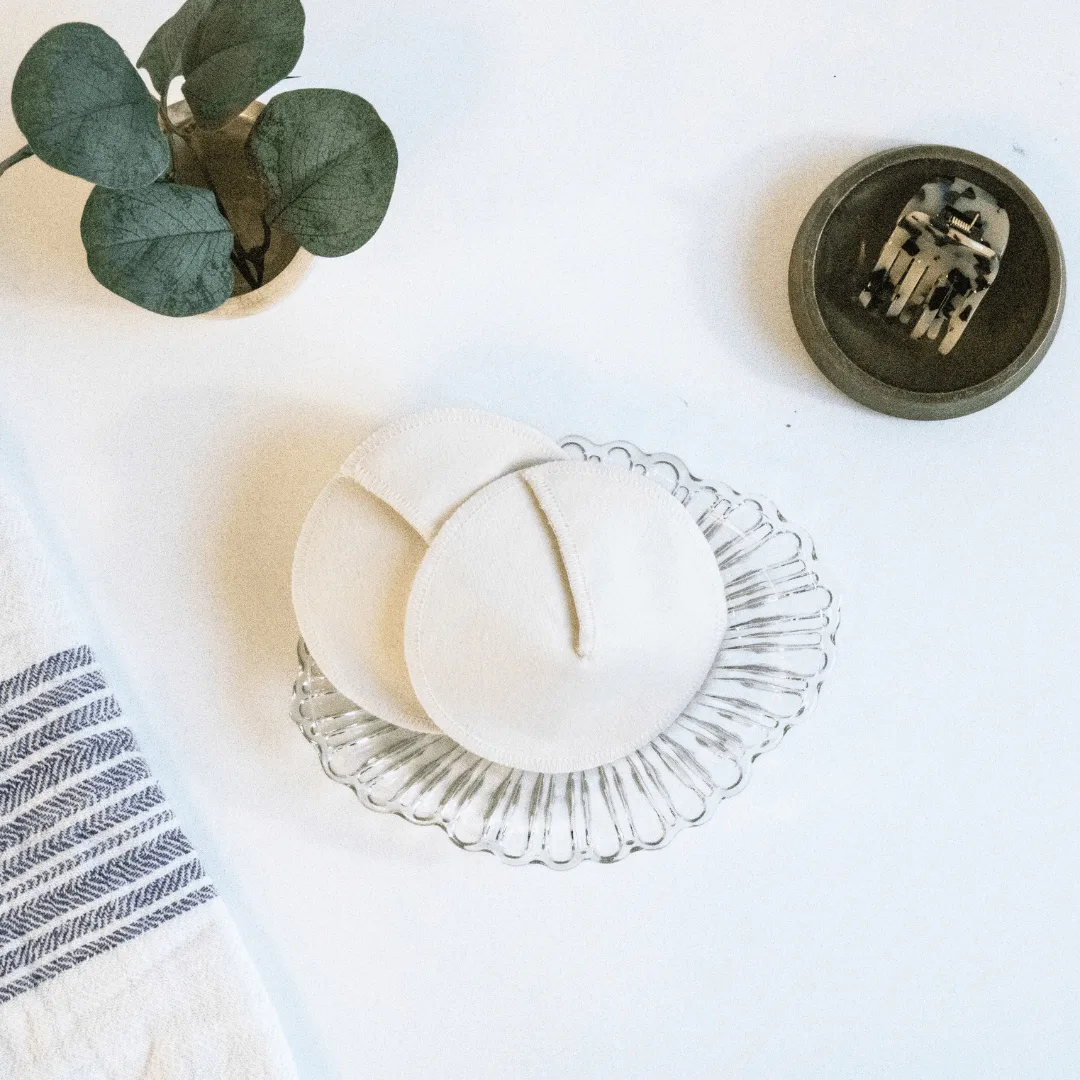
Organic Nursing Pad Pair
-
Organic Nursing Pad Pair: The fold-over flap gives you a natural look and helps keep the pad securely in place. This design reduces visible lines under clothing and prevents the pad from shifting during the day.