Quick answer
Use the Philosophical Questions for Curious Minds card deck as a structured icebreaker at your next party—draw a card, read the question aloud, and let the conversation flow naturally. This turns small talk into memorable, thoughtful exchanges.
Why this card game works for parties
Most party games focus on trivia or silly prompts, but this deck draws from philosophy's biggest conundrums. The questions are designed to spark lively, warm, and fascinating conversations among families and friends, making them perfect for gatherings where you want more than surface-level chat.
Because the cards require no prior knowledge, anyone can participate—from curious teens to adults who rarely discuss philosophy. The trade-off is that some questions may feel too deep for a very casual or loud party; save this game for smaller, more intimate groups or a quieter moment in the evening.
How to use the card game at a party
- Set the mood: Choose a quiet corner or a moment when guests are already seated (e.g., after dinner). Place the deck in the center and explain that each card contains a big question to explore together. Avoid starting during loud music or high-energy dancing—the game works best when people can hear each other.
- Draw and read: The first player draws a card, reads the question aloud, and answers it first. This models the kind of honest, thoughtful response you want from everyone. A common mistake is rushing to the next card—let the question hang for a moment so others can jump in.
- Pass the turn: After the first player answers, they pass the deck to the next person. Each person can either answer the same question or draw a new one. This keeps the conversation flowing naturally. If the group gets stuck on one question, that's a good sign—don't force a new card until the discussion feels complete.
Product facts
-
Philosophical Questions for Curious Minds: Puzzles and ideas to help young minds grow. Children are born philosophers – but it helps to equip them with the largest and most thought-expanding questions. This means the deck works for mixed-age groups, including older kids and teens, without feeling childish or overly academic.
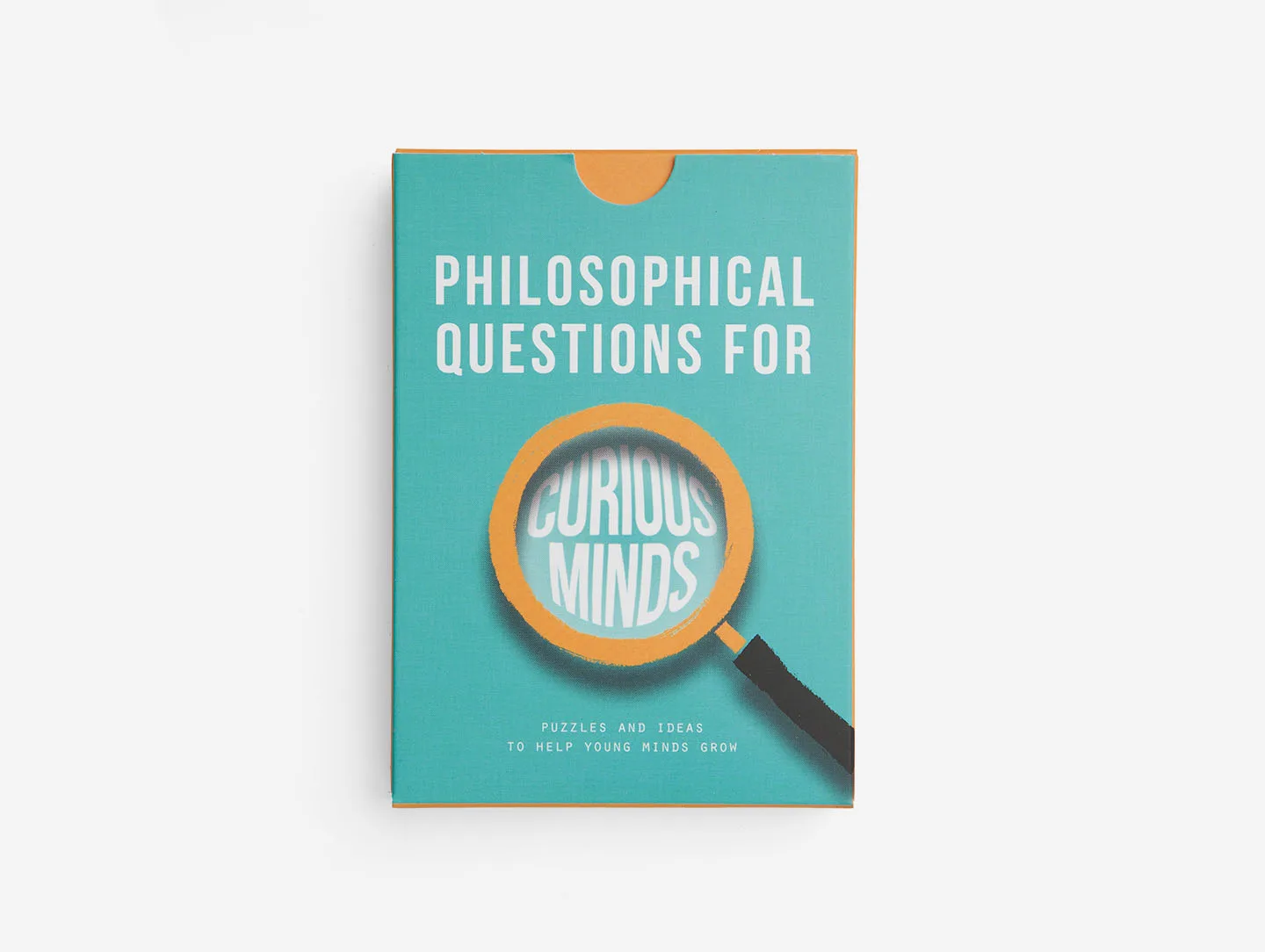
Philosophical Questions for Curious Minds