Quick Answer
Use Photographic Learning Cards Emotions as a structured conversation starter: show a card, ask a guided question, and expand the child's feeling vocabulary. This practical approach builds emotional awareness and communication skills in sessions.
Why Photographic Cards Work for Young Children
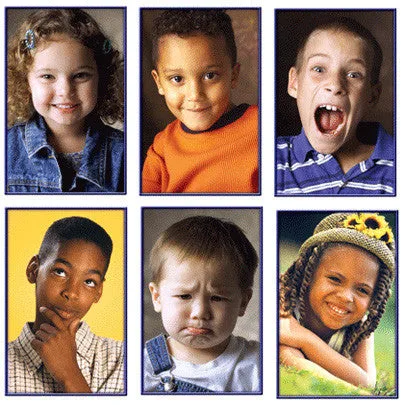
Real photographs help children connect facial expressions to feelings more concretely than drawings or emojis. For ages 4–6, this visual clarity supports recognition and labeling, which are foundational for emotional regulation.
The included resource guide in English and Spanish also makes it easier to involve bilingual families in the learning process, extending therapy skills beyond the session.
Adapting to Different Therapy Goals
While the cards are designed for ages 4–6, you can adapt them for older children by focusing on more nuanced discussion questions or using them as prompts for storytelling. For younger or less verbal children, start with simple matching or pointing activities.
The guided questions on each card help you scaffold conversations, but feel free to add your own open-ended questions to deepen exploration.
Step-by-Step Guide to Using Emotion Cards in Therapy
- Introduce the Cards: Show a few cards one at a time. Ask 'What feeling do you see?' and let the child name it. If they struggle, offer a choice: 'Is this happy or sad?' Checkpoint: Keep it positive—avoid pressure; the goal is exploration, not right answers.
- Use Guided Questions: Pick one card and ask the guided question from the resource guide, such as 'When do you feel this way?' Encourage the child to share a personal example. Checkpoint: If the child gives a short answer, follow up with 'Tell me more about that time.'
- Expand Feeling Vocabulary: Introduce synonyms for the basic emotion on the card. For 'happy,' add 'joyful,' 'excited,' or 'proud.' Discuss how the face in the photo shows the difference. Checkpoint: Don't overload—introduce only one or two new words per session.
- Practice Conversation Skills: Take turns picking a card and describing a time you felt that emotion. Model turn-taking and active listening. Ask the child to ask you a question back. Checkpoint: Watch for turn-taking; if the child interrupts, gently remind them to wait.
- Create a Feelings Check-In Routine: At the start of each session, have the child pick a card that shows how they feel today. Use this as a springboard for the session's activities. Checkpoint: Consistency builds routine—use the same cards each time to build familiarity.
Product Facts
-
Photographic Learning Cards-Emotions: Includes 22 cards, each 5.5 x 8.5 inches, with photographs of different emotions plus a bilingual resource guide. The large, clear photos and bilingual guide make it easy to engage young children and support diverse families.
Photographic Learning Cards-Emotions