Quick answer
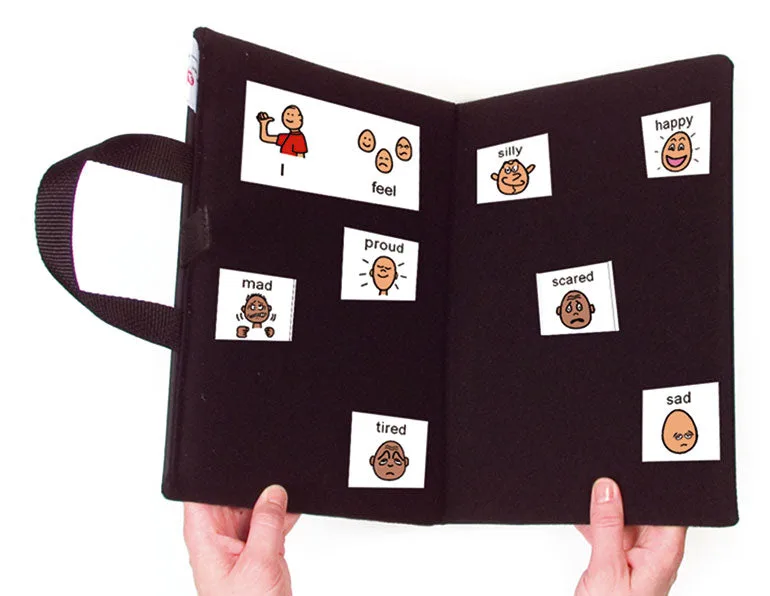
Use a portable bi-fold communication folder by setting it up with a small, high-value picture set, placing it within reach during transitions, and modeling one exchange at a time. Keep the folder in the same spot in your bag so it becomes part of your daily routine. The Portable Bi-Fold Communication Folder is a practical starting point because its Velcro-receptive inside and waterproof nylon outside handle daily wear.
Set up the folder with a small, functional picture set
Start with 6–10 pictures that match your child's most common requests or needs, such as a favorite snack, a break, a toy, or a bathroom. Attach hook Velcro to the back of each picture and press it onto the folder's Velcro-receptive fabric. Keep the layout consistent: put frequently used pictures on the left side and less frequent ones on the right. If your child is nonverbal or just beginning to use picture communication, fewer choices reduce overwhelm and make success more likely.
Practice during calm, low-demand moments at home
Before you rely on the folder during outings, practice at home when everyone is relaxed. Sit with your child, point to a picture, and say the word while you hand them the item. For example, point to 'crackers,' say 'crackers,' and give a cracker. Do this a few times a day in short bursts. This builds the connection between the picture and the outcome without the pressure of a busy store or a rushed morning.
Keep the folder accessible during transitions
The folder only works if it is within reach. Use the handle to hang it on a stroller, hook it to your bag, or keep it in a dedicated pocket. During car rides, keep it on the seat next to your child rather than in the trunk. If your child uses a wheelchair or adaptive stroller, attach the folder where they can touch it independently. The goal is to remove any barrier between your child and the pictures.
Model one picture exchange at a time
When your child wants something, guide their hand to the picture or point to it yourself, then immediately honor the request. Avoid asking multiple questions or adding new pictures mid-exchange. One picture, one response. If they point to 'juice,' give juice. This immediate cause-and-effect teaches that the folder is a reliable way to communicate. Over time, you can add a second step, like choosing between two drinks.
Rotate pictures based on current needs and seasons
Review the folder every week or two. Swap out pictures that are no longer relevant (e.g., a winter coat) for ones that are (e.g., sunscreen). If your child has mastered a picture, you can move it to a less prominent spot and introduce a new one. Keep a small resealable bag of extra pictures in your bag so you can update the folder on the go. The Velcro-receptive fabric makes switching quick and quiet.
Clean and store the folder to make it last
Wipe the waterproof nylon exterior with a damp cloth and mild soap as needed. Check that the Velcro closure still holds and that the handle is secure. Store the folder flat or hanging, not crumpled under heavy items. If the inside fabric gets dirty, brush it lightly or use a lint roller. Consistent care keeps the folder ready for daily use.
Daily steps for using the communication folder
- Step 1: Choose 6–10 pictures for the day: Pick pictures that match your child's likely needs for that day's activities—snack, break, bathroom, a preferred toy. Attach hook Velcro to the back and press them onto the folder's inside fabric. Common mistake: overloading the folder with too many pictures. Start small and add only when your child is successful.
- Step 2: Place the folder within reach before transitions: Hang it on the stroller, clip it to your bag, or set it on the car seat next to your child. Make sure they can touch it without asking for help. Checkpoint: if your child has to ask you for the folder, it's not accessible enough.
- Step 3: Model one picture exchange during a real request: When your child shows interest in something, guide their hand to the picture or point to it yourself, then immediately give the item. Say the word clearly as you do. Common mistake: asking 'What do you want?' before modeling. Show first, then wait.
- Step 4: Honor the communication every time: If your child points to 'bubbles,' blow bubbles. If they point to 'break,' give a break. Immediate follow-through builds trust in the folder. Checkpoint: if you can't honor a request right away, acknowledge it and offer a substitute picture that you can honor.
- Step 5: Review and reset the folder at the end of the day: Remove pictures that were not used, add ones for tomorrow, and wipe the exterior if needed. Store it in the same place so it's ready for the next morning. Next step: once your child reliably uses 6–10 pictures, add a choice board or a sentence strip to expand communication.
Product facts
- Portable Bi-Fold Communication Folder: The folder has a Velcro-receptive fabric inside and a waterproof nylon exterior, with a handle and Velcro closure. The inside surface lets you attach and rearrange picture cards quickly, while the waterproof outside protects the folder during spills or rain. The handle makes it easy to carry or hang on a bag.