Quick answer
Hang your prism ball suncatcher in a south- or east-facing window where direct sunlight hits the glass cube, and adjust the angle by rotating the hanging cord to cast rainbow light patterns across the room.
Why window direction matters for rainbow effects
A prism ball works by splitting sunlight into red, green, and blue beams. South-facing windows in the Northern Hemisphere receive the most direct light throughout the day, producing the strongest rainbows. East-facing windows give bright morning effects but fade by afternoon. North-facing windows rarely produce visible color separation because the light is too diffuse.
If you live in the Southern Hemisphere, reverse that advice: north-facing windows are your best bet for direct sun.
Indoor vs. outdoor placement trade-offs
Indoor placement protects the acrylic resin from UV degradation and keeps the prism ball clean. Outdoor hanging exposes it to dust, pollen, and weather, which can dull the surface and reduce light clarity. For the best indoor results, place the suncatcher within 12 inches of the window glass so the light hasn't scattered before hitting the prism.
One trade-off: indoor light is filtered by window glass, which slightly reduces intensity compared to outdoor direct sun. The rainbow colors will still be vivid, but the projected pattern may be softer.
Step-by-step hanging guide
- Choose the right window and time of day: Pick a south- or east-facing window that receives direct, unobstructed sunlight. Test the light by holding the prism ball near the glass around midday. If you see sharp colored beams on the wall or ceiling, that spot works. A common mistake is using a north-facing window. You'll see almost no color separation there.
- Hang the prism ball at the correct height: Use a clear monofilament or thin cotton cord to suspend the prism ball so it hangs 2 to 6 inches away from the window glass. The lower edge of the cube should be at or slightly above eye level when you're standing, so the rainbows project onto walls or ceilings rather than the floor. If the ball hangs too far from the glass, the light scatters and the colors become faint.
- Rotate the cube to adjust the light pattern: Gently twist the hanging cord to rotate the prism ball a quarter turn. Watch how the colored beams shift across the room. Keep rotating until you see three distinct red, green, and blue patches or streaks on a nearby wall or ceiling. The exact angle depends on the sun's position, so you may need to re-adjust every few hours. Don't expect a full rainbow. The internal film in these prisms separates light into only three primary colors.
- Secure the cord and avoid drafts: Tie the cord securely to a hook, suction cup, or adhesive clip attached to the window frame or glass. Make sure the prism ball hangs still—drafts from an open window or air conditioning can make it spin constantly, blurring the projected colors into a white blur. A suction cup works well on clean glass but may lose grip over time. Check it weekly.
Product spotlight
-
Prism Ball: Originally crafted as projector components, these cube-shaped optical glass prisms contain a special internal film that separates light into its three primary colours: red, green, and blue. Some prisms are discarded due to minute imperfections such as scratches or chips. These are transformed into captivating light-reflecting objects by sealing them in acrylic resin. The internal film is what creates the distinct red, green, and blue beams instead of a full rainbow spectrum, so you know exactly what kind of light effect to expect.
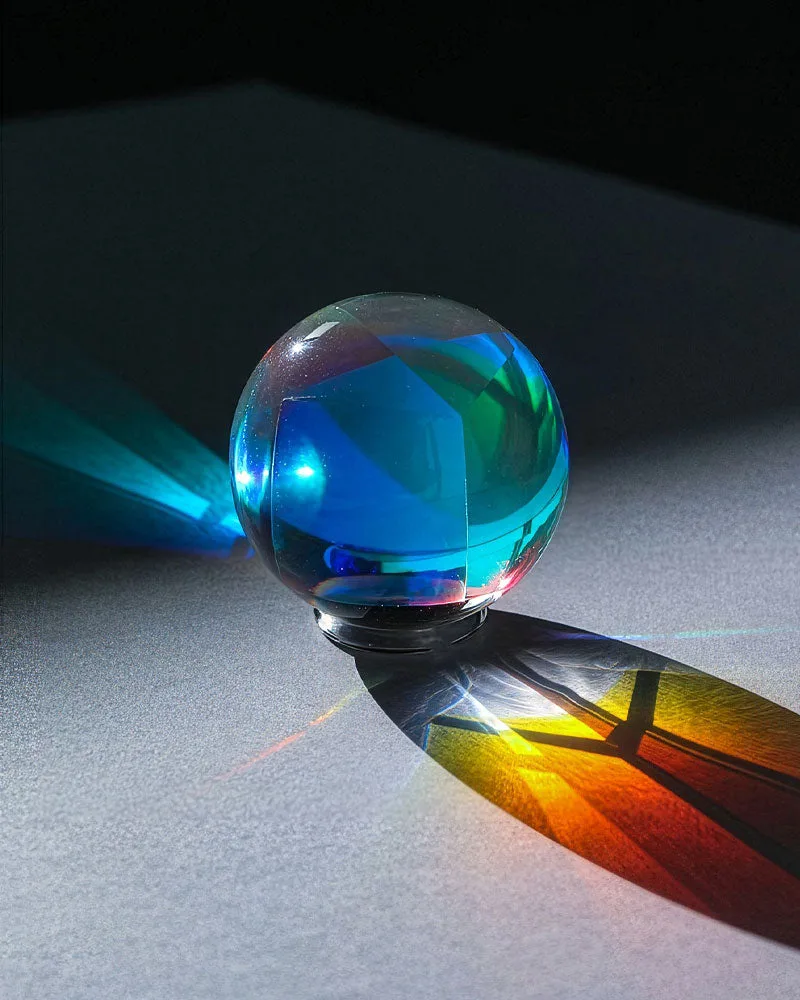
Prism Ball